A $6 million program takes aim at a backlog of thousands of requests for sidewalk maintenance, but critics say requiring property owners to foot half of the bill excludes less affluent neighborhoods.



The infusion of federal pandemic relief dollars is funding a $6 million program to fix broken sidewalks in St. Louis, as part of efforts to clear a years-long backlog of requests. According to a St. Louis Post-Dispatch article by Austin Huguelet, “There are at least 1,500 uneven, cracked or crumbling sidewalks awaiting service from the city’s repair program, and many people have heard help is coming before: At least 180 of the requests date back to 2017 or earlier.”
The city also found that old requests were, for a time, not rolling over year to year, meaning that unfulfilled requests disappeared without any action. In the summer of 2022, in response to a series of deadly crashes, the mayor’s office launched a plan “to spend tens of millions of dollars to redesign dangerous intersections, install traffic-slowing devices on major thoroughfares, and shore up the city’s beleaguered sidewalk program.”
Critics argue that the program’s funding structure, which requires property owners to pay 50 percent of the cost of sidewalk repairs, means that lower-income neighborhoods will be left with crumbling infrastructure.
FULL STORY: St. Louis residents have waited years for new sidewalks. Can the city catch up?

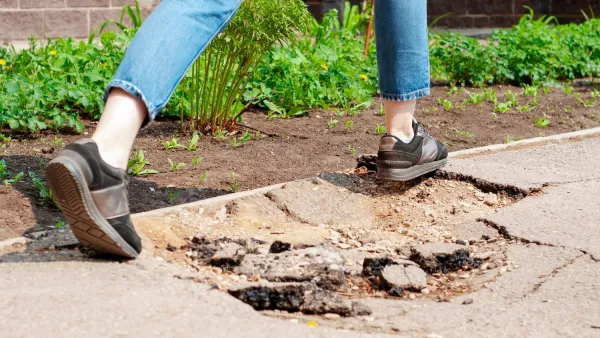
Portland Council Tentatively Approves Sidewalk Repair Plan
The proposal would address sidewalk needs in Portland’s District 1 and District 4.
Denver Takes on Sidewalk Repair
The Colorado capital is the largest U.S. city to commit to maintaining its entire sidewalk network, funding repairs through a fee on property owners.
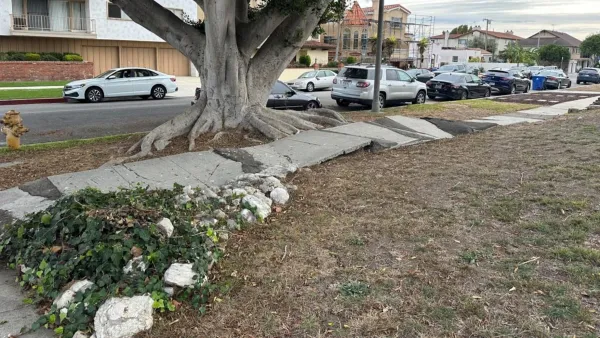
The City of Broken Sidewalks
Can Los Angeles fix 4,000 miles of broken sidewalks before the city hosts the 2028 Olympic Games?

The state-sanctioned urbicide of Austin
People don’t kill cities. Freeways do.

US to reduce Colorado River water deliveries to Mexico
A new Colorado Treaty amendment reduces Mexico’s Colorado River water allocation by 250,000 acre feet.

New Jersey’s second-largest city bans standalone data centers
Jersey City will continue to allow co-location facilities, such as those meant for research institutions that store their own data.

Amtrak not solely to blame for New Jersey commuter rail's unreliability, report finds
A new study from the Garden State Initiative found that NJ Transit’s budget grew 20% across a 4 year period, but reliability declined significantly over the same period.

EPA erases limits on planet-warming pollution from power plants
Under Monday’s plan, power plants would still have some limits on how much mercury, arsenic and other contaminants they can emit.

Phoenix announces new on-demand transit service, more frequent RAPID buses
Both new services will launch in October, and are part of Phoenix's Project Effective Access Solutions for Easing Congestion.

FREE Course: Walkable City 1: Why Walkability?
After describing his path towards focusing on walkability as the essence of good planning, Jeff Speck marches through his five principal reasons for making more walkable places.
Reinventing Malls: Planning Alchemy—Turning Gray Fields Into Gold
The course focuses on the opportunities and imperatives that shape reinvention of mall sites.

Eagle County Government
Harvard University Graduate School of Design
Nashville Planning Department
The Architects Foundation
University of Cincinnati Online
The Pocatello Development Authority
The Urban Renewal Agency of the City of Pocatello
Journal of the American Planning Association