Some of the fastest-growing metro areas in the country are also the ones building the most new housing.


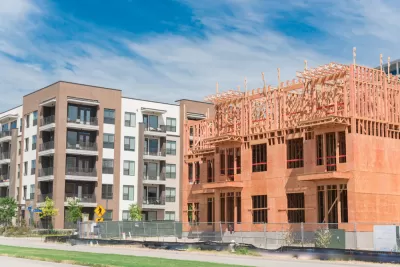
What do the fastest-growing parts of the country have in common? According to a piece by Justin Fox in Bloomberg CityLab, it’s not lower taxes, better weather, or lower crime rates. It’s the availability of housing.
According to Fox, the South and inland West, home to 46.3 percent of the U.S. population, accounted for 65.8 percent of new housing construction between 2020 and 2022. Admittedly, “Many of these metro areas are able to build so much more housing in part because they’re surrounded by mostly flat land on which developers can easily plunk down new subdivisions.” Other, more geographically challenging, cities, like Seattle, have taken conscious actions to promote multifamily development. “Apartments also made up the majority of new housing permitted in and around Austin, Salt Lake City and Denver, and more than 40% in metro Orlando, San Antonio and Richmond.”
Meanwhile, while the nation’s biggest cities and walkable urban areas remain desirable—and, despite early pandemic predictions, nowhere near ‘dead’—they are also less and less affordable for most U.S. households.
See the source article for charts detailing the most and least affordable cities in the country, as well as rates of housing construction.
FULL STORY: What Do US Growth Zones Have in Common? They Build Housing


Stuck, Part II: Why Do People Move (Or Not Move)?
Yes, Americans are moving a lot less, but why? In this part of my post, I drill down to try to unearth some of the reasons. It turns out they're complicated.
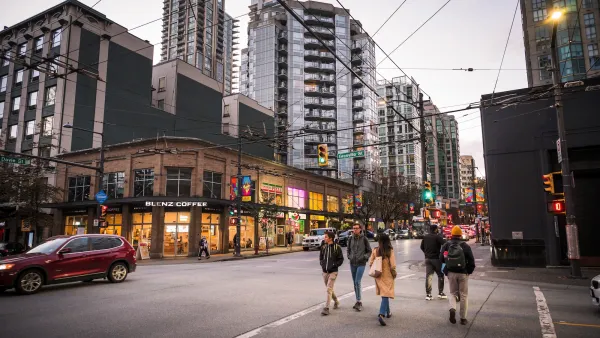
To upzone or not to upzone? Two views on the housing crisis
Allowing more density can increase the housing supply, but does the attendant rise in land prices cancel out the benefits?
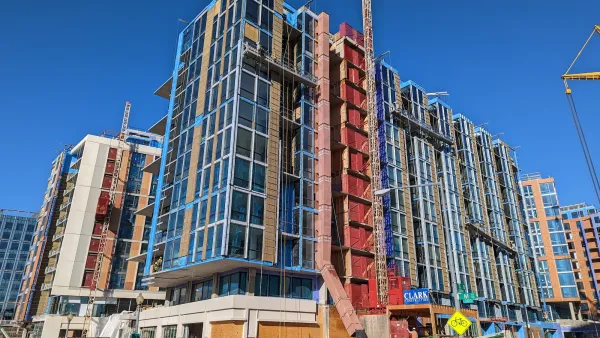
Analysis: DC needs tens of thousands of new homes — not just 'zoned capacity'
Estimates for Washington DC's housing needs range from 15,000 to 170,000.

Planetizen Federal Action Tracker
A weekly monitor of how Trump’s orders and actions are impacting planners and planning in America.

The state-sanctioned urbicide of Austin
People don’t kill cities. Freeways do.

US to reduce Colorado River water deliveries to Mexico
A new Colorado Treaty amendment reduces Mexico’s Colorado River water allocation by 250,000 acre feet.

5 New England states march closer to 800 megawatt wind energy project
Securing federal approval for the project may be complicated under the Trump administration, which has historically been hostile towards domestic wind power.

Baltimore to break ground on $50 million Transit Priority Project
The project will bring faster bus trips, safer streets and better bike connections to Baltimore.

Airbnb launches $250 million 'last-dollar financing' housing accelerator, makes first investment in Austin
The company will put $6.4 million towards affordable housing development in Texas’ capital.

FREE Course: Walkable City 1: Why Walkability?
After describing his path towards focusing on walkability as the essence of good planning, Jeff Speck marches through his five principal reasons for making more walkable places.
Reinventing Malls: Planning Alchemy—Turning Gray Fields Into Gold
The course focuses on the opportunities and imperatives that shape reinvention of mall sites.

Eagle County Government
Harvard University Graduate School of Design
Nashville Planning Department
The Architects Foundation
University of Cincinnati Online
The Pocatello Development Authority
The Urban Renewal Agency of the City of Pocatello
Journal of the American Planning Association