Restaurant owners say the new regulations proposed by the city for installing and maintaining outdoor dining areas would put them out of reach for many businesses.


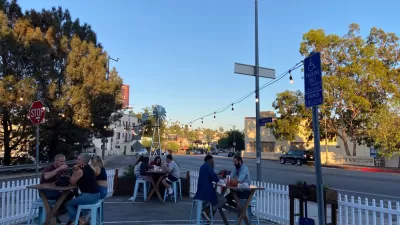
During the pandemic, the Al Fresco Dining program launched by Los Angeles that allowed restaurants to install outdoor dining patios in front of their businesses kept many of them afloat, with more than 2,500 businesses taking advantage of the program. As Jenn Harris explains in the Los Angeles Times, “The program bypassed the usual paperwork, bureaucracy, fees and months of approval that accompany the city permitting process, allowing restaurants to apply for free permits online in minutes and to set up dining areas on private property, on sidewalks, along curbsides and in the street.”
The program is now under threat as city officials outline regulations for the future. While city planners say the streamlined program was always intended to be temporary, restaurant owners say they are still barely beginning to work their way out from under the debt they accrued during the pandemic at a time when ingredient and labor costs are soaring.
“Now, the city’s proposed ordinance would revert to confusing red tape that could cost restaurants tens of thousands of dollars and put those who can’t afford the additional costs out of business for good.” The proposed ordinance would make the process cost tens of thousands and potentially require a zoning variance. “In addition to the new permits, the proposed ordinance includes restrictions such as the height of a barrier wall, the number of parking spaces that could be turned into outdoor dining areas and allowances for private events.”
Harris also points out that the ordinance only applies to zoning. Restaurants would likely have to apply for additional permits from the Department of Building and Safety and the Department of Transportation.
FULL STORY: ‘Sucker punch’ proposal could doom outdoor dining

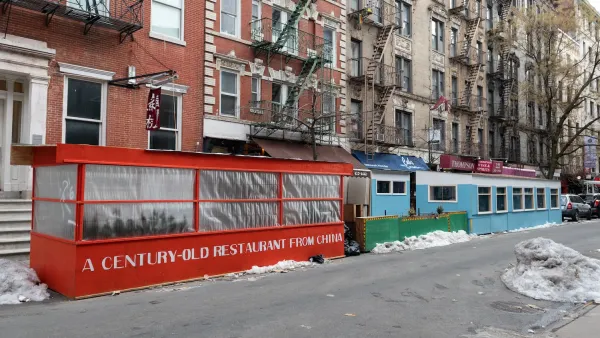
NYC Outdoor Dining Could Get a Re-Do
The city council is considering making the al fresco dining program year-round to address cost concerns from small businesses.
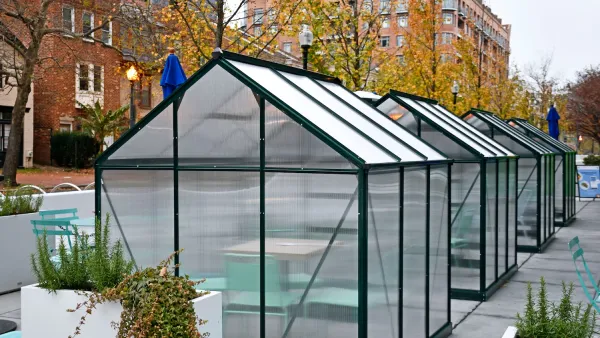
DC Extends Application Window for Outdoor Dining Permits
District restaurants will have until the end of November to apply, but businesses with permits in rush hour parking lanes must end operations on July 31.

NYC Losing Many Outdoor Dining Areas Due to Expensive New Regulations
Restaurant owners say the city’s new outdoor dining program makes it too difficult and expensive to operate al fresco setups.

Planetizen Federal Action Tracker
A weekly monitor of how Trump’s orders and actions are impacting planners and planning in America.

The state-sanctioned urbicide of Austin
People don’t kill cities. Freeways do.

US to reduce Colorado River water deliveries to Mexico
A new Colorado Treaty amendment reduces Mexico’s Colorado River water allocation by 250,000 acre feet.

5 New England states march closer to 800 megawatt wind energy project
Securing federal approval for the project may be complicated under the Trump administration, which has historically been hostile towards domestic wind power.

Baltimore to break ground on $50 million Transit Priority Project
The project will bring faster bus trips, safer streets and better bike connections to Baltimore.

Airbnb launches $250 million 'last-dollar financing' housing accelerator, makes first investment in Austin
The company will put $6.4 million towards affordable housing development in Texas’ capital.

FREE Course: Walkable City 1: Why Walkability?
After describing his path towards focusing on walkability as the essence of good planning, Jeff Speck marches through his five principal reasons for making more walkable places.
Reinventing Malls: Planning Alchemy—Turning Gray Fields Into Gold
The course focuses on the opportunities and imperatives that shape reinvention of mall sites.

Eagle County Government
Harvard University Graduate School of Design
Nashville Planning Department
The Architects Foundation
University of Cincinnati Online
The Pocatello Development Authority
The Urban Renewal Agency of the City of Pocatello
Journal of the American Planning Association