With the project still under federal investigation, local and state agencies say they are moving forward with the development of design details for the contentious freeway redesign.



The controversial plan to rebuild and widen parts of Interstate 45 in Houston is once again moving forward after the city and the Texas Department of Transportation (TxDOT) came to an agreement at the end of last year.
As reported by Dug Begley for the Houston Chronicle, details of the agreement, which will require plans for rebuilding Interstate 69 under a light rail line, flood control projects, sidewalks and bikeways, and details for how changes to I-45 will impact connecting roads, remain to be worked out.
Meanwhile, a Federal Highway Administration (FHWA) review of the project and potential civil rights violations is still in progress. As Begley explains, “Though minor changes have reduced some of the effects, TxDOT’s approved project impacts — the catchword for any structure or dwelling directly touched by the changing road boundary — include 158 houses, 433 apartments or condos, 486 public housing units, 340 businesses, five churches and two schools.”
The North Houston Highway Improvement Project has been at the heart of a fierce debate over the future of downtown Houston, with critics calling for a new approach to transportation and mobility that rejects the perpetuation of unsustainable, car-oriented planning. “In a statement, Air Alliance Houston said the agreements ‘will do very little to protect Houston communities from the harms posed by this project,’ specifically related to air pollution caused by the larger freeway in many neighborhoods around the central business district.”
FULL STORY: TxDOT has deal to rebuild I-45, but many details must be worked out before lifting a shovel

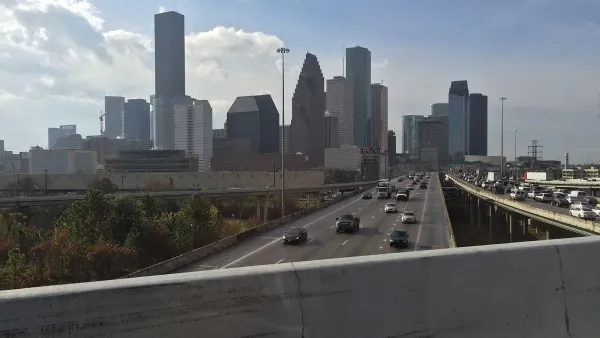
Contentious Houston Freeway Widening Project Inches Forward
Federal officials have given TxDOT the go-ahead to resume work on a small portion of a controversial interstate widening project in downtown Houston.
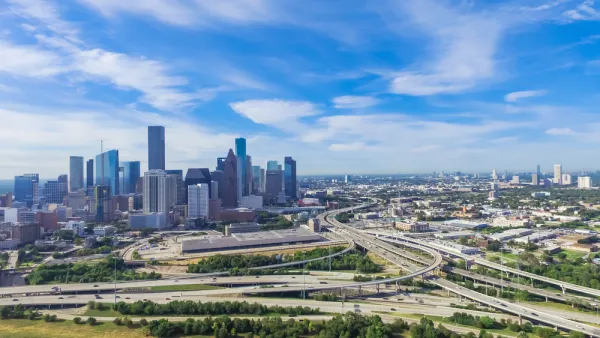
Interstate Expansion to Go Ahead in Houston
The North Houston Highway Improvement Project, stalled by a federal investigation, will now go ahead with only a few tweaks that opponents say don’t go far enough to mitigate the damage it will cause to Houston neighborhoods.
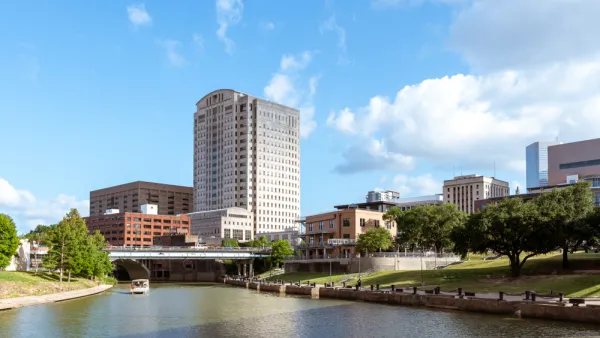
Proposed Park Yet Another Hurdle for Houston Interstate Expansion
The Interstate 45 widening project, halted by a federal order and opposed by many local officials and organizations, could hit a new snag if White Oak Bayou becomes a city park.

Planetizen Federal Action Tracker
A weekly monitor of how Trump’s orders and actions are impacting planners and planning in America.

The state-sanctioned urbicide of Austin
People don’t kill cities. Freeways do.

US to reduce Colorado River water deliveries to Mexico
A new Colorado Treaty amendment reduces Mexico’s Colorado River water allocation by 250,000 acre feet.

5 New England states march closer to 800 megawatt wind energy project
Securing federal approval for the project may be complicated under the Trump administration, which has historically been hostile towards domestic wind power.

Baltimore to break ground on $50 million Transit Priority Project
The project will bring faster bus trips, safer streets and better bike connections to Baltimore.

Airbnb launches $250 million 'last-dollar financing' housing accelerator, makes first investment in Austin
The company will put $6.4 million towards affordable housing development in Texas’ capital.

FREE Course: Walkable City 1: Why Walkability?
After describing his path towards focusing on walkability as the essence of good planning, Jeff Speck marches through his five principal reasons for making more walkable places.
Reinventing Malls: Planning Alchemy—Turning Gray Fields Into Gold
The course focuses on the opportunities and imperatives that shape reinvention of mall sites.

Eagle County Government
Harvard University Graduate School of Design
Nashville Planning Department
The Architects Foundation
University of Cincinnati Online
The Pocatello Development Authority
The Urban Renewal Agency of the City of Pocatello
Journal of the American Planning Association