A set of proposed updates to the city’s development code would expand TOD zones and encourage more backyard dwellings.



In an effort to boost housing production, San Diego officials have proposed an update to the city’s zoning rules that would expand transit-oriented development zones to a one-mile radius of a transit station and loosen regulations for accessory dwelling units (ADUs). David Garrick reports for the Del Mar Times.
Formally named the 2022 Land Development Code update, “The proposed rule changes would make an additional 5,224 acres close enough to transit to be eligible for developer density bonuses. The changes also would increase by 4,612 the acreage eligible for the accessory dwelling unit bonus program.”
As Garrick explains, “The piece of the proposal that encourages developers to build more lower-priced rental housing in prosperous neighborhoods would rely on the state’s definition of “high-opportunity” areas, which focuses primarily on the presence of educational institutions and high-paying jobs.”
The roughly 80 proposed changes also include “prohibiting new storage facilities on prime industrial land, loosening rules for pool demolitions at historic homes and specifying that converted parking lots must be used for outdoor dining, not retail.” After gaining unanimous approval from the city’s Planning Commission in December, the proposal must pass through the Land Use and Housing Committee and the full city council next month.
The city is relatively unique in that it updates its development code en masse once a year, in contrast with other municipalities that make zoning and development changes piecemeal.
See the source article for more details about proposed changes and the pushback from critics who want to preserve the current zoning code.
FULL STORY: San Diego could OK many more high-rise homes and backyard apartments under new city housing proposal

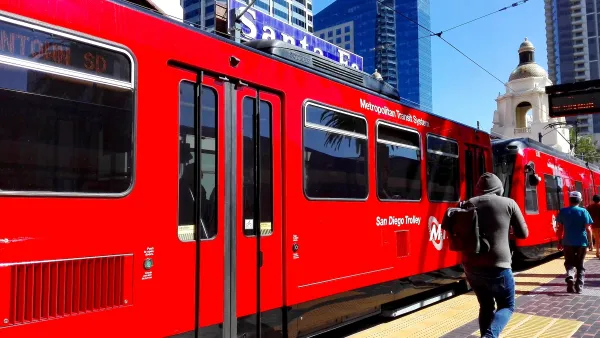
San Diego wants to limit upzoning law to just 16% of transit-adjacent parcels
The city's planning director says some areas are unfit for immediate upzoning due to a lack of resources or hazards such as wildfire risk.
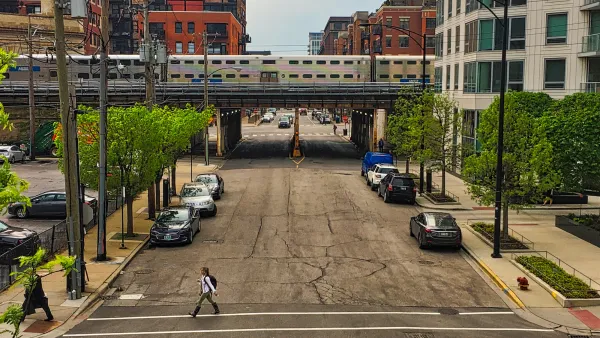
Chicago eliminates parking requirements near transit
In 2025, Illinois barred cities from mandating parking near train and bus stations.
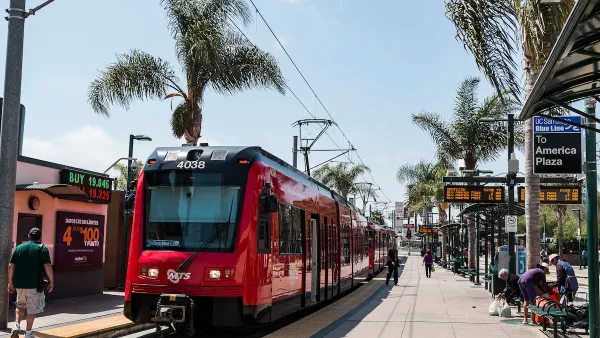
1,000 New Homes Sprouting Around San Diego Trolley Station
Multiple projects, helped along by city and state incentives, will densify the area around the Palm Avenue station.

Planetizen Federal Action Tracker
A weekly monitor of how Trump’s orders and actions are impacting planners and planning in America.

The state-sanctioned urbicide of Austin
People don’t kill cities. Freeways do.

US to reduce Colorado River water deliveries to Mexico
A new Colorado Treaty amendment reduces Mexico’s Colorado River water allocation by 250,000 acre feet.

Mamdani overhauls NYC's Vision Zero plan with 100 new policy goals
The overhaul aims to reduce traffic deaths and make streets safer for pedestrians, cyclists and drivers through lower speed limits, new safety infrastructure and more.

Amtrak not solely to blame for New Jersey commuter rail's unreliability, report finds
A new study from the Garden State Initiative found that NJ Transit’s budget grew 20% across a 4 year period, but reliability declined significantly over the same period.

EPA erases limits on planet-warming pollution from power plants
Under Monday’s plan, power plants would still have some limits on how much mercury, arsenic and other contaminants they can emit.

FREE Course: Walkable City 1: Why Walkability?
After describing his path towards focusing on walkability as the essence of good planning, Jeff Speck marches through his five principal reasons for making more walkable places.
Reinventing Malls: Planning Alchemy—Turning Gray Fields Into Gold
The course focuses on the opportunities and imperatives that shape reinvention of mall sites.

Eagle County Government
Harvard University Graduate School of Design
Nashville Planning Department
The Architects Foundation
University of Cincinnati Online
The Pocatello Development Authority
The Urban Renewal Agency of the City of Pocatello
Journal of the American Planning Association