The New York Times compared images from readers portraying similar scenes in 2020 and 2022.


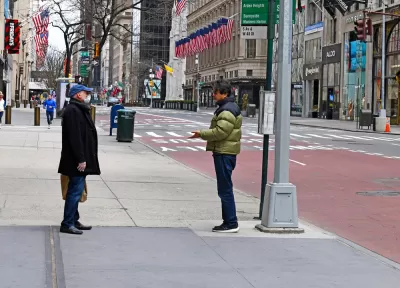
An article by Alicia Parlapiano, Emily Badger, Claire Cain Miller, and Margot Sanger-Katz for the New York Times collects reader-submitted photos that compare the experience of 2020 with photos updated for 2022. All of the new photos reference earlier photos published by the Times in 2020.
While the article is an effective way to ring in the new year by celebrating how far we’ve come since the darkest days to the pandemic, it also acknowledges the deep scars left by the pandemic and the many ways many people are still living with the burdens of the pandemic—from health risk to economic shock to personal loss and much more.
“It will be years before we know how deeply this experience has transformed us,” according to the article. “But the responses give an idea.”
FULL STORY: Readers Sent Us Pandemic Photos in 2020. Here’s How Their Lives Look Now.

'Never Let a Good Crisis Go to Waste' and Planning in the Pandemic
The latest in a series of compendia collecting news and commentary focusing on the complexities of the COVID-19 pandemic's effect on communities.

D.C., San Francisco Lead Pandemic Work From Home Trend
Remote work increased threefold during the pandemic, but the numbers vary significantly from city to city and region to region. Almost half of D.C.-area employees, for example, worked from home in 2021, according to American Community Survey data.

What Can Lessons From Traffic Safety Teach About the Covid Response?
Finger waggings aren't effective for pedestrian safety—so why should they work for public health? A "safe system" approach, created for traffic safety in Sweden, offers a model for improved pandemic public health outcomes, according to this opinion.

The state-sanctioned urbicide of Austin
People don’t kill cities. Freeways do.

US to reduce Colorado River water deliveries to Mexico
A new Colorado Treaty amendment reduces Mexico’s Colorado River water allocation by 250,000 acre feet.

New Jersey’s second-largest city bans standalone data centers
Jersey City will continue to allow co-location facilities, such as those meant for research institutions that store their own data.

Amtrak not solely to blame for New Jersey commuter rail's unreliability, report finds
A new study from the Garden State Initiative found that NJ Transit’s budget grew 20% across a 4 year period, but reliability declined significantly over the same period.

EPA erases limits on planet-warming pollution from power plants
Under Monday’s plan, power plants would still have some limits on how much mercury, arsenic and other contaminants they can emit.

Phoenix announces new on-demand transit service, more frequent RAPID buses
Both new services will launch in October, and are part of Phoenix's Project Effective Access Solutions for Easing Congestion.

FREE Course: Walkable City 1: Why Walkability?
After describing his path towards focusing on walkability as the essence of good planning, Jeff Speck marches through his five principal reasons for making more walkable places.
Reinventing Malls: Planning Alchemy—Turning Gray Fields Into Gold
The course focuses on the opportunities and imperatives that shape reinvention of mall sites.

Eagle County Government
Harvard University Graduate School of Design
Nashville Planning Department
The Architects Foundation
University of Cincinnati Online
The Pocatello Development Authority
The Urban Renewal Agency of the City of Pocatello
Journal of the American Planning Association