As carmakers improve the fuel efficiency of some models, many American car buyers are purchasing big trucks and SUVs that still offer low MPGs.



Despite improvements in the fuel efficiency of some vehicles, the average car in the United States did not get more efficient in 2021, reports Sean Tucker for MarketWatch. “The average new vehicle purchased in 2021 managed 25.4 mpg—the same figure as 2020.”
As Tucker explains, this is because the car buying choices made by many Americans are canceling out any gains made by cleaner, more efficient engines. “Truck-based SUVs made up 45% of the market in 2021, the EPA says. More efficient sedans and wagons — 50% of the market as recently as 2013 — fell to just 26%.”
The EPA expressed optimism that gains in efficiency will pick up next year. “Though 2021 saw flat lines or modest improvements, the EPA estimates that 2022’s numbers will be better” as electric, hybrid, and fuel cell vehicles, which are expected to rise from 4 percent of production to 8 percent in 2022, become more popular.
FULL STORY: Americans’ car choices are canceling out fuel efficiency gains

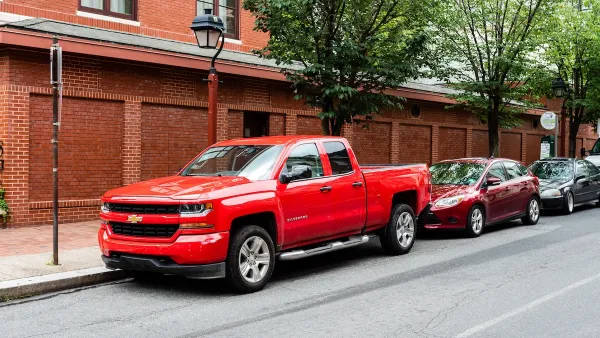
Heavier Vehicles Don’t Keep Passengers Safer
A new study shows that modern safety features are more important than size and weight once vehicles weigh over 4,000 pounds.
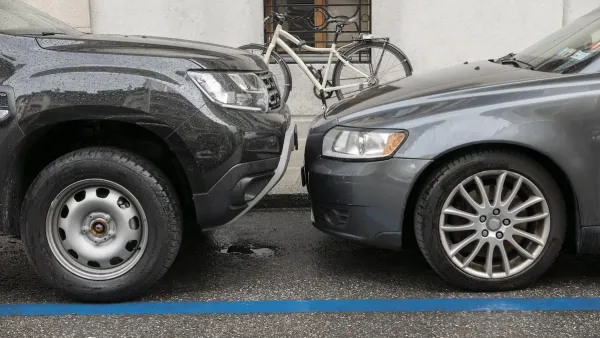
Tall Vehicles: Unsafe at Any Speed
Vehicles with taller front-end designs are more likely to injure pedestrians even when traveling at lower speeds.

Congress Introduces Bill to Limit Size of SUVs and Trucks
Lawmakers want the federal government to set standards for vehicle height and visibility to combat the sharp rise in pedestrian deaths over the past decade.

Planetizen Federal Action Tracker
A weekly monitor of how Trump’s orders and actions are impacting planners and planning in America.

The state-sanctioned urbicide of Austin
People don’t kill cities. Freeways do.

US to reduce Colorado River water deliveries to Mexico
A new Colorado Treaty amendment reduces Mexico’s Colorado River water allocation by 250,000 acre feet.

Colorado’s Largest Data Center Could Rise Next to Homes — Without a Public Hearing
The proposed campus would consume 11 times the power of Denver International Airport; as it has across the country, opposition mounts.

5 New England states march closer to 800 megawatt wind energy project
Securing federal approval for the project may be complicated under the Trump administration, which has historically been hostile towards domestic wind power.

Baltimore to break ground on $50 million Transit Priority Project
The project will bring faster bus trips, safer streets and better bike connections to Baltimore.

FREE Course: Walkable City 1: Why Walkability?
After describing his path towards focusing on walkability as the essence of good planning, Jeff Speck marches through his five principal reasons for making more walkable places.
Reinventing Malls: Planning Alchemy—Turning Gray Fields Into Gold
The course focuses on the opportunities and imperatives that shape reinvention of mall sites.

Eagle County Government
Harvard University Graduate School of Design
Nashville Planning Department
The Architects Foundation
University of Cincinnati Online
The Pocatello Development Authority
The Urban Renewal Agency of the City of Pocatello
Journal of the American Planning Association