Unsurprisingly, cities in Asia and Europe top the list.


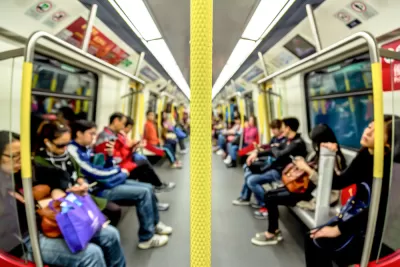
A newly released list from the Oliver Wyman Forum and the University of California Berkeley’s Institute of Transportation Studies ranks transit systems in cities around the world, with Hong Kong coming in first thanks to its “low fares, limited delays or service disruptions, and for supporting itself financially.” Amelia Pollard details the list for Bloomberg CityLab.
One of the keys to Hong Kong’s success, says Andreas Nienhaus of Oliver Wyman, is the city’s willingness to make “individual mobility” less attractive to residents. “They have either large green zones or large car-free zones, or just make it very expensive to drive personal vehicles in the city. And this helps.” Other cities in the top of the list included Zurich, Stockholm, Singapore, and Helsinki. “The report also gives credit to Oslo’s multimodal network that includes park and ride stations, as well as allowing bikes on public transit.”
U.S. cities ranked low “because of their over dependence on cars,” according to Pollard. “Additionally, the report ranks cities on “mobility readiness,” with San Francisco topping the list in part for its EV-charging network. That said, Oliver Wyman points out concerns that San Francisco’s aging infrastructure puts it at risk in a region prone to natural disasters like earthquakes and wildfires.”
Read the full story: These Cities Have the Best Public Transit Systems

For Better Public Transit, We Need Better Stories
Public transportation provides many often-overlooked benefits. We can do better at communicating the value of transit investments. We have good stories to tell.
Why Saving Transit Matters
Jarrett Walker argues that letting transit systems die has impacts that go far beyond transit riders.

‘It’s Been 50 years’: Public Transit Law Passes in Montana
Legislation would fix transportation district issue, allow for greater reach on city bus routes.

Planetizen Federal Action Tracker
A weekly monitor of how Trump’s orders and actions are impacting planners and planning in America.

The state-sanctioned urbicide of Austin
People don’t kill cities. Freeways do.

Colorado’s Largest Data Center Could Rise Next to Homes — Without a Public Hearing
The proposed campus would consume 11 times the power of Denver International Airport; as it has across the country, opposition mounts.

Judges permit Denver to divert 77,000 acre feet from the Colorado River for reservoir expansion
Overuse and climate change have caused the Colorado River’s water levels to plummet.

Amtrak, CN end decades-long dispute with eight-year agreement
The new operating agreement establishes an updated framework for the companies to work together, including processes to resolve disputes.

Raised interest rates may kill financially vulnerable construction projects
The chief economist at ConstructConnect warns that if construction project owners are negatively impacted by the raised rates, it could result in delayed payments to contractors.

FREE Course: Walkable City 1: Why Walkability?
After describing his path towards focusing on walkability as the essence of good planning, Jeff Speck marches through his five principal reasons for making more walkable places.
Reinventing Malls: Planning Alchemy—Turning Gray Fields Into Gold
The course focuses on the opportunities and imperatives that shape reinvention of mall sites.

KFH Group Inc.
Greater Baltimore Committee
Eagle County Government
The Architects Foundation
University of Cincinnati Online
The Pocatello Development Authority
The Urban Renewal Agency of the City of Pocatello