The Climate and Economic Justice Screening Tool, version 1.0, is now available on the internet.


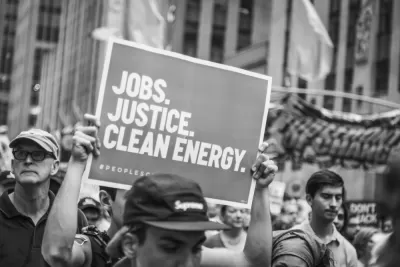
The Council on Environmental Quality (CEQ) published a new Climate and Economic Justice Screening Tool on November 22—providing an interactive map identifying disadvantaged Census tracts.
A press release on WHiteHouse.gov announced the new tool as a key tool for the Biden Administration’s Justice40 initiative, which requires spending 40 percent of federal funds in underserved areas.
The new Climate and Economic Justice Screening Tool defines disadvantaged communities as having one “burden” related to climate change, transportation barriers, lack of green space, lack of indoor plumbing, redlining, legacy pollution, or water pollution. Disadvantaged Census tracts also are above the 65th percentile people in households where income is less than or equal to twice the federal poverty level.
“The Climate and Economic Justice Screening Tool identifies communities that have faced historic injustices and have borne the brunt of pollution so we can ensure they’re some of the first to see the benefits of climate action. This is a major step toward meeting President Biden’s environmental justice goals and forging a better, cleaner future for all,” says CEQ Chair Brenda Mallory in the press release.
FULL STORY: Climate and Economic Justice Screening Tool

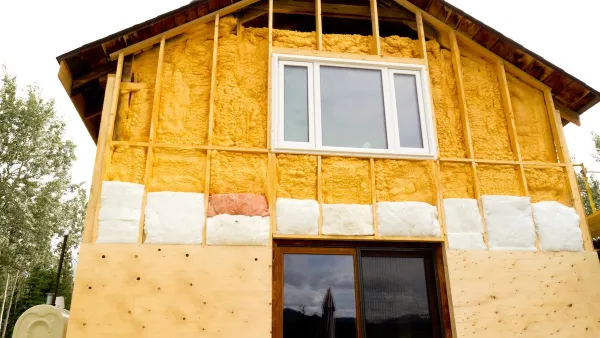
Future of Justice40 Initiative Hinges on Election
The program requires that 40 percent of some federal funds be used to benefit historically disadvantaged communities.
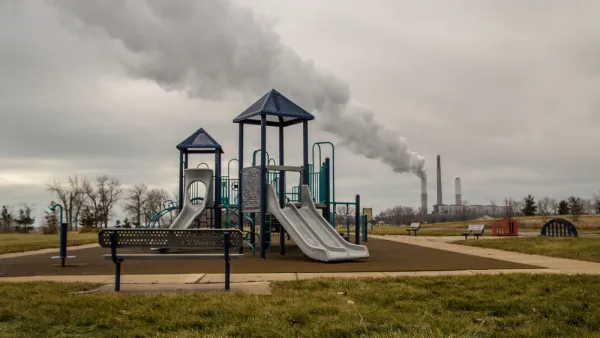
Democrats Call for Stronger Action on Environmental Justice
The Justice40 initiative could make a major difference for communities burdened by pollution, but only if funds are spent on projects that maintain a focus on equity.

Building a Just Energy Transition
A new book outlines a “four-plus pillars” framework for phasing out fossil fuels while addressing systemic inequities, emphasizing public support, dedicated funding, economic diversification, coalitions, and reforms that dismantle extractive systems.

Planetizen Federal Action Tracker
A weekly monitor of how Trump’s orders and actions are impacting planners and planning in America.

The state-sanctioned urbicide of Austin
People don’t kill cities. Freeways do.

US to reduce Colorado River water deliveries to Mexico
A new Colorado Treaty amendment reduces Mexico’s Colorado River water allocation by 250,000 acre feet.

5 New England states march closer to 800 megawatt wind energy project
Securing federal approval for the project may be complicated under the Trump administration, which has historically been hostile towards domestic wind power.

Baltimore to break ground on $50 million Transit Priority Project
The project will bring faster bus trips, safer streets and better bike connections to Baltimore.

Airbnb launches $250 million 'last-dollar financing' housing accelerator, makes first investment in Austin
The company will put $6.4 million towards affordable housing development in Texas’ capital.

FREE Course: Walkable City 1: Why Walkability?
After describing his path towards focusing on walkability as the essence of good planning, Jeff Speck marches through his five principal reasons for making more walkable places.
Reinventing Malls: Planning Alchemy—Turning Gray Fields Into Gold
The course focuses on the opportunities and imperatives that shape reinvention of mall sites.

Eagle County Government
Harvard University Graduate School of Design
Nashville Planning Department
The Architects Foundation
University of Cincinnati Online
The Pocatello Development Authority
The Urban Renewal Agency of the City of Pocatello
Journal of the American Planning Association