“We are on a highway to climate hell with our foot on the accelerator.”


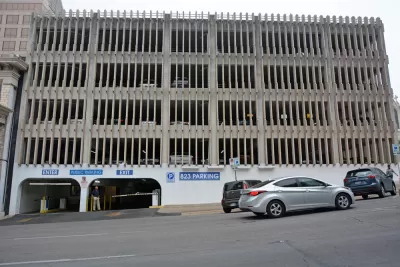
The United Nations published the “Emissions Gap Report 2022” at the end of October, once again calling attention to the vast differences between the changes necessary to prevent the worst effects of climate change. In the United States—much of the remaining gap between where we are with emissions and where we need to be is a direct consequence of planning decisions. It’s the car-centric planning—and United Nations Secretary General António Guterres even went so far as to deploy a tongue-in-cheek metaphor to make a point while announcing the report, saying “We are on a highway to climate hell with our foot on the accelerator.”
Bill Pugh provides an in-depth description of the new report in a guest contribution for Greater Greater Washington, focusing first on the prioritization list for greenhouse gas emission reductions included in the list. Issues of transportation and land use appear early and often. The most important actions for the transportation sector to take, according to the report are to 1) integrate land use and transportation planning to prioritize public transit over private automobiles, 2) investment in projects and programs to make high capacity, low-carbon transportation cheaper and easier, and 3) complete the transmission to zero-emission power for vehicles of all kinds.
According to Pugh, the nation is poised to make a real choice about whether it gets to work immediately on these needed shifts given the huge influx of funding from the Infrastructure Investment and Jobs Act and the Inflation Reduction Act. The Greater Washington, D.C. area has two opportunities to make contributions to the effort, according to Pugh: the Visualize 2045 long-range transportation plan for the region and the TransAction long-range plan for the Northern Virginia Transportation Authority. Both plans include billions for road funding and would double down on the GHG emitting status quo, according to Pugh.
“This is an opportunity for residents of suburban MD, DC, and Northern VA to demand that their local officials prioritize climate and make necessary changes,” writes Pugh.
FULL STORY: New UN climate report points to compact cities, moving people not just electric cars, to cut emissions

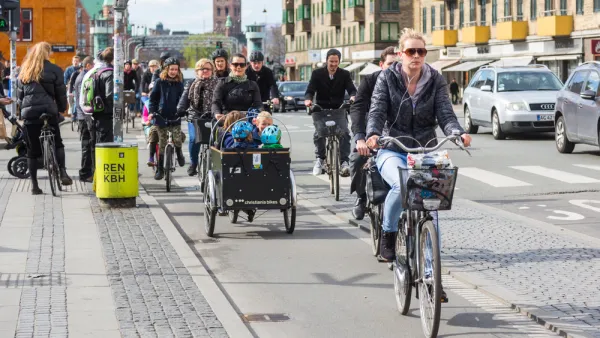
The Inflation Reduction Act's 'Inadequate' Reliance on Electric Vehicles
Electric vehicles can help reduce greenhouse gas emissions, but not enough to prevent the worst of climate change and not as much as walkable cities with far fewer cars on the road.

L.A. Times: California Must Shift Transportation Spending Priorities
Despite its ambitious emissions reduction goals, California continues to spend a majority of transportation funds on car-centric infrastructure.
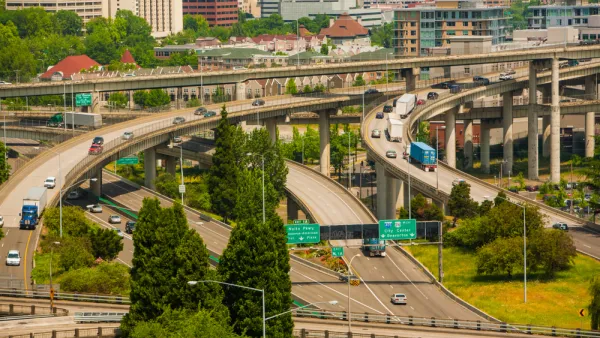
Can Portland Have its Climate Goals and Expand its Highways Too?
Portland wants it both ways, but so do most places. But if Portland can't quit the car habit, which cities can?

Planetizen Federal Action Tracker
A weekly monitor of how Trump’s orders and actions are impacting planners and planning in America.

The state-sanctioned urbicide of Austin
People don’t kill cities. Freeways do.

US to reduce Colorado River water deliveries to Mexico
A new Colorado Treaty amendment reduces Mexico’s Colorado River water allocation by 250,000 acre feet.

5 New England states march closer to 800 megawatt wind energy project
Securing federal approval for the project may be complicated under the Trump administration, which has historically been hostile towards domestic wind power.

Baltimore to break ground on $50 million Transit Priority Project
The project will bring faster bus trips, safer streets and better bike connections to Baltimore.

Airbnb launches $250 million 'last-dollar financing' housing accelerator, makes first investment in Austin
The company will put $6.4 million towards affordable housing development in Texas’ capital.

FREE Course: Walkable City 1: Why Walkability?
After describing his path towards focusing on walkability as the essence of good planning, Jeff Speck marches through his five principal reasons for making more walkable places.
Reinventing Malls: Planning Alchemy—Turning Gray Fields Into Gold
The course focuses on the opportunities and imperatives that shape reinvention of mall sites.

Eagle County Government
Harvard University Graduate School of Design
Nashville Planning Department
The Architects Foundation
University of Cincinnati Online
The Pocatello Development Authority
The Urban Renewal Agency of the City of Pocatello
Journal of the American Planning Association