A coalition of community groups claims that current plans are designed to benefit developers and don’t guarantee improvements for transit riders.


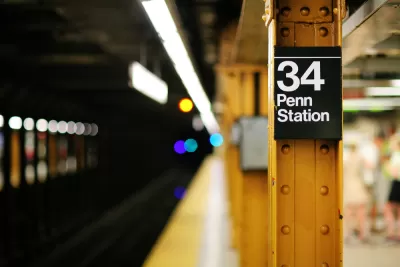
Penn Station’s long-awaited redevelopment hit another snag as several citizen groups filed a lawsuit against Empire State Development and the New York State Public Authorities Control Board, claiming that the agencies did not conduct a proper environmental review and “improperly” entered a revenue-sharing agreement with the city. Colleen Wilson reports on the case for NorthJersey.com.
“At issue is the more than 18 million square feet of commercial, residential and hotel space proposed on properties in the immediate vicinity of Penn Station.” Revenue from these projects is meant to fund other improvements to the station area, such as additional tracks, new entrances and elevators, and a new pedestrian corridor, but the plaintiffs in the suit say “there's "no basis" for ESD's claim that it would generate the revenue needed to fund New York's share of station projects.”
As Wilson explains, the historic station has become a notorious choke point in New York’s public transportation system. “The now-54-year-old structure was designed to handle 200,000 people a day, but for at least two decades it has operated over capacity, with as many as 650,000 people using the station daily in 2019.”
See the source article for more details on the lawsuit and how it could affect the redevelopment plans.
Read the full story: Giving us mediocrity:' Penn Station remodel controversy lands in court

New Penn Station design calls for ample public seating — a rare commodity in US public spaces
Amtrak's renderings show benches throughout the station.
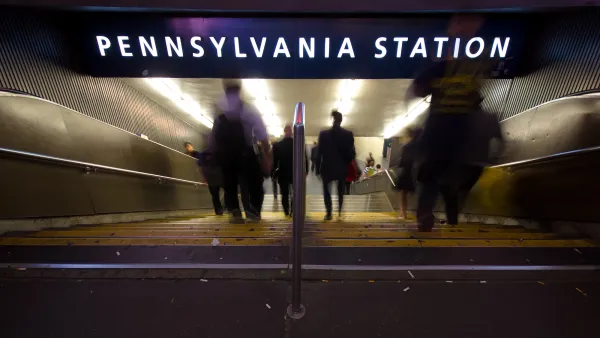
New Penn Station design won't move Madison Square Garden
Amtrak and federal officials agreed on a new plan for the station's redesign that may be largely funded by the federal government.

Listen to Tom Hanks’ Song That's an Ode to the New York Subway
The actor penned a song praising the 7 train.

Planetizen Federal Action Tracker
A weekly monitor of how Trump’s orders and actions are impacting planners and planning in America.

California plans to bury El Niño’s downpour
If the state plays its cards right, it may be able to store a billion acre-feet of El Niño’s water in aquifers.

Desperate measures: Advocates weigh draining Lake Powell to fill Colorado River
Draining the reservoir could reduce evaporation losses by a couple hundred thousand acre-feet.

Chicago voters approve permanent festival grounds, penalty for vacant property owners
Currently, major summer and fall festivals take over public parks for weeks at a time, drawing criticism from nearby residents

NYC votes to cut outdoor dining red tape, speed up permitting
New York City also voted to allow the Department of Transportation to begin work on urgent projects before notifying elected officials.

California appears to reject Prop. 45
The proposition would have expanded the projects that qualify for a streamlined environmental review, effectively paring down the California Environmental Quality Act.

FREE Course: Walkable City 1: Why Walkability?
After describing his path towards focusing on walkability as the essence of good planning, Jeff Speck marches through his five principal reasons for making more walkable places.
Reinventing Malls: Planning Alchemy—Turning Gray Fields Into Gold
The course focuses on the opportunities and imperatives that shape reinvention of mall sites.

City of Rosemead
Rutgers University, Edward J. Bloustein School of Planning and Public Policy
One Hundred Miles
Hunter College, City University of New York (CUNY)
The Architects Foundation
University of Cincinnati Online
City of Cambridge
Montrose County
The Pocatello Development Authority