New research quantifies the impact of wildfires on California’s air quality, indicating that bigger and more frequent fires contribute significantly to greenhouse gas emissions.


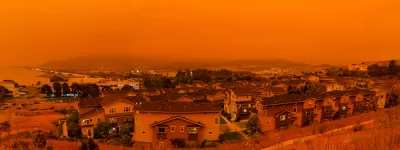
While climate change is driving more destructive wildfires in the American West, those same fires are also emitting greenhouse gases that themselves exacerbate climate change and create pollutants harmful to people’s health, reports Ben Adler for Yahoo News.
“In total, more than 9,000 wildfires devastated the Golden State in 2020, sending smoke all the way to the East Coast. More than 4.3 million acres burned, 30 people died and economic losses topped $19 billion,” Adler explains. According to a research paper published in Environmental Pollution, emissions from wood burned in wildfires accounted for 30 percent of California’s total emissions in 2020. “In other words, 2020’s wildfire season, which set a record for the number of acres burned in the state, essentially wiped out 16 years of progress California had made on climate change through efforts such as replacing fossil fuels with clean energy.”
Wildfires also worsen air quality and aggravate respiratory illnesses. “In June, an analysis in the annual Air Quality Life Index found wildfire smoke was so bad in 2020 that it temporarily reversed the gains in air quality from decades of federal and state regulation in California.” Half of the state’s counties experienced the worst air pollution since measurements began in 1998.
FULL STORY: 2020 wildfire season in California wiped away 16 years of climate gains

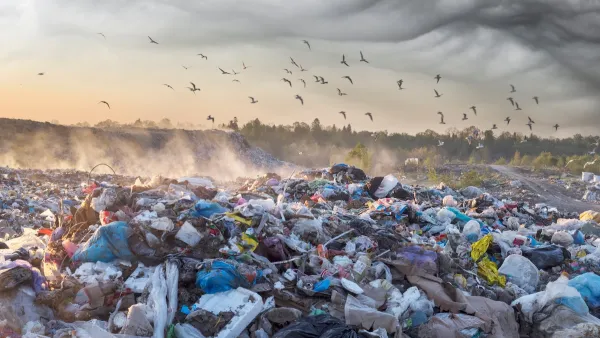
Colorado Landfills Emit as Much Pollution as 1M Cars
Landfills are the third-largest source of methane pollution in Colorado, after agriculture and fossil fuel extraction.

Driving Equity and Clean Air: California Invests in Greener School Transportation
California has awarded $500 million to fund 1,000 zero-emission school buses and chargers for educational agencies as part of its effort to reduce pollution, improve student health, and accelerate the transition to clean transportation.
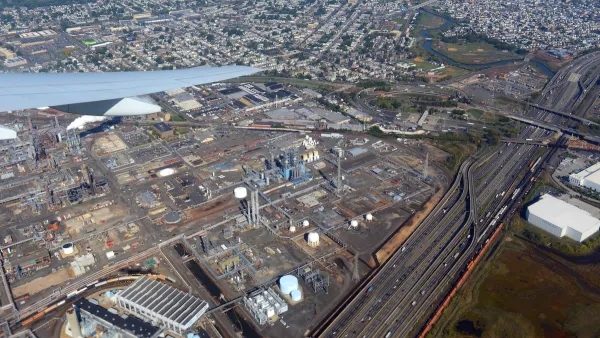
New Jersey to Consider Charging Fossil Fuel Companies for Pollution
A proposed law would make companies liable for damages caused by burning fossil fuels.

Planetizen Federal Action Tracker
A weekly monitor of how Trump’s orders and actions are impacting planners and planning in America.

The state-sanctioned urbicide of Austin
People don’t kill cities. Freeways do.

US to reduce Colorado River water deliveries to Mexico
A new Colorado Treaty amendment reduces Mexico’s Colorado River water allocation by 250,000 acre feet.

Colorado’s Largest Data Center Could Rise Next to Homes — Without a Public Hearing
The proposed campus would consume 11 times the power of Denver International Airport; as it has across the country, opposition mounts.

5 New England states march closer to 800 megawatt wind energy project
Securing federal approval for the project may be complicated under the Trump administration, which has historically been hostile towards domestic wind power.

Baltimore to break ground on $50 million Transit Priority Project
The project will bring faster bus trips, safer streets and better bike connections to Baltimore.

FREE Course: Walkable City 1: Why Walkability?
After describing his path towards focusing on walkability as the essence of good planning, Jeff Speck marches through his five principal reasons for making more walkable places.
Reinventing Malls: Planning Alchemy—Turning Gray Fields Into Gold
The course focuses on the opportunities and imperatives that shape reinvention of mall sites.

Eagle County Government
Harvard University Graduate School of Design
Nashville Planning Department
The Architects Foundation
University of Cincinnati Online
The Pocatello Development Authority
The Urban Renewal Agency of the City of Pocatello
Journal of the American Planning Association