It no longer takes a storm to cause flooding in many coastal areas of the United States. Galveston, Texas could eventually face floods more than half the days of the year.


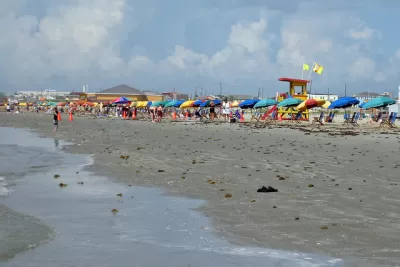
The National Oceanic and Atmospheric Administration (NOAA) recently released updated predictions that show rising flood risks in Galveston, reports Emily Foxhall in a paywalled article for the Houston Chronicle.
According to the new projections, “High tides could flood Galveston streets as many as 210 days a year by 2050, compared with as many as 17 days in 2022,” reports Foxhall.
“The expected number of high-tide flood days in Galveston’s is nearly the worst of any coastal spot in the country because this region suffers from land that’s sinking in addition to sea levels that are rising,” adds Foxhall.
William Sweet, a NOAA oceanographer, is quoted in the article saying the need to build sea-level-rise-resilient infrastructure is already present in Galveston. “The city of Galveston is spending millions to build pump stations to push water back out to the bay when the tide is up. But projects of this nature take time,” writes Foxhall.
Read the full story: Galveston could flood 210 days of the year by 2050, a new NOAA prediction shows

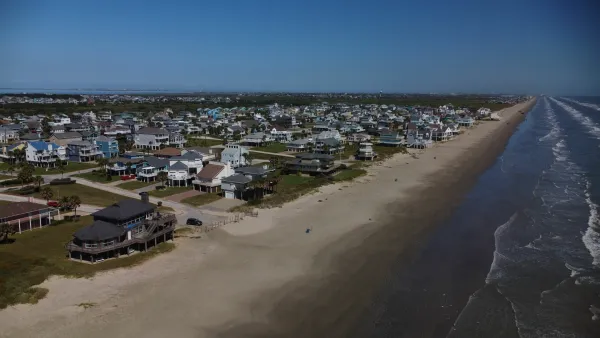
Looking for a Beach House? Check Your Risk First.
A new report from the insurance industry names the historic town of Galveston, Texas as the riskiest place to buy a beach house in the United States.
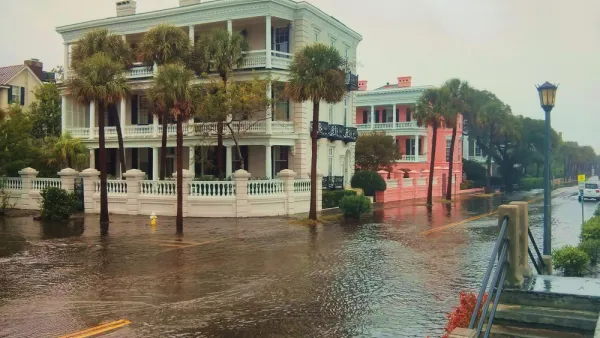
As Development in Flood-Prone Areas Continues, Cities Are Slow to Respond
Drawn by affordable property, low taxes, and job opportunities, high numbers of Americans continue to move to flood-prone areas even as the threat of catastrophic flooding grows.
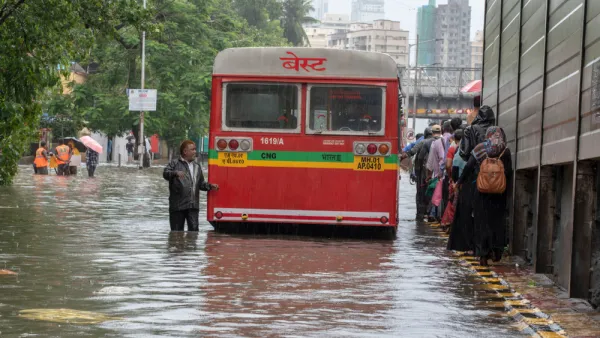
Over 80 Million People Live in Flood Zones
New research shows a 24% increase in people living in flood-prone areas since 2000, prompting calls for increased adaptation measures.

Planetizen Federal Action Tracker
A weekly monitor of how Trump’s orders and actions are impacting planners and planning in America.

The state-sanctioned urbicide of Austin
People don’t kill cities. Freeways do.

Colorado’s Largest Data Center Could Rise Next to Homes — Without a Public Hearing
The proposed campus would consume 11 times the power of Denver International Airport; as it has across the country, opposition mounts.

Nation's most wind-powered state turns to coal as data centers increase energy demand
For the first time in decades, Iowa has increased its generation of coal power.

NYC cools commuters with city's first rain garden above a bus stop
New York City officials say the plants in the rain garden can absorb 16 gallons of rainwater during heavy storms.

Brightline West’s future may rely on $6 billion federal loan
The company has until Nov. 2 to make a $400 million equity investment into its proposed high-speed rail line.

FREE Course: Walkable City 1: Why Walkability?
After describing his path towards focusing on walkability as the essence of good planning, Jeff Speck marches through his five principal reasons for making more walkable places.
Reinventing Malls: Planning Alchemy—Turning Gray Fields Into Gold
The course focuses on the opportunities and imperatives that shape reinvention of mall sites.

Greater Baltimore Committee
Eagle County Government
Harvard University Graduate School of Design
The Architects Foundation
University of Cincinnati Online
The Pocatello Development Authority
The Urban Renewal Agency of the City of Pocatello
Journal of the American Planning Association