A “vehicle to grid” pilot program in a Southern California school district has school buses doing double-duty as electricity storage.


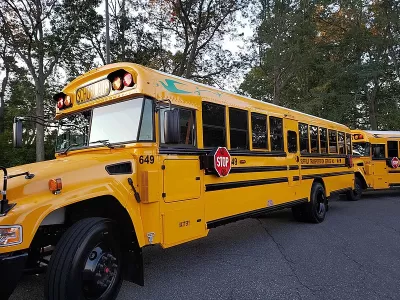
“A fleet of electric-powered school buses in El Cajon can send electricity back to California's grid, thanks to first-of-its kind technology developed by a local company and a partnership with San Diego Gas & Electric,” reports Rob Nikolewski for The San Diego Union-Tribune and republished in Governing. The concept is called “vehicle to grid,” making the buses multi-task as energy storage.
Nicknamed V2G for short, the bi-directional technology allows electric vehicle batteries that charge during the day when solar energy is abundant on California's power system to then discharge emissions-free energy back to the electric grid when it is needed the most.
The El Cajon project, deployed earlier this month, is the first of its kind in the United States. “Scott Buxbaum, the school district's assistant superintendent of business services, said the buses typically charge overnight when electricity prices are low. After the buses pick up and drop off students and drivers complete other chores, the batteries quickly get recharged and can then send electricity back to the grid.” The buses charge fully in two to three hours.
The school district could even create revenue by participating in San Diego Gas & Electric’s Emergency Load Reduction Program, which “pays business customers $2 per kilowatt-hour if they are able to export power to the grid or reduce their usage during energy emergencies.”
Read the full story: California Town’s EV School Buses Return Electricity to the Grid


Driving Equity and Clean Air: California Invests in Greener School Transportation
California has awarded $500 million to fund 1,000 zero-emission school buses and chargers for educational agencies as part of its effort to reduce pollution, improve student health, and accelerate the transition to clean transportation.
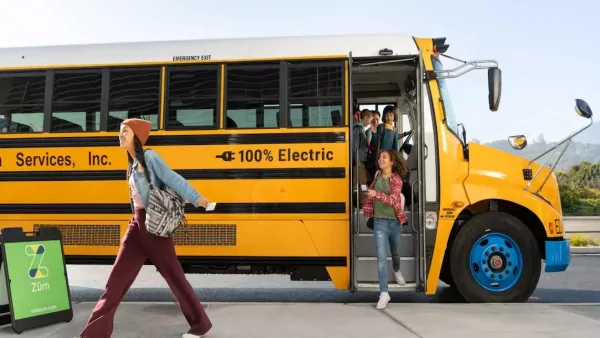
California Invests Additional $5M in Electric School Buses
The state wants to electrify all of its school bus fleets by 2035.
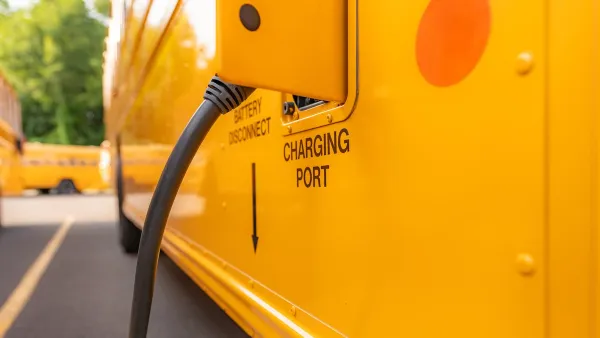
Pittsburgh Rolls Out Electric School Buses
Pittsburgh Public Schools has launched its first electric school buses, with plans to fully electrify its fleet over the next 14 months, aiming to create a cleaner, more sustainable transportation system supported by new charging infrastructure.

Planetizen Federal Action Tracker
A weekly monitor of how Trump’s orders and actions are impacting planners and planning in America.

Colorado’s Largest Data Center Could Rise Next to Homes — Without a Public Hearing
The proposed campus would consume 11 times the power of Denver International Airport; as it has across the country, opposition mounts.

US to reduce Colorado River water deliveries to Mexico
A new Colorado Treaty amendment reduces Mexico’s Colorado River water allocation by 250,000 acre feet.

'This is going to be painful:’ Virginia stares down $1.7 billion funding gap for highway maintenance
The state may address the deficit by shifting $290 million from its construction budget to maintenance projects.

Judges permit Denver to divert 77,000 acre feet from the Colorado River for reservoir expansion
Overuse and climate change have caused the Colorado River’s water levels to plummet.
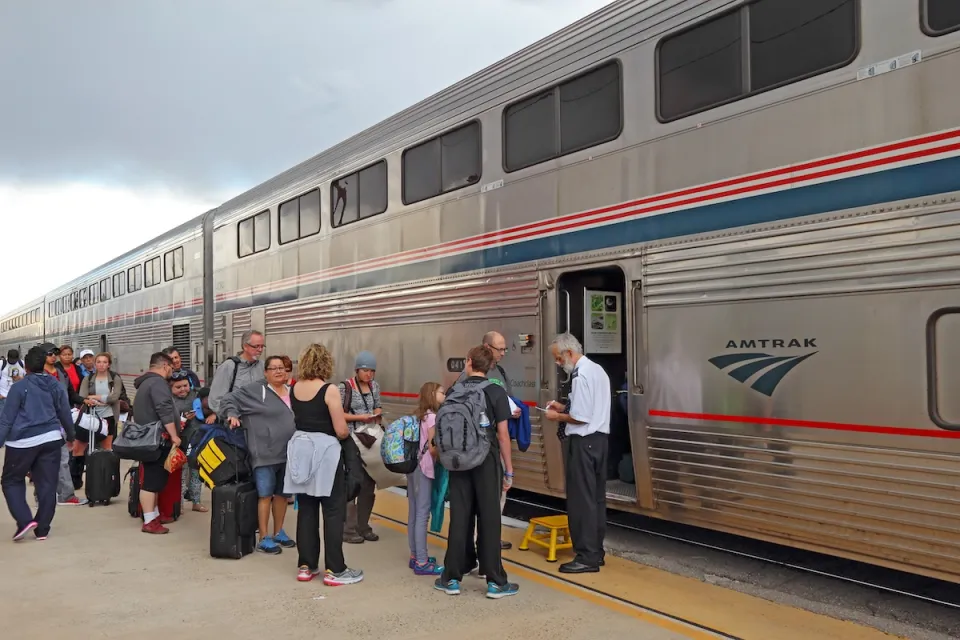
Amtrak, CN end decades-long dispute with eight-year agreement
The new operating agreement establishes an updated framework for the companies to work together, including processes to resolve disputes.

FREE Course: Walkable City 1: Why Walkability?
After describing his path towards focusing on walkability as the essence of good planning, Jeff Speck marches through his five principal reasons for making more walkable places.
Reinventing Malls: Planning Alchemy—Turning Gray Fields Into Gold
The course focuses on the opportunities and imperatives that shape reinvention of mall sites.


KFH Group Inc.
Greater Baltimore Committee
Eagle County Government
The Architects Foundation
University of Cincinnati Online
The Pocatello Development Authority
The Urban Renewal Agency of the City of Pocatello