Public transit systems in major U.S. cities are struggling to restore their image after rising crime rates led to heightened security concerns among riders.


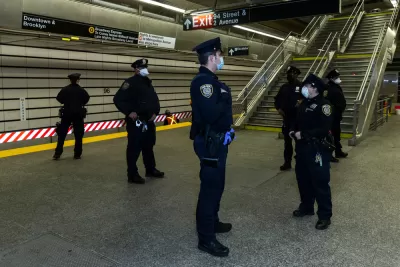
In a detailed piece in Governing, Jake Blumgart outlines the security issues faced by mass transit systems around the country that are keeping some riders from returning. “There are many reasons why transit ridership has not returned after the pandemic. The major factor, most experts agree, is the rise of remote work for many white-collar professions.” But recurring COVID-19 infection surges and the fear of crime also play important roles.
Blumgart highlights New York City’s transit system, where “Mayor Eric Adams won his election with promises to save New York and its subways through a judicious application of law and order.” Now, six months after Adams took office, “Conservatives feel that Adams hasn’t put enough officers in the subway system and is too focused on social services as an answer. Progressively inclined activist groups argue that while they are not anti-police, overly broad orders to crack down on minor offenses are oppressive and likely to disproportionately target Black riders.”
Blumgart describes the challenges faced by the Adams administration and other city leaders in balancing public safety with equity and efforts to improve social services and housing options for people experiencing homelessness. “As transit agencies face fiscal realities borne of fare losses, they must also confront an existential question of public order alongside the law enforcement institutions that are suffering their own legitimacy crisis.”
As Blumgart writes, “New York is the Democrat-dominated city most publicly struggling with this tangled knot of policy questions. But all of the nation’s big cities will have to figure out how, or whether, they will have their police maintain the bright lines of conduct on their buses and trains.”
FULL STORY: Progressive Cities Have a Public Order Problem on Mass Transit

NYC Subway Had its Safest Year in Almost 20 Years — and Riders Noticed
A majority of passengers say they feel safe on trains and in stations.
MTA Poised to Break Ridership, On-Time Service Records
New York City’s transit system saw strong increases in ridership and improvements in service quality in the first half of 2025.
New York Subway Reaches One Billion Ride Milestone
The system’s 2024 performance is on track for its fastest growth since the pandemic.

Planetizen Federal Action Tracker
A weekly monitor of how Trump’s orders and actions are impacting planners and planning in America.

The state-sanctioned urbicide of Austin
People don’t kill cities. Freeways do.

US to reduce Colorado River water deliveries to Mexico
A new Colorado Treaty amendment reduces Mexico’s Colorado River water allocation by 250,000 acre feet.

5 New England states march closer to 800 megawatt wind energy project
Securing federal approval for the project may be complicated under the Trump administration, which has historically been hostile towards domestic wind power.

Baltimore to break ground on $50 million Transit Priority Project
The project will bring faster bus trips, safer streets and better bike connections to Baltimore.

Airbnb launches $250 million 'last-dollar financing' housing accelerator, makes first investment in Austin
The company will put $6.4 million towards affordable housing development in Texas’ capital.

FREE Course: Walkable City 1: Why Walkability?
After describing his path towards focusing on walkability as the essence of good planning, Jeff Speck marches through his five principal reasons for making more walkable places.
Reinventing Malls: Planning Alchemy—Turning Gray Fields Into Gold
The course focuses on the opportunities and imperatives that shape reinvention of mall sites.

Eagle County Government
Harvard University Graduate School of Design
Nashville Planning Department
The Architects Foundation
University of Cincinnati Online
The Pocatello Development Authority
The Urban Renewal Agency of the City of Pocatello
Journal of the American Planning Association