Americans are driving slightly less due to high prices at the pump, but this reduction in driving is only making a small impact on overall U.S. carbon emissions.


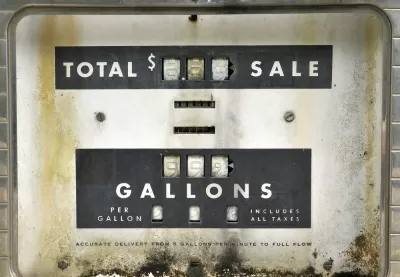
“Gas prices in much of the United States shot past the $5 a gallon mark last month before a slight drop, and Americans have responded by driving a bit less, two sets of data show. June gas sales are about 5% below pre-pandemic 2019 levels and 2.6% below a year ago, according to the U.S. Energy Information Administration.” Yet, according to an article by Seth Borenstein and Tom Krisher in the Denver Post, “a 6% drop in driving roughly translates to only a 1% drop in overall U.S. carbon emissions, [former University of Michigan professor Michael] Sivak said.”
The article notes that “High gas prices are ‘unequivocally’ good for fighting climate change because people use less fossil fuel and emissions go down, but the poorest people, who don’t have other options also ‘suffer the most,’ said climate economist Solomon Hsiang, director of the Climate Impact Lab at the University of California, Berkeley.” Advocates for higher gas taxes say that while higher gas prices are necessary, the government could provide financial assistance to low-income families without subsidizing driving.
“Biden has frequently said he doesn’t want high gas prices, attacked oil companies’ multi-billion dollar profits, proposed new offshore oil and gas drilling despite campaign promises and proposed a gas tax holiday, which congressional leaders said won’t fly.”
Read the full story: Higher gas prices hurt pockets, make small dent in emissions
Oregon DOT Projects Little Decline in Driving Despite Climate Pledge
Financial projections from the state's Department of Transportation suggest the agency does not anticipate a marked reduction in driving in the next decade.
FTA Kills ‘Social Cost of Carbon’ in Transit Grant Criteria
The Capital Investments Grant program will no longer factor in the future impacts of carbon emissions.
California’s Cap and Trade Program Up in the Air
The state’s carbon trading program is being attacked as ineffective from one side and overly onerous from the other.

Planetizen Federal Action Tracker
A weekly monitor of how Trump’s orders and actions are impacting planners and planning in America.

California plans to bury El Niño’s downpour
If the state plays its cards right, it may be able to store a billion acre-feet of El Niño’s water in aquifers.

Desperate measures: Advocates weigh draining Lake Powell to fill Colorado River
Draining the reservoir could reduce evaporation losses by a couple hundred thousand acre-feet.

US buildings threatened, destroyed by fires set to triple by 2060
Researchers found a high fire risk for socioeconomically vulnerable neighborhoods in the American West.

LA residents may be allowed to paint their own crosswalks
Councilwoman Katy Yaroslavsky put out a motion instructing the Los Angeles Department of Public Transportation to study the feasibility of allowing volunteers to paint crosswalks.

Dallas moves to overhaul its zoning code
The city's zoning reform will allow more multi-family and mixed-use developments.

FREE Course: Walkable City 1: Why Walkability?
After describing his path towards focusing on walkability as the essence of good planning, Jeff Speck marches through his five principal reasons for making more walkable places.
Reinventing Malls: Planning Alchemy—Turning Gray Fields Into Gold
The course focuses on the opportunities and imperatives that shape reinvention of mall sites.

City of Rosemead
Rutgers University, Edward J. Bloustein School of Planning and Public Policy
One Hundred Miles
Hunter College, City University of New York (CUNY)
The Architects Foundation
University of Cincinnati Online
City of Cambridge
Montrose County
The Pocatello Development Authority