Housing advocates in Connecticut are leading walking tours that fight misinformation about transit-oriented development and emphasize the benefits of increased density.



Housing organizations in Connecticut including Darien Talks Housing and Desegregate CT are sponsoring walking tours that “highlight housing solutions near transit that fit the community but also improve housing affordability,” reports Camila Vallejo for Connecticut Public Radio. “Out of 40 ‘transit towns’ with at least a train or CTFastrak station, only 25 allow as-of-right multi-family homes on some percentage of land near transportation, according to a report by DesegregateCT.”
The tours are one way for TOD advocates to fight misinformation about TODs and density that have prevented legislative efforts from moving forward, writes Vallejo. “A bill introduced this year, required towns to allow at least 15 housing units per acre within half a mile of a rail line or CTFastrak station. Opponents highlighted concerns about density, losing local control of zoning decisions, traffic and more. The bill died in committee.”
Christie Stewart, the director of the Fairfield County Center for Housing Opportunity, said “advocates are hosting tours to show residents that transit oriented development is an approach that can help increase housing, but also be in line with what towns want and need.”
Read the full story: Advocates say transit-oriented development is misunderstood. Their walking tours aim to change minds

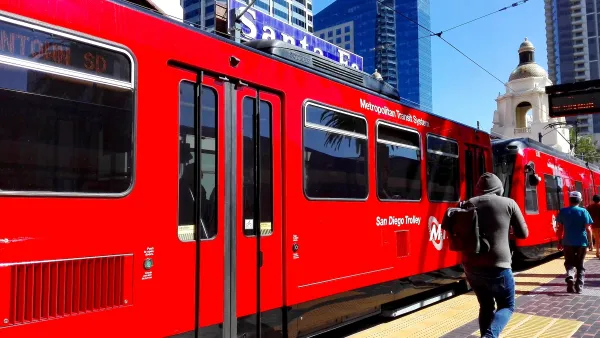
San Diego wants to limit upzoning law to just 16% of transit-adjacent parcels
The city's planning director says some areas are unfit for immediate upzoning due to a lack of resources or hazards such as wildfire risk.
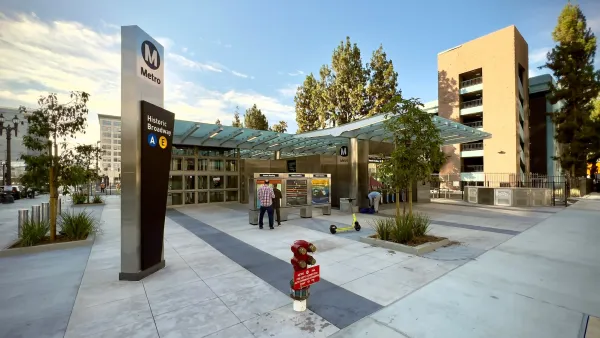
LA Delays State TOD Law to 2030 With its Own, Lower-density Plan
SB 79 allows cities to delay its implementation if they come up with alternate plans to boost density while retaining local control near transit.
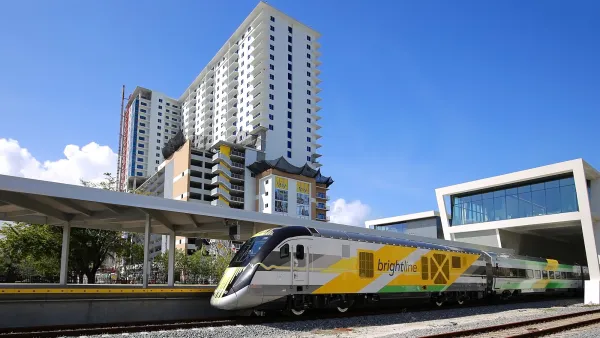
House Bill Would Incentivize Housing Near Transit
The Build HUBS Act intends to make federal funding for TOD more available and streamline permitting for transit-adjacent housing.

Planetizen Federal Action Tracker
A weekly monitor of how Trump’s orders and actions are impacting planners and planning in America.

Amtrak, CN end decades-long dispute with eight-year agreement
The new operating agreement establishes an updated framework for the companies to work together, including processes to resolve disputes.

Judges permit Denver to divert 77,000 acre feet from the Colorado River for reservoir expansion
Overuse and climate change have caused the Colorado River’s water levels to plummet.

Boston has spent millions making the Green Line more accessible — and there’s no end in sight
While the city has invested millions into expanding and adding platforms to the Green Line to make it more accessible, new train cars set to arrive next year will be too tall for disabled passengers to board without raising the current platforms.

Idaho may see an 18% drop in federal surface transit funding — the largest estimated cut in the US
Transit systems in rural communities are much more reliant on federal funding to provide their services.

How ‘post-disaster gentrification’ alters neighborhoods after natural calamities
After hurricanes, fires or other calamities, the original residents of a community are often replaced by younger, wealthier residents.

FREE Course: Walkable City 1: Why Walkability?
After describing his path towards focusing on walkability as the essence of good planning, Jeff Speck marches through his five principal reasons for making more walkable places.
Reinventing Malls: Planning Alchemy—Turning Gray Fields Into Gold
The course focuses on the opportunities and imperatives that shape reinvention of mall sites.

Harvard University Graduate School of Design
KFH Group Inc.
Greater Baltimore Committee
The Architects Foundation
University of Cincinnati Online
The Pocatello Development Authority
The Urban Renewal Agency of the City of Pocatello