Riders of electric and non-electric bikes alike agree that they would ride more if they felt safer on city streets, signaling a need for an increased focus on bike infrastructure.


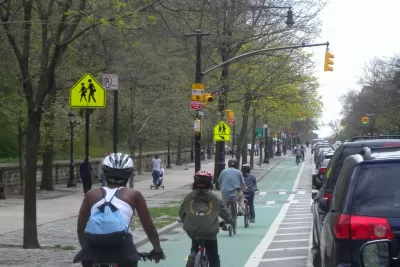
“With battery-powered motors that assist riders as they pedal, e-bikes enable a broader range of people to make more and longer trips than traditional bikes. And they are cheaper, more efficient, and less resource-intensive to manufacture than electric cars.” Like electric cars, e-bikes require infrastructure improvements to make their widespread use practical and safe.
“There is no great mystery in how to get more people to ride e-bikes (as well as traditional bikes),” writes Ira Boudway in Bloomberg. “In polling commissioned by the advocacy group PeopleforBikes in 2018, nearly 70% of respondents across eight U.S. cities said that roads are not safe enough for families to bike and, of those, 63% said they would ride if they felt safer.” Research shows that “In city after city, when protected bike lanes are added to roadways, ridership increases.”
New bike infrastructure doesn’t have to be expensive, notes Boudway. “Fortunately, thanks to decades of spending on road and highway building, the infrastructure needed to create these networks already exists. Cities don’t need to pour asphalt; they just need to commandeer some of the surplus of streets from cars.”
Boudway points out that a majority of Americans support more bike and pedestrian infrastructure when polled, yet progress remains painfully slow as city leaders give in to the NIMBY minorities who protest loudest.
FULL STORY: How to Make a City Safer for E-Bikes? Think Infrastructure

E-Bikes and the Bike Infrastructure of the Future
What will the future hold for cycling and bike infrastructure? With the introduction of e-bikes, the landscape of cycling, and even the definition of a bike, is changing.
The E-Bike Boom Continues
The popularity of electric bikes doesn't seem to be waning as the devices outpace electric car sales by almost two to one.
Faster E-Bikes Pose Regulation Dilemma
As a growing number of devices fall outside of traditional vehicle classes, policymakers must decide how to classify and regulate high-speed e-bikes.

Planetizen Federal Action Tracker
A weekly monitor of how Trump’s orders and actions are impacting planners and planning in America.

The state-sanctioned urbicide of Austin
People don’t kill cities. Freeways do.

US to reduce Colorado River water deliveries to Mexico
A new Colorado Treaty amendment reduces Mexico’s Colorado River water allocation by 250,000 acre feet.

5 New England states march closer to 800 megawatt wind energy project
Securing federal approval for the project may be complicated under the Trump administration, which has historically been hostile towards domestic wind power.

Baltimore to break ground on $50 million Transit Priority Project
The project will bring faster bus trips, safer streets and better bike connections to Baltimore.

Airbnb launches $250 million 'last-dollar financing' housing accelerator, makes first investment in Austin
The company will put $6.4 million towards affordable housing development in Texas’ capital.

FREE Course: Walkable City 1: Why Walkability?
After describing his path towards focusing on walkability as the essence of good planning, Jeff Speck marches through his five principal reasons for making more walkable places.
Reinventing Malls: Planning Alchemy—Turning Gray Fields Into Gold
The course focuses on the opportunities and imperatives that shape reinvention of mall sites.


Eagle County Government
Harvard University Graduate School of Design
Nashville Planning Department
The Architects Foundation
University of Cincinnati Online
The Pocatello Development Authority
The Urban Renewal Agency of the City of Pocatello
Journal of the American Planning Association