Fewer workers in downtown Seattle are taking public transit to work thanks in large part to an ongoing move to remote work.


Following a massive shift to remote work during the COVID-19 pandemic, downtown Seattle's transit ridership has plunged. According to an article by David Kroman, whereas more than half of downtown workers used transit in 2019, that number dropped to 18 percent at the end of 2021. "Meanwhile, the share of workers driving alone to work remained roughly the same, at a quarter of all employees."
Kroman writes that "The Downtown Seattle Association estimates there were 321,000 jobs downtown in 2021. Once upon a time, just 6% of all employees from downtown businesses worked remotely. That number jumped to 46% over the course of the pandemic, according to the survey of 4,371 employees."
"Among those still commuting into work, which mode they choose is driven by convenience. Thirty-eight percent of drivers said they did so because it was the most flexible, while another 19% said it was the fastest way into work. Asked what would increase transit ridership, 31% said more routes and 12% said faster service." Madeline Feig, spokesperson for Commute Seattle, says "the dip in transit use is hopefully a temporary one that will reverse as people realize service is close to normal."
Read the full story: New data shows remote work surges, transit use collapses among workers in downtown Seattle
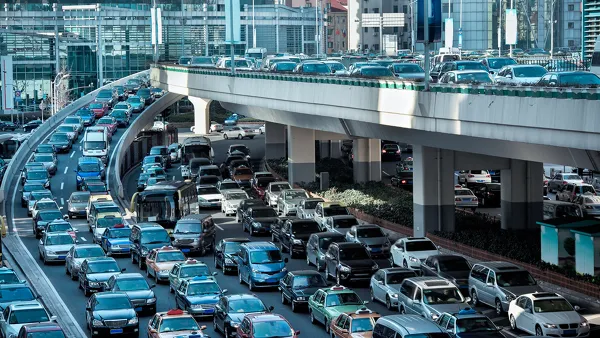
Some Commute Times Worsening Despite Remote Work Trends
The unpredictability of constantly changing commuting trends has some workers seeing much longer commute times as transportation agencies work to adjust to new travel patterns.
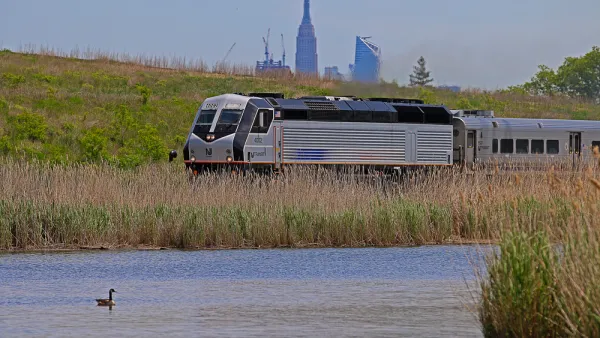
New York's Commuter Rail Ridership May Never Reach Pre-Pandemic Levels
Shifting commute patterns and the popularity of remote work could pose an existential threat to the New York City region's commuter rail services.
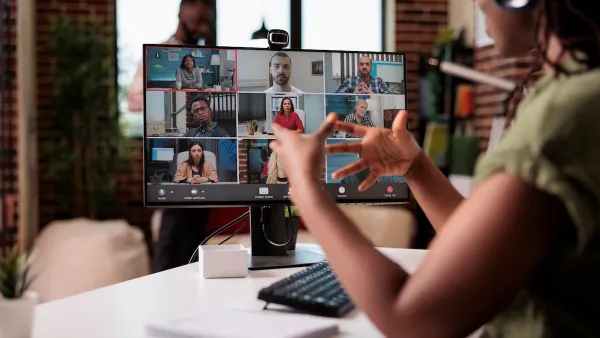
Which Cities Have the Most Remote Workers?
Across the country, a median of 12.5 percent of workers continue to perform their jobs remotely.

Planetizen Federal Action Tracker
A weekly monitor of how Trump’s orders and actions are impacting planners and planning in America.

California plans to bury El Niño’s downpour
If the state plays its cards right, it may be able to store a billion acre-feet of El Niño’s water in aquifers.

Desperate measures: Advocates weigh draining Lake Powell to fill Colorado River
Draining the reservoir could reduce evaporation losses by a couple hundred thousand acre-feet.

In Texas, data centers are swallowing promised parkland
Residents who moved to Taylor, Texas for a rural community now have to contend with three data centers in their backyard.

How a Chicago-sized wind farm beat the odds and powered on
The project spanned five presidential administrations and a standoff with a U.S. military base.

MTA gives itself 30 days to transform pit into basketball court
The site has been under construction since 2022; the city originally estimated it would finish the court in 2024.

FREE Course: Walkable City 1: Why Walkability?
After describing his path towards focusing on walkability as the essence of good planning, Jeff Speck marches through his five principal reasons for making more walkable places.
Reinventing Malls: Planning Alchemy—Turning Gray Fields Into Gold
The course focuses on the opportunities and imperatives that shape reinvention of mall sites.


City of Rosemead
Rutgers University, Edward J. Bloustein School of Planning and Public Policy
One Hundred Miles
Hunter College, City University of New York (CUNY)
The Architects Foundation
University of Cincinnati Online
City of Cambridge
Montrose County
The Pocatello Development Authority