In a radical shift from prior policy that singled out passenger safety, new cars could be required to include more features that protect people outside the vehicle.


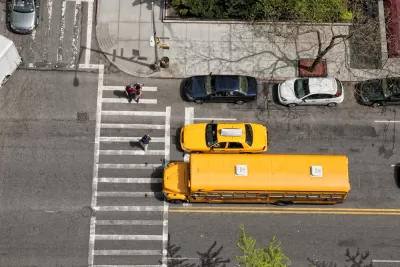
New cars could soon be required to include more safety features as the National Highway Traffic Safety Administration (NHTSA) seeks ways to combat a rising number of pedestrian deaths, reports Andrew J. Hawkins.
For the first time, NHTSA will consider the inclusion of advanced driver-assistance system (ADAS — sorry for all the acronyms!) features, like automatic emergency braking, blind-spot detection, and lane-keep assistance. These ADAS features, which are quickly becoming standard in most vehicles today, could become essential criteria for a five-star safety rating from the government.
This signals a shift from prior safety standards, which only assessed the safety of a car's occupants through crash tests, but failed to account for the safety of pedestrians or cyclists. "NHTSA acknowledges that this is no longer a tenable system," writes Hawkins. "For the first time ever, NCAP includes technology recommendations not only for drivers and passengers but for road users outside the vehicle, like pedestrians," according to a statement by Steven Cliff, deputy administrator at NHTSA.
"The idea is to rate automobile safety on a host of new technologies that can stop risky driving behavior before it even occurs. As a result, NCAP tests will become more stringent, and vehicles that don’t include these features are likely to receive a lower rating."
FULL STORY: The US government finally realizes that cars kill people outside the vehicle, too


Helsinki Achieves Full Year With No Traffic Deaths
How did the Finnish capital achieve Vision Zero? It was no accident.
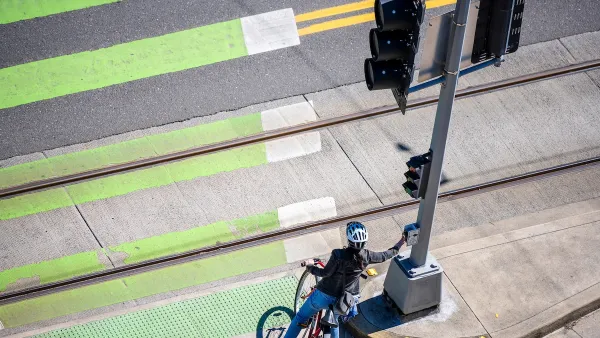
Audit: Portland’s Vision Zero Needs More Data, Funding
A city audit found that the program has failed to reduce traffic deaths and could benefit from a more systematic approach. Meanwhile, PBOT says it needs more state funding to support road safety projects.
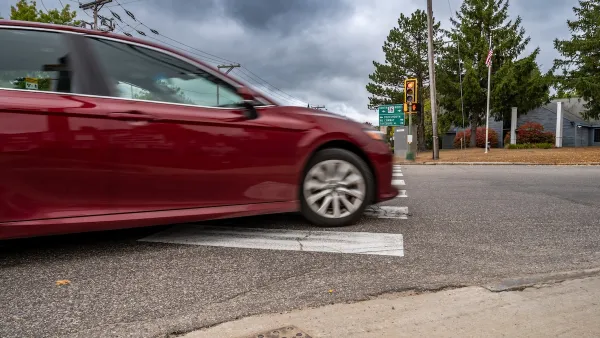
Banning Right Turns on Red Just One Step Toward Vision Zero
Experts caution that blanket bans on right turns on red make only a slight contribution to reducing fatal crashes, and other interventions are needed to bring down traffic fatalities.

Planetizen Federal Action Tracker
A weekly monitor of how Trump’s orders and actions are impacting planners and planning in America.

The state-sanctioned urbicide of Austin
People don’t kill cities. Freeways do.

US to reduce Colorado River water deliveries to Mexico
A new Colorado Treaty amendment reduces Mexico’s Colorado River water allocation by 250,000 acre feet.

5 New England states march closer to 800 megawatt wind energy project
Securing federal approval for the project may be complicated under the Trump administration, which has historically been hostile towards domestic wind power.

Baltimore to break ground on $50 million Transit Priority Project
The project will bring faster bus trips, safer streets and better bike connections to Baltimore.

Airbnb launches $250 million 'last-dollar financing' housing accelerator, makes first investment in Austin
The company will put $6.4 million towards affordable housing development in Texas’ capital.

FREE Course: Walkable City 1: Why Walkability?
After describing his path towards focusing on walkability as the essence of good planning, Jeff Speck marches through his five principal reasons for making more walkable places.
Reinventing Malls: Planning Alchemy—Turning Gray Fields Into Gold
The course focuses on the opportunities and imperatives that shape reinvention of mall sites.


Eagle County Government
Harvard University Graduate School of Design
Nashville Planning Department
The Architects Foundation
University of Cincinnati Online
The Pocatello Development Authority
The Urban Renewal Agency of the City of Pocatello
Journal of the American Planning Association