The city approved speed limit reductions on close to 200 miles of city roads in an effort to reduce traffic deaths and move closer to Vision Zero.


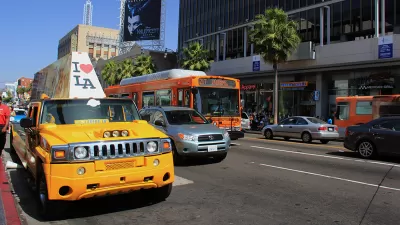
As Joe Linton reports in Streetsblog LA, the city of Los Angeles has selected 177 miles of streets to receive speed limit reductions, a move praised by safety advocates. "[Mayor Eric] Garcetti acknowledged that this round of speed limit reductions were the result of the hard work of livability advocates, the city’s Transportation Department (LADOT), City Councilmembers Mike Bonin and Paul Koretz, as well as State Assemblymember Laura Friedman," who championed a state bill that allows cities to implement speed limit reductions. "Friedman’s A.B. 43 carved out several important exceptions to that rule, making it legal for cities to now consider safety concerns when setting speed limits – as well as allowing municipalities to roll back some recent speed limit increases."
Once A.B. 43 was passed, the city reviewed streets where speed reductions could be implemented. "Those decreases were approved by the City Council Transportation Committee and by the full City Council in February."
The new speed limits will take effect by June, per LADOT General Manager Seleta Reynolds.
High speed limits are often criticized for creating dangerous conditions, with many advocates calling for speeds of 20mph or lower on urban streets.
FULL STORY: Mayor Garcetti Approves 177 Miles of Speed Limit Reductions

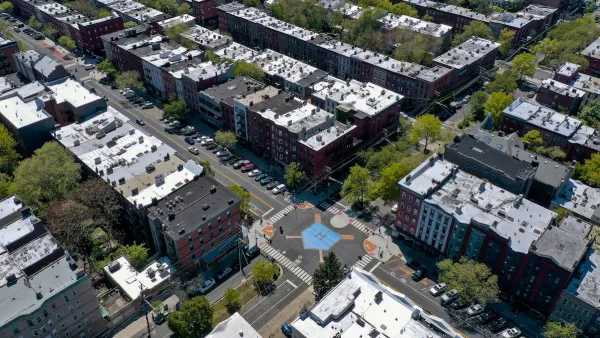
Vision Zero at Work: Hoboken Celebrates Seven Years of Zero Traffic Deaths
The New Jersey city implemented simple yet impactful changes to eliminate traffic fatalities.
Washington Focuses Road Safety Efforts on Individuals, Neglecting Design
Legislative efforts to reduce traffic deaths could move the needle toward Vision Zero, but state leaders failed to commit infrastructure funds to making structural improvements.
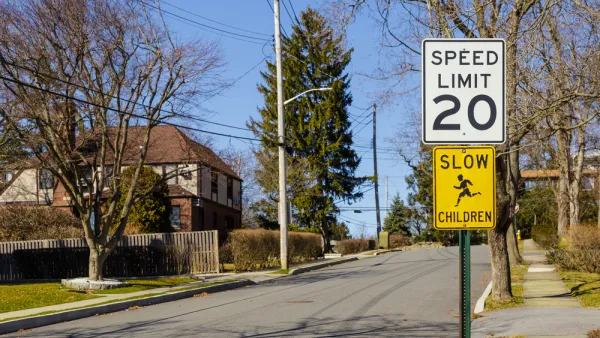
Tacoma Lowers Speed Limits as Part of Vision Zero Plan
The city voted to reduce speed limits on residential and some arterial streets in an effort to improve traffic safety and reduce the risk of death or serious injury when crashes occur.

Planetizen Federal Action Tracker
A weekly monitor of how Trump’s orders and actions are impacting planners and planning in America.

The state-sanctioned urbicide of Austin
People don’t kill cities. Freeways do.

US to reduce Colorado River water deliveries to Mexico
A new Colorado Treaty amendment reduces Mexico’s Colorado River water allocation by 250,000 acre feet.

5 New England states march closer to 800 megawatt wind energy project
Securing federal approval for the project may be complicated under the Trump administration, which has historically been hostile towards domestic wind power.

Baltimore to break ground on $50 million Transit Priority Project
The project will bring faster bus trips, safer streets and better bike connections to Baltimore.

Airbnb launches $250 million 'last-dollar financing' housing accelerator, makes first investment in Austin
The company will put $6.4 million towards affordable housing development in Texas’ capital.

FREE Course: Walkable City 1: Why Walkability?
After describing his path towards focusing on walkability as the essence of good planning, Jeff Speck marches through his five principal reasons for making more walkable places.
Reinventing Malls: Planning Alchemy—Turning Gray Fields Into Gold
The course focuses on the opportunities and imperatives that shape reinvention of mall sites.

Eagle County Government
Harvard University Graduate School of Design
Nashville Planning Department
The Architects Foundation
University of Cincinnati Online
The Pocatello Development Authority
The Urban Renewal Agency of the City of Pocatello
Journal of the American Planning Association