The increase in miles driven by light trucks and other 'megacars' could have contributed to the rise in traffic deaths, despite an overall reduction in VMT.


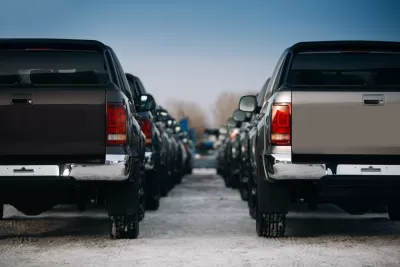
"According to estimates from the Federal Highway Administration, vehicles classified as “light truck, long wheelbase” — a category which includes many of America’s most popular pick-up trucks, or any car with at least 121 inches between its axles — were driven about 1.5 billion miles more during the year that much of the country fell under quarantine orders than they were the year before, an increase of about one percent." Smaller cars, by contrast, traveled 16 percent fewer miles in 2020 than in 2019. The implications for public health are severe, writes Kea Wilson for Streetsblog.
The rising popularity of both SUVs and light trucks has long been recognized as a significant factor in the nation’s rising pedestrian death rate, which surged 21 percent between 2019 and 2020, the largest annual increase ever recorded by federal agencies; light trucks of all lengths are two to three times more likely to kill a walker in the event of a crash, because of their weight, height, and front-end design.
The article outlines a variety of possible reasons for the discrepancy, including the use of bigger vehicles by workers who can't telecommute and the correlation of large vehicles with right-leaning voters. But Wilson argues "Whatever the reason why so many megacar drivers took to the road in 2020, there’s no doubt that those motorists posed an outsized danger to vulnerable road users — and that something must be done about it."
Read the full story: Feds: Megacar Owners Actually Drove More In 2020 Than 2019

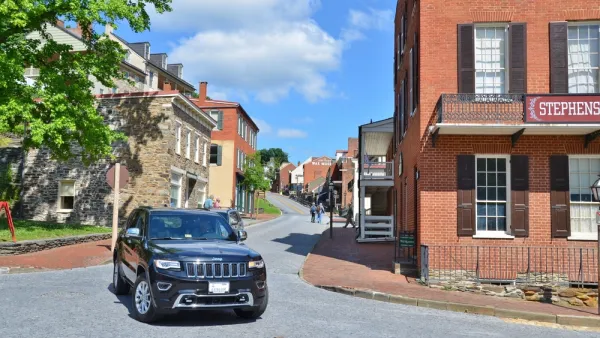
For Transportation Justice, Auto Safety Must Protect People Outside the Car
Light trucks are killing more pedestrians than ever while keeping their drivers and passengers safer. Is it time to reframe safety regulations?
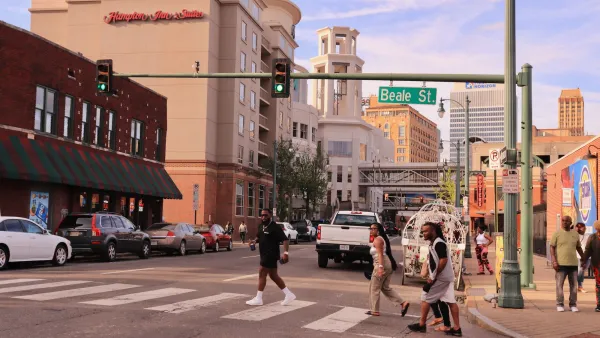
Memphis is the nation's most dangerous city for pedestrians
Memphis had the highest rate of traffic deaths for people walking in the US for two years in a row.
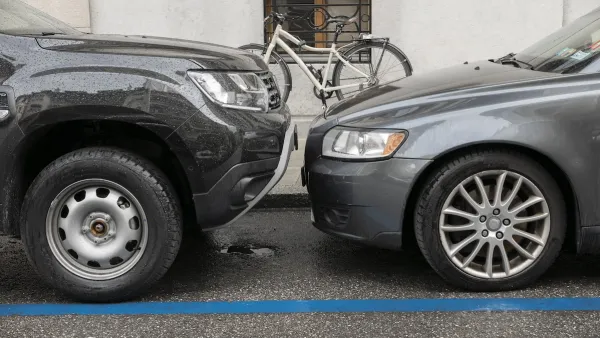
Tall Vehicles: Unsafe at Any Speed
Vehicles with taller front-end designs are more likely to injure pedestrians even when traveling at lower speeds.

Planetizen Federal Action Tracker
A weekly monitor of how Trump’s orders and actions are impacting planners and planning in America.

California plans to bury El Niño’s downpour
If the state plays its cards right, it may be able to store a billion acre-feet of El Niño’s water in aquifers.

Desperate measures: Advocates weigh draining Lake Powell to fill Colorado River
Draining the reservoir could reduce evaporation losses by a couple hundred thousand acre-feet.

California city breaks ground on transit connector
The project includes three mobility hubs and a pedestrian bridge.

After public outcry, Massachusetts city releases housing development tracker
Cambridge’s tracker currently shows 250 housing projects in various stages of development.

40 years after approval, Chicago breaks ground on new park
The park honors Jean Baptiste Point du Sable, the city’s first permanent non-native settler.

FREE Course: Walkable City 1: Why Walkability?
After describing his path towards focusing on walkability as the essence of good planning, Jeff Speck marches through his five principal reasons for making more walkable places.
Reinventing Malls: Planning Alchemy—Turning Gray Fields Into Gold
The course focuses on the opportunities and imperatives that shape reinvention of mall sites.

City of Rosemead
Rutgers University, Edward J. Bloustein School of Planning and Public Policy
One Hundred Miles
Hunter College, City University of New York (CUNY)
The Architects Foundation
University of Cincinnati Online
City of Cambridge
Montrose County
The Pocatello Development Authority