Despite broader intentions, federal economic relief continues to get redirected to automobile-focused infrastructure.


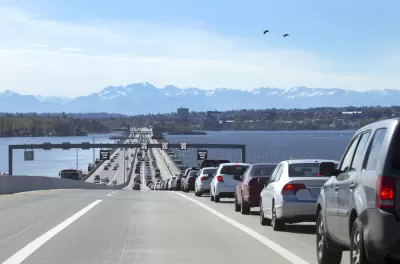
Washington State has one of the most aggressive approaches to climate change in the nation and a governor who promotes a climate-friendly agenda. The same governor, however, also wants to funnel a federal windfall to automobile infrastructure.
"Gov. Jay Inslee wants to use a half-billion dollars in federal pandemic relief money to keep up with rapid cost increases on the Highway 520 bridge replacement, and widenings for [Seattle's] combined Interstate 405/Highway 167 program," reports Mike Lindblom for the Seattle Times.
According to Lindblom, both projects are behind schedule. The need for more funding to get the projects across the finish line inspired the governor and state legislators to consider a gas tax increase in 2021 and approve a carbon pricing scheme that will go into effect in 2023.
In a noteworthy twist in how the article is framed, Lindblom compares the increasing costs of highway construction in Washington State to the more widely documented troubles the state is having keeping costs down for capital investments in the public transit sector.
Highway inflation isn’t as well-known as Sound Transit’s current $6.5 billion funding shortfall in three counties, blamed largely on land prices and estimating errors. They’re related, because Sound Transit’s Stride bus rapid transit on I-405, which voters approved to begin in 2024, is already delayed until 2027 or 2028, and would slip further if the state loses more time on I-405 roadbuilding that provides bus-entrance lanes, and new toll lanes where buses could move fast along the freeway.
Linblom also notes the opportunity cost of using the federal funding from the American Rescue Plan for behind schedule, over budget highway widening projects: "those are dollars states may apply to other infrastructure such as water and sewer projects, or even human services."
More details about the history of the Highway 520 bridge and Interstate 405/Highway 167 programs are included in the source article below.
Read the full story: Cost jumps for Highway 520 bridge work; here’s why, and where the money could come from

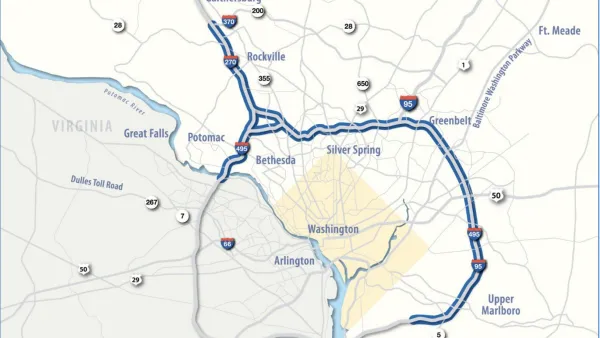
Maryland Highway Widening Plans Moving Forward Under New Governor
Maryland Governor Wes Moore is differentiating his new administration from his predecessor’s, but some projects, like the widening of federal highways in the Capital Beltway, stay the same.
Missouri to Spend $2.8 Billion Widening I-70
Missouri Gov. Mike Parson had a $859 million vision to expand I-70 in key parts of the state. State legislators had an even more ambitious vision.
Can Portland Have its Climate Goals and Expand its Highways Too?
Portland wants it both ways, but so do most places. But if Portland can't quit the car habit, which cities can?

Planetizen Federal Action Tracker
A weekly monitor of how Trump’s orders and actions are impacting planners and planning in America.

Colorado’s Largest Data Center Could Rise Next to Homes — Without a Public Hearing
The proposed campus would consume 11 times the power of Denver International Airport; as it has across the country, opposition mounts.

US to reduce Colorado River water deliveries to Mexico
A new Colorado Treaty amendment reduces Mexico’s Colorado River water allocation by 250,000 acre feet.

'This is going to be painful:’ Virginia stares down $1.7 billion funding gap for highway maintenance
The state may address the deficit by shifting $290 million from its construction budget to maintenance projects.
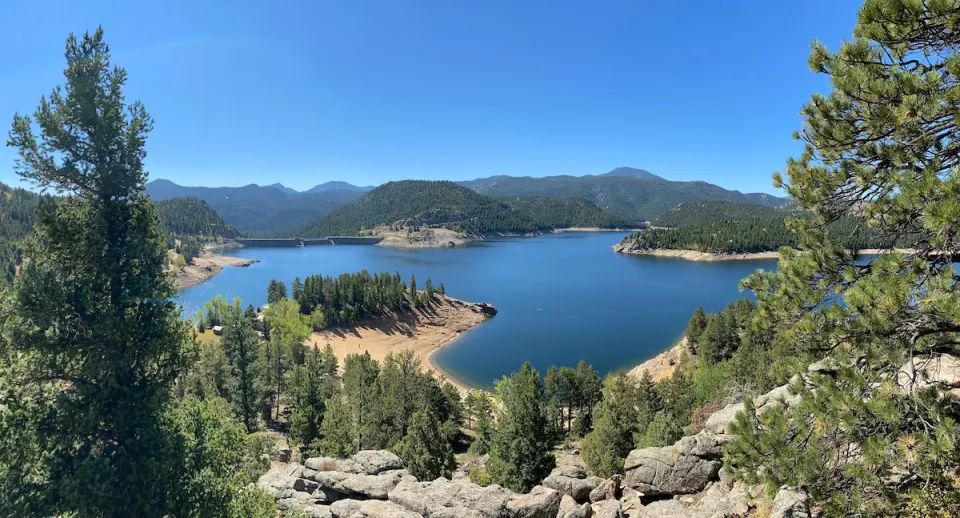
Judges permit Denver to divert 77,000 acre feet from the Colorado River for reservoir expansion
Overuse and climate change have caused the Colorado River’s water levels to plummet.
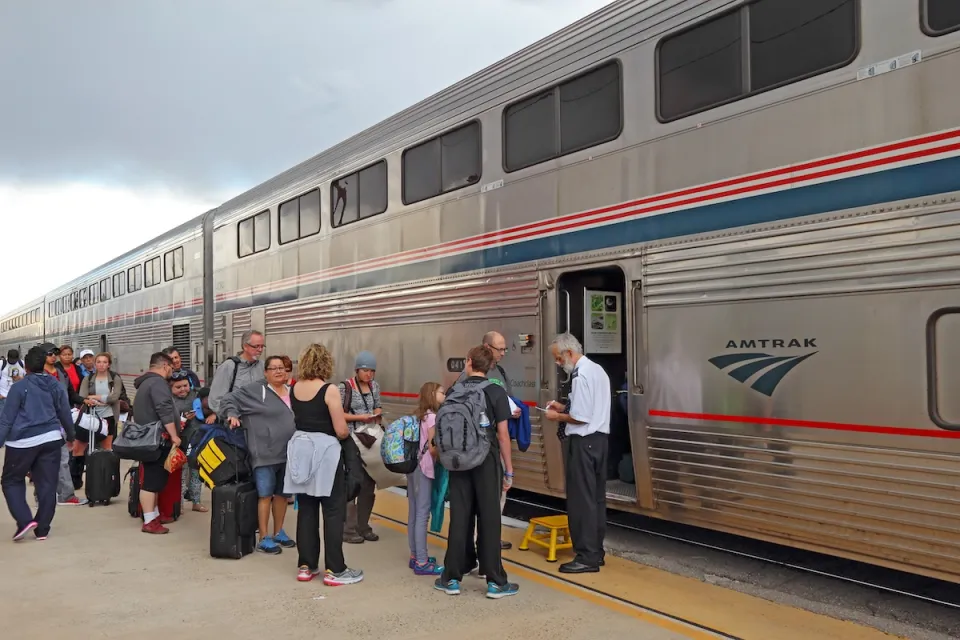
Amtrak, CN end decades-long dispute with eight-year agreement
The new operating agreement establishes an updated framework for the companies to work together, including processes to resolve disputes.

FREE Course: Walkable City 1: Why Walkability?
After describing his path towards focusing on walkability as the essence of good planning, Jeff Speck marches through his five principal reasons for making more walkable places.
Reinventing Malls: Planning Alchemy—Turning Gray Fields Into Gold
The course focuses on the opportunities and imperatives that shape reinvention of mall sites.

KFH Group Inc.
Greater Baltimore Committee
Eagle County Government
The Architects Foundation
University of Cincinnati Online
The Pocatello Development Authority
The Urban Renewal Agency of the City of Pocatello