With a rapidly growing population and strained water supplies, Utah lawmakers and conservation groups debate how to best replenish the state's water sources.



Utah policymakers are facing increasing urgency to conserve and replenish water supplies in the state as its population grows faster than any other state's and groundwater supplies dwindle. As Brett Walton reports, state officials are proposing pipeline projects that would bring water from distant sources. "But public interest advocates assert that spending billions of dollars to build pipelines to transport water from distant sources is foolish."
Each pipeline project raises questions that are fundamental to life in the arid western United States, and essential for Utahans to consider before the current homebuilding spree establishes land use and development patterns that will influence water demand for a generation: How do growing communities live with limited water? And will past behaviors be adapted to new climate and demographic realities?
Conservationists argue the state can do more to reduce water usage and curb waste before building new pipelines and reservoirs that could damage the environment, use taxpayer funds, and provide only short-term solutions to the state's growing water crisis. According to Walton, "In 2019, the Utah Legislature ordered a report on actions that could help preserve the Great Salt Lake and its wetlands." The report outlined several recommended conservation measures, including: "expanded metering of residential irrigation water, better data collection to understand how water is being used, bringing land-use planners and water providers together, reducing lawn sizes."
FULL STORY: Utah has a water dilemma

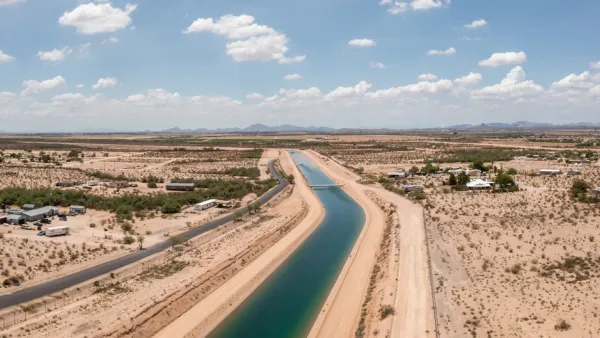
Arizona Governor Takes Steps to Modernize Water Policy
A newly released report warns of rapidly dwindling groundwater resources as developers plan to build hundreds of thousands of new homes.
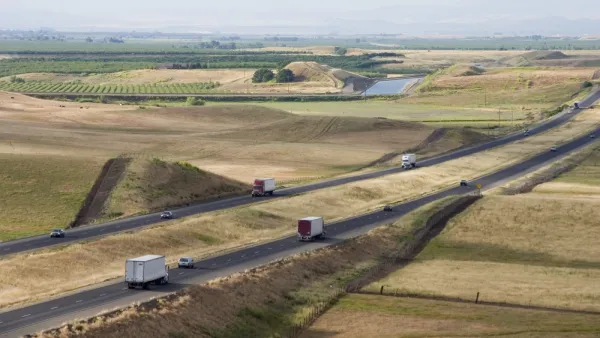
Grant Program Will Pay California Farmers To Repurpose Fallow Land
A new state grant program will help California farmers convert idle land to new purposes in an effort to mitigate the environmental and economic effects of drought on the state's Central Valley.
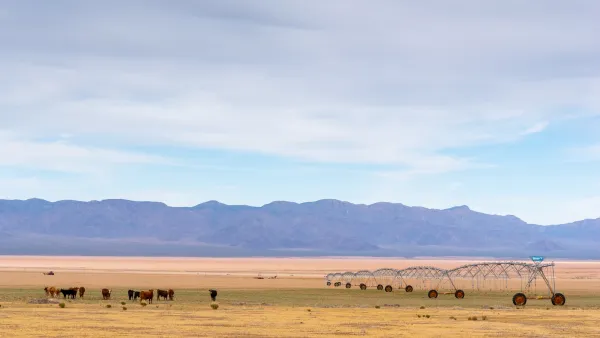
Arizona Tightens Groundwater Restrictions to Rein in Agribusinesses
The state is creating an ‘active management area’ in the western part of the state, where agribusinesses including a Saudi alfalfa exporter have practically free rein over water supplies.

Planetizen Federal Action Tracker
A weekly monitor of how Trump’s orders and actions are impacting planners and planning in America.

The state-sanctioned urbicide of Austin
People don’t kill cities. Freeways do.

US to reduce Colorado River water deliveries to Mexico
A new Colorado Treaty amendment reduces Mexico’s Colorado River water allocation by 250,000 acre feet.

Mamdani overhauls NYC's Vision Zero plan with 100 new policy goals
The overhaul aims to reduce traffic deaths and make streets safer for pedestrians, cyclists and drivers through lower speed limits, new safety infrastructure and more.

Amtrak not solely to blame for New Jersey commuter rail's unreliability, report finds
A new study from the Garden State Initiative found that NJ Transit’s budget grew 20% across a 4 year period, but reliability declined significantly over the same period.

EPA erases limits on planet-warming pollution from power plants
Under Monday’s plan, power plants would still have some limits on how much mercury, arsenic and other contaminants they can emit.

FREE Course: Walkable City 1: Why Walkability?
After describing his path towards focusing on walkability as the essence of good planning, Jeff Speck marches through his five principal reasons for making more walkable places.
Reinventing Malls: Planning Alchemy—Turning Gray Fields Into Gold
The course focuses on the opportunities and imperatives that shape reinvention of mall sites.

Eagle County Government
Harvard University Graduate School of Design
Nashville Planning Department
The Architects Foundation
University of Cincinnati Online
The Pocatello Development Authority
The Urban Renewal Agency of the City of Pocatello
Journal of the American Planning Association