Parking reform is reaching new frontiers.


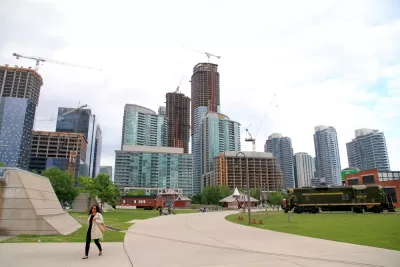
"Citing concerns about a changing climate and the changing habits of urban dwellers, Toronto city council is set to decide if it will keep requiring a minimum number of parking spaces to be built with new developments," reports Trevor Dunn for CBC News.
According to Dunn, a Toronto City Council committee heard a staff report on earlier this month that included a number of recommendations that could help remake transportation planning in the fourth most populous city on the continent, ranging from expanding bicycle parking and electric vehicle infrastructure to the aforementioned parking requirement reforms.
The staff report has already prompted opposition. Dunn cites the example of the Federation of South Toronto Residents Associations (FoSTRA), which sent a letter to the committee opposing the proposed reforms.
The full council is expected to review the staff report in December. The full council voted to study its parking policy in January 2021.
FULL STORY: Toronto to consider ending minimum parking space requirements in new developments

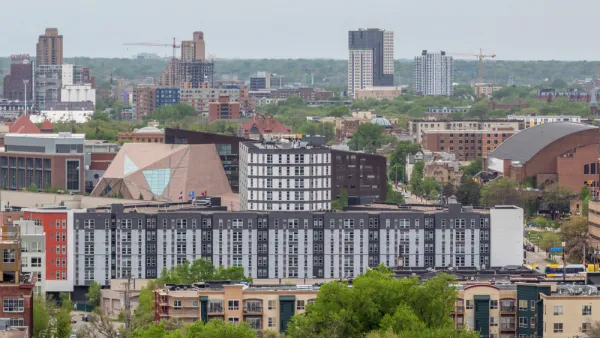
Minneapolis Eliminates Parking Requirements Citywide
Minneapolis joins the avant garde of cities implementing a dramatic overhaul of the parking requirement status quo that has been a primary determinant of the form and function of cities for nearly a century.
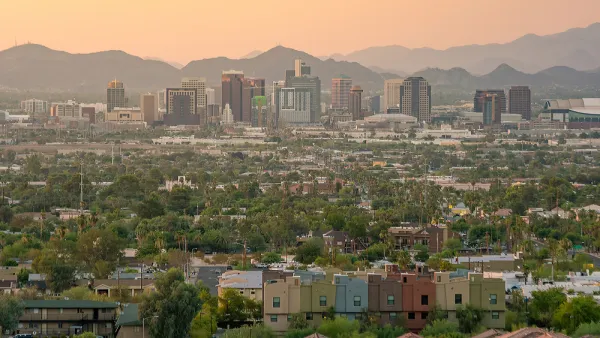
Phoenix Could Ease Parking Requirements to Support Transit, Affordable Housing
In addition to lower citywide parking requirements on residential properties, a proposed law in Phoenix would lower minimum parking requirements even further for affordable housing developments near the city’s light rail system.

Toronto City Council Removes Most Minimum Parking Requirements
The parking reform movement has a major new feather in its cap: the Toronto City Council has this week adopted sweeping changes to the parking requirements of the city's zoning bylaws.

Planetizen Federal Action Tracker
A weekly monitor of how Trump’s orders and actions are impacting planners and planning in America.

The state-sanctioned urbicide of Austin
People don’t kill cities. Freeways do.

US to reduce Colorado River water deliveries to Mexico
A new Colorado Treaty amendment reduces Mexico’s Colorado River water allocation by 250,000 acre feet.

5 New England states march closer to 800 megawatt wind energy project
Securing federal approval for the project may be complicated under the Trump administration, which has historically been hostile towards domestic wind power.

Baltimore to break ground on $50 million Transit Priority Project
The project will bring faster bus trips, safer streets and better bike connections to Baltimore.

Airbnb launches $250 million 'last-dollar financing' housing accelerator, makes first investment in Austin
The company will put $6.4 million towards affordable housing development in Texas’ capital.

FREE Course: Walkable City 1: Why Walkability?
After describing his path towards focusing on walkability as the essence of good planning, Jeff Speck marches through his five principal reasons for making more walkable places.
Reinventing Malls: Planning Alchemy—Turning Gray Fields Into Gold
The course focuses on the opportunities and imperatives that shape reinvention of mall sites.

Eagle County Government
Harvard University Graduate School of Design
Nashville Planning Department
The Architects Foundation
University of Cincinnati Online
The Pocatello Development Authority
The Urban Renewal Agency of the City of Pocatello
Journal of the American Planning Association