Denver voters this week rejected Initiated Ordinance 303, written by chairman of the Denver Republican Party, which would have expanded the city's controversial camping ban.


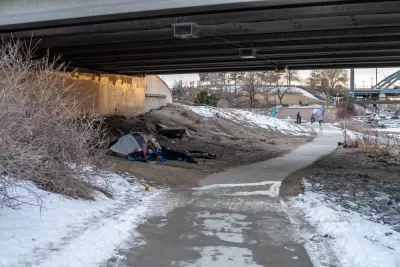
Joe Rubino reports that Denver voters rejected an ordinance that would have made the city's camping ban more strict, just a few days after a judge struck down a key components of the ordinance.
Initiated Ordinance 303 "would require people to obtain written permission before camping on private property and cap the number of city-sanctioned safe outdoor camping sites for people experiencing homelessness in the city at four, requiring amenities like bathrooms at each," according to Rubini. Garrett Flicker, chairman of the Denver Republican Party, wrote the ordinance.
On Sunday, two days before the citywide election, Denver District Court Judge Darryl Shockley struck down a section of the ordinance "that would have mandated that the city had 72 hours — three days — to respond if a resident filed a complaint about an unsanctioned encampment," explains Rubino. "The measure would have given residents the power to sue the city if action wasn’t taken in that window."
The outcome of the election stood out compared to a vote in Austin in May 2021, when voters supported criminal penalties for camping in public.
Denver has been contesting the boundaries of its camping ban since approved by the council in 2021—the city briefly rescinded the ban at the beginning of 2020 to adjust its practices to the landmark Supreme Court ruling in Martin v. City of Boise.
Read the full story: Denver ballot measure 303: Voters rejecting ordinance that would build on city’s camping ban

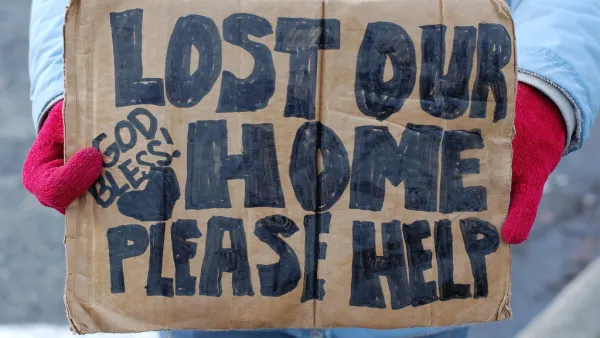
Cities Still Sweeping Away Homeless Camps, Despite Legal Challenges
Denver and Los Angeles kicked the new year off by committing to the enforcement of a sleeping ban and sweeping away a large homeless encampment, respectively.
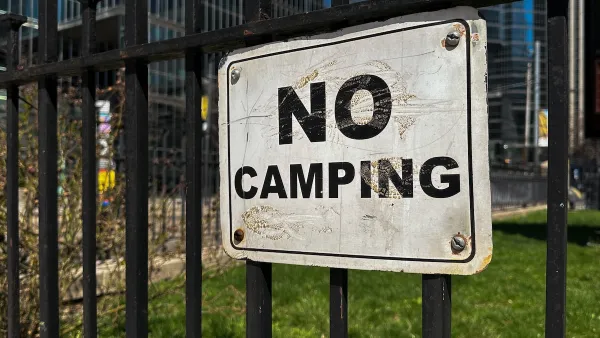
Nevada Cities Pass Punitive Anti-Homeless Laws
State legislators rejected a proposed bill that would have enshrined a “Homeless Person’s Bill of Rights” in state law.
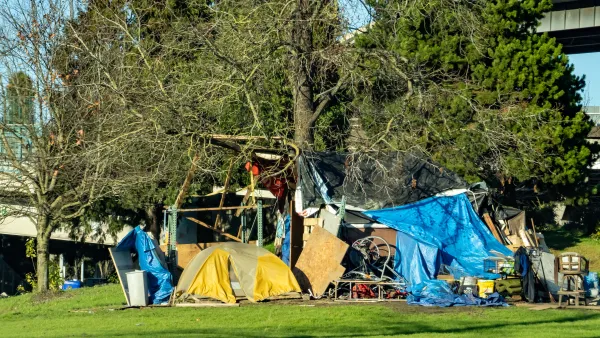
Tent Encampments: Will the Legal Restraint be Lifted?
A controversial U.S. Ninth Circuit Court of Appeals ruling in 2018 that has hindered the ability of western cities to clear tent encampments on public spaces will likely be revisited and overturned by the Supreme Court, predicts a popular CNN host.

Planetizen Federal Action Tracker
A weekly monitor of how Trump’s orders and actions are impacting planners and planning in America.

The state-sanctioned urbicide of Austin
People don’t kill cities. Freeways do.

Colorado’s Largest Data Center Could Rise Next to Homes — Without a Public Hearing
The proposed campus would consume 11 times the power of Denver International Airport; as it has across the country, opposition mounts.

Nation's most wind-powered state turns to coal as data centers increase energy demand
For the first time in decades, Iowa has increased its generation of coal power.

NYC cools commuters with city's first rain garden above a bus stop
New York City officials say the plants in the rain garden can absorb 16 gallons of rainwater during heavy storms.

Brightline West’s future may rely on $6 billion federal loan
The company has until Nov. 2 to make a $400 million equity investment into its proposed high-speed rail line.

FREE Course: Walkable City 1: Why Walkability?
After describing his path towards focusing on walkability as the essence of good planning, Jeff Speck marches through his five principal reasons for making more walkable places.
Reinventing Malls: Planning Alchemy—Turning Gray Fields Into Gold
The course focuses on the opportunities and imperatives that shape reinvention of mall sites.

Greater Baltimore Committee
Eagle County Government
Harvard University Graduate School of Design
The Architects Foundation
University of Cincinnati Online
The Pocatello Development Authority
The Urban Renewal Agency of the City of Pocatello
Journal of the American Planning Association