Voters in Austin voted to reinstate a ban on public camping, taking steps to criminalize homelessness before the State Legislature could.


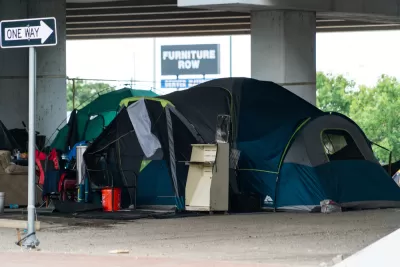
"In a hotly contested debate involving the city's homelessness crisis, 57% of voters said they were in favor of reinstating criminal penalties for camping in public spaces and 42% said they were not," reports Ryan Autollo.
The vote overturns a law approved by the City Council and Mayor Steve Adler two years ago. A law that would preempt local camping laws—written largely in response to the Austin law—had been progressing through the State Legislature.
Mayor Adler, conceding defeat in the Proposition B vote, pledged to reduce the city's homeless population before leaving office in 2023. "A plan he helped created with other government officials and nonprofit leaders calls for Austin to add 3,000 housing and shelter units in the next three years," according to Autollo.
The controversies over homelessness in the city are set in a context of rapid growth—with many newcomers arriving from California and potentially finding some of the dynamics they fled from on the West Coast already taking hold in Austin.
For example, the cost of housing, while still lower than San Francisco, is growing quickly. "According to Zillow, home prices in Austin are up more than 18% in the last year, creating a shortage of affordable housing," according to an article published by CBS News.
The comparisons to San Francisco are readily available in the CBS News coverage: "Laid-back and long known for its food and music scene, the capital of Texas has become one of the fastest-growing cities in the nation. The downtown skyline is a ballet of cranes and new skyscrapers. Tech giants like Google and Apple are expanding their footprint, and Tesla is building a massive manufacturing plant here."
For now at least, however, the Austin offers more value than San Francisco, according to the new arrivals quoted in the article, one of which reports affording the rent for a three-bedroom home in Austin For the same price as an apartment in San Francisco.
FULL STORY: Austin voters choose to bring back homeless camping ban

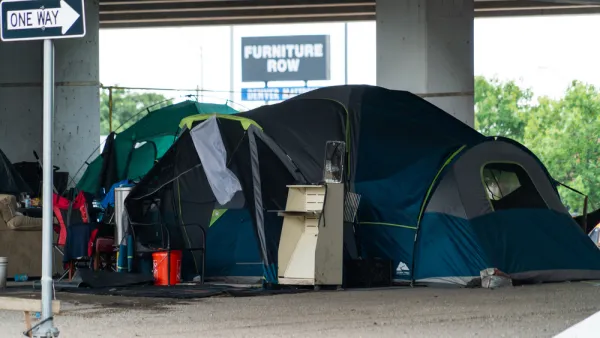
Texas Legislature Would Preempt Local Law to Ban Homeless Encampments
The state of Texas and the city of Austin are moving in opposite directions on how best to respond to the needs of people experiencing homelessness.
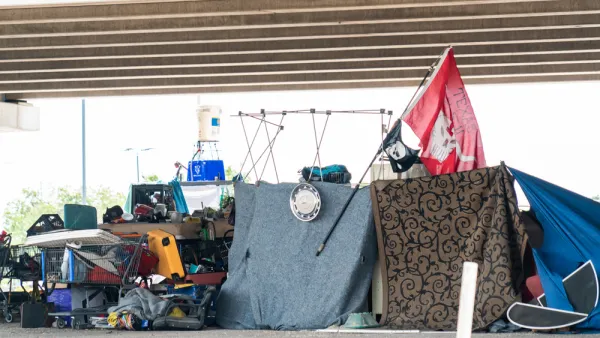
Unhoused Austin Population Spikes Under Reinstated Camping Ban
The Texas capital is struggling to house its unsheltered residents even as the city commits more resources to building and acquiring more affordable housing units.
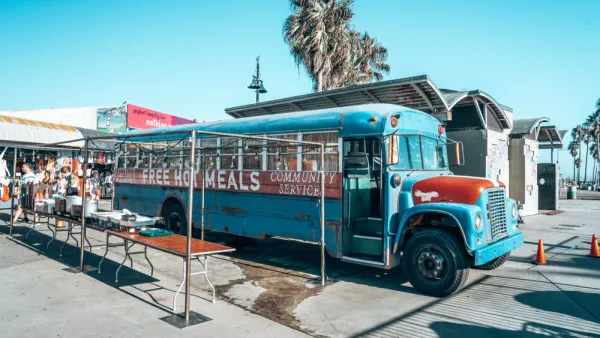
L.A. Could Consider Parks for Sanctioned Camping Locations for People Experiencing Homelessness
L.A. residents are demanding solutions for the city's growing number of people experiencing homelessness, but they don't tend to like those solutions when they include allowing people experiencing homelessness to stay in the neighborhood.

The state-sanctioned urbicide of Austin
People don’t kill cities. Freeways do.

US to reduce Colorado River water deliveries to Mexico
A new Colorado Treaty amendment reduces Mexico’s Colorado River water allocation by 250,000 acre feet.

New Jersey’s second-largest city bans standalone data centers
Jersey City will continue to allow co-location facilities, such as those meant for research institutions that store their own data.

Amtrak not solely to blame for New Jersey commuter rail's unreliability, report finds
A new study from the Garden State Initiative found that NJ Transit’s budget grew 20% across a 4 year period, but reliability declined significantly over the same period.

EPA erases limits on planet-warming pollution from power plants
Under Monday’s plan, power plants would still have some limits on how much mercury, arsenic and other contaminants they can emit.

Phoenix announces new on-demand transit service, more frequent RAPID buses
Both new services will launch in October, and are part of Phoenix's Project Effective Access Solutions for Easing Congestion.

FREE Course: Walkable City 1: Why Walkability?
After describing his path towards focusing on walkability as the essence of good planning, Jeff Speck marches through his five principal reasons for making more walkable places.
Reinventing Malls: Planning Alchemy—Turning Gray Fields Into Gold
The course focuses on the opportunities and imperatives that shape reinvention of mall sites.

Eagle County Government
Harvard University Graduate School of Design
Nashville Planning Department
The Architects Foundation
University of Cincinnati Online
The Pocatello Development Authority
The Urban Renewal Agency of the City of Pocatello
Journal of the American Planning Association