The Build Back Better agenda is in retreat—including much of the substance on a plan to spend $330 billion to tackle the nation's housing affordability crisis.


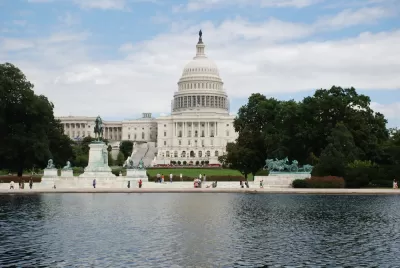
Negotiations over the federal budget reconciliation bill, which includes several components of critical importance to the planning field, such as the Infrastructure Investment and Jobs Act, took a turn at the end of October.
Jersulem Demsas reports on how the budget bill has transformed the Biden administration's Build Back Better agenda—a key promise of the Biden campaign during the election and a frequent talking point in the White House as the Covid-19 pandemic has lingered. Demsas describes the evolution of the Build Back Better in dire terms:
This package was both a once-in-a-generation investment and also barely enough to scratch the surface. Now, even those proposed investments are being cut down as part of negotiations over the final package.
More concerning, according to the article, is the bill's avoidance of the root of the problem. To elaborate this point, Demsas interviews Paul Williams, a fellow at the Jain Family Institute, for details of the new, adjusted Build Back Better plan regarding issues like the Housing Trust Fund, down payment assistance, exclusionary zoning reform, and more.
A planning-specific component of Build Back Better, the "Housing Supply and Affordability Act," is still in the reconciliation bill, according to Tweets by the Planners' Advocacy Network of the American Planning Association. Williams, however, doubts the grant program is substantial enough to "swing the pendulum for a lot of jurisdictions, particularly those with some of the most egregious policies."
FULL STORY: Congress isn’t going to save the housing market

White House Announces Plans for 100,000 Affordable Homes
The Biden administration has proposed a suite of policy and funding programs designed to create and protect 100,000 affordable housing units. If successful, the program will still fall well short of the need.
Infrastructure and its Discontents
The significance of the Biden administration's expansive view of infrastructure is reflected in the flood of commentary published in the week since the public's first look at the American Jobs Plan.

Austin’s ‘Affordability Unlocked’ Initiative Faces Lawsuit
A group of 18 plaintiffs is suing to overturn the city of Austin’s “Affordability Unlocked” planning initiative.

Planetizen Federal Action Tracker
A weekly monitor of how Trump’s orders and actions are impacting planners and planning in America.

The state-sanctioned urbicide of Austin
People don’t kill cities. Freeways do.

US to reduce Colorado River water deliveries to Mexico
A new Colorado Treaty amendment reduces Mexico’s Colorado River water allocation by 250,000 acre feet.

Mamdani overhauls NYC's Vision Zero plan with 100 new policy goals
The overhaul aims to reduce traffic deaths and make streets safer for pedestrians, cyclists and drivers through lower speed limits, new safety infrastructure and more.

Amtrak not solely to blame for New Jersey commuter rail's unreliability, report finds
A new study from the Garden State Initiative found that NJ Transit’s budget grew 20% across a 4 year period, but reliability declined significantly over the same period.

EPA erases limits on planet-warming pollution from power plants
Under Monday’s plan, power plants would still have some limits on how much mercury, arsenic and other contaminants they can emit.

FREE Course: Walkable City 1: Why Walkability?
After describing his path towards focusing on walkability as the essence of good planning, Jeff Speck marches through his five principal reasons for making more walkable places.
Reinventing Malls: Planning Alchemy—Turning Gray Fields Into Gold
The course focuses on the opportunities and imperatives that shape reinvention of mall sites.

Eagle County Government
Harvard University Graduate School of Design
Nashville Planning Department
The Architects Foundation
University of Cincinnati Online
The Pocatello Development Authority
The Urban Renewal Agency of the City of Pocatello
Journal of the American Planning Association