The city's ambitious transit plan will bring light rail and bus connections to more areas of the city.


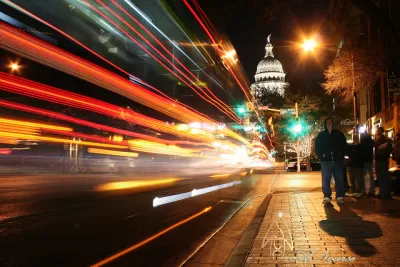
Tina Bellon reports on Austin's efforts to build out their transit system and the questions surrounding potential ridership. The city plans to spend close to $20 billion on infrastructure that includes a $7.1 billion project that would connect the north, south, and east parts of the city by light rail and significantly expand bus routes. With a more reliable and comprehensive system in place, city officials hope more people will choose transit over cars to reduce traffic and pollution in the increasingly congested city.
But skeptics like Gerald Daugherty, a former Republican commissioner in Travis County, argue that Austinites won't give up their cars that easily, with only 4 percent of residents using public transit before the pandemic. Daugherty supports road-based solutions such as clean vehicles and dedicated bus lanes, in addition to road expansion like the controversial I-35 project.
Austin is also revising its zoning and land use code to encourage denser development and increase housing supply near employment and transit centers.
Read the full story: Car-centric Austin is building transit. Will anyone ride it?

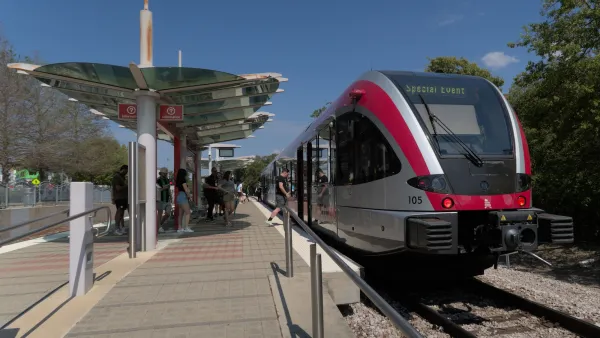
Austin's Project Connect has shrunk to less than half its proposed length — at a higher cost
A highly anticipated light rail project is quickly diminishing in scope as costs soar.
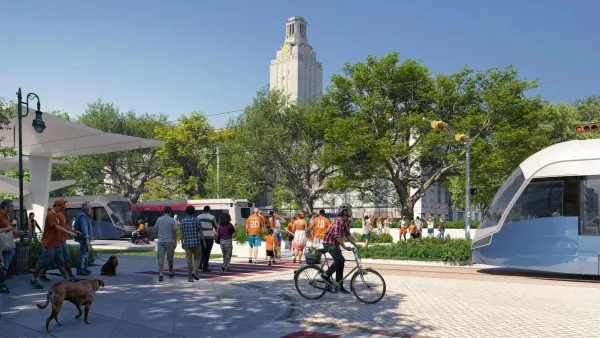
Austin Light Rail Project Begins Work, Could Open in 2033
The Austin Transit Partnership awarded a contract for pre-construction activities for a 10-mile light rail line.
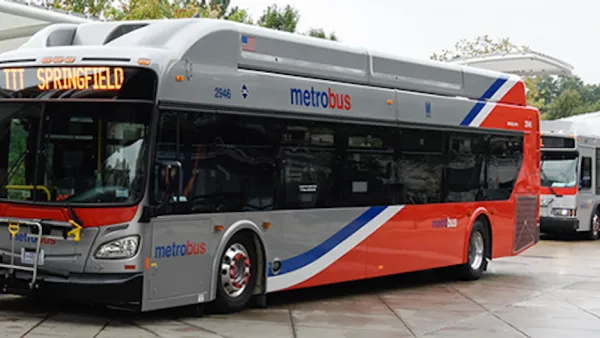
DC Metro Is Betting on Buses
The agency plans to significantly expand bus service, which can be added faster and at a lower cost than rail projects.

Planetizen Federal Action Tracker
A weekly monitor of how Trump’s orders and actions are impacting planners and planning in America.

The state-sanctioned urbicide of Austin
People don’t kill cities. Freeways do.

Colorado’s Largest Data Center Could Rise Next to Homes — Without a Public Hearing
The proposed campus would consume 11 times the power of Denver International Airport; as it has across the country, opposition mounts.

Nation's most wind-powered state turns to coal as data centers increase energy demand
For the first time in decades, Iowa has increased its generation of coal power.

NYC cools commuters with city's first rain garden above a bus stop
New York City officials say the plants in the rain garden can absorb 16 gallons of rainwater during heavy storms.

Brightline West’s future may rely on $6 billion federal loan
The company has until Nov. 2 to make a $400 million equity investment into its proposed high-speed rail line.

FREE Course: Walkable City 1: Why Walkability?
After describing his path towards focusing on walkability as the essence of good planning, Jeff Speck marches through his five principal reasons for making more walkable places.
Reinventing Malls: Planning Alchemy—Turning Gray Fields Into Gold
The course focuses on the opportunities and imperatives that shape reinvention of mall sites.

Greater Baltimore Committee
Eagle County Government
Harvard University Graduate School of Design
The Architects Foundation
University of Cincinnati Online
The Pocatello Development Authority
The Urban Renewal Agency of the City of Pocatello
Journal of the American Planning Association