A highly anticipated light rail project is quickly diminishing in scope as costs soar.


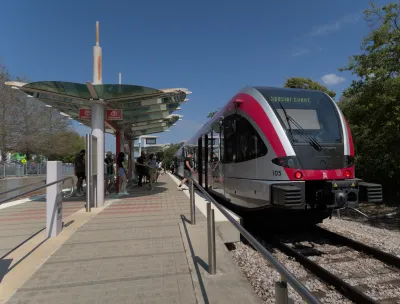
Almost four years after Austin residents voted to increase city property taxes to fund a $7.1 billion light rail proposal, the project has been whittled down to just 10 miles of projected rail at a cost of $8.2 billion. Land acquisition costs nearly quadrupled as Austin land values rose rapidly and more properties along the line were needed than previously thought.
According to reporting by Joshua Fechter in The Texas Tribune, "The new plan no longer reaches Austin-Bergstrom International Airport and the number of stops was cut from 26 to 15." The per-mile cost has risen to three times more than the 2020 estimate, Fechter adds.
In 2024, some residents sued the city, saying that the project is no longer what they voted for. Another lawsuit will decide whether the city can use property taxes to fund transit at all. The project has also received none of the federal funding it was relying on.
According to Fechter, "Officials and transit advocates say that even the smaller light rail plan is necessary to give people more options to move around the state’s fourth-largest urban area as it grows." Austin Transit Partnership intends to break ground on the project next year.
FULL STORY: Bigger price tag, smaller footprint: How Austin’s Project Connect went off the rails


Austin’s Project Connect Funding Safe for 2025
The light rail project is moving ahead with plans to finalize its environmental impact review by late 2025.
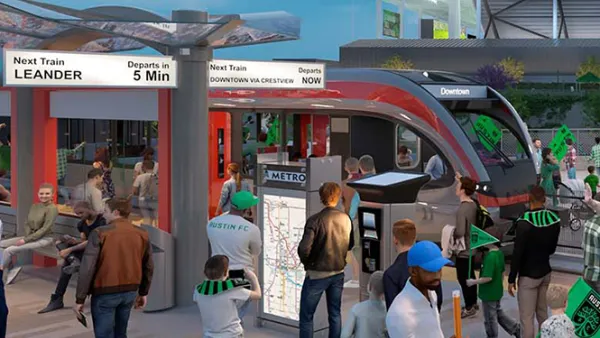
Texas Attorney General Calls Project Connect Funding Scheme Illegal
The massive transit project’s unique funding scheme could run afoul of state law.
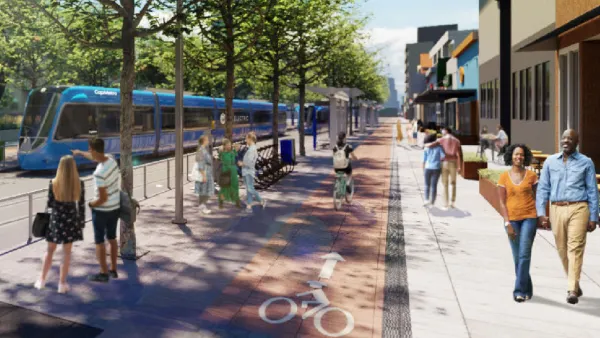
Austin’s Project Connect Faces More Hurdles
Two proposed bills in the Texas state legislature call for more voter oversight of the mass transit project, which could imperil the transit expansion approved by voters in 2020.

Planetizen Federal Action Tracker
A weekly monitor of how Trump’s orders and actions are impacting planners and planning in America.

The state-sanctioned urbicide of Austin
People don’t kill cities. Freeways do.

US to reduce Colorado River water deliveries to Mexico
A new Colorado Treaty amendment reduces Mexico’s Colorado River water allocation by 250,000 acre feet.

Amtrak not solely to blame for New Jersey commuter rail's unreliability, report finds
A new study from the Garden State initiative found that NJ Transit’s budget grew 20% across a 4 year period, but reliability declined significantly over the same period.

EPA erases limits on planet-warming pollution from power plants
Under Monday’s plan, power plants would still have some limits on how much mercury, arsenic and other contaminants they can emit.

Phoenix announces new on-demand transit service, more frequent RAPID buses
Both new services will launch in October, and are part of Phoenix's Project Effective Access Solutions for Easing Congestion.

FREE Course: Walkable City 1: Why Walkability?
After describing his path towards focusing on walkability as the essence of good planning, Jeff Speck marches through his five principal reasons for making more walkable places.
Reinventing Malls: Planning Alchemy—Turning Gray Fields Into Gold
The course focuses on the opportunities and imperatives that shape reinvention of mall sites.

Eagle County Government
Harvard University Graduate School of Design
Nashville Planning Department
The Architects Foundation
University of Cincinnati Online
The Pocatello Development Authority
The Urban Renewal Agency of the City of Pocatello
Journal of the American Planning Association