The one-year moratorium is a stopgap measure to assist homeowners affected by recent wildfires as the state assesses ways of addressing the root causes of increasingly damaging natural disasters.


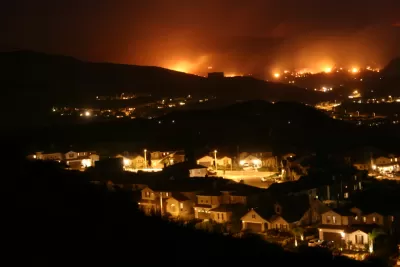
In an effort to help homeowners affected by recent wildfires, writes Dale Kasler, California has imposed a one-year ban on insurance companies dropping homeowners in recent fire zones from their insurance policies. The moratorium, which includes areas affected by the Dixie, Caldor, and other 2021 fires, "came a month after Lara imposed a similar moratorium affecting 25,000 homeowners who live in the vicinity of the Lava and Beckwourth Complex fires."
The ban includes parts of 22 Northern California counties and about 325,000 homeowners, but Insurance Commissioner Ricardo Lara "acknowledged that the moratorium isn’t a cure-all for the breakdown of the property-casualty insurance market in areas prone to wildfires," but rather short-term relief for a long-standing crisis. "The insurance commissioner has been negotiating with the industry to find ways to stabilize the rural markets," where homeowners often have to resort to the state's FAIR plan, "which sells bare-bones policies that insure only against wildfire risk. By the time they’re finished purchasing separate policies covering burglary and other perils, their annual insurance bill has doubled or tripled, costing them thousands."
"Among other things, negotiators are trying to establish standards for home and community “hardening” — including fuel breaks, building retrofits and other measures — that would bring insurers back into areas they’ve been deserting."
FULL STORY: California halts insurance cancellations in major wildfire areas across 22 counties

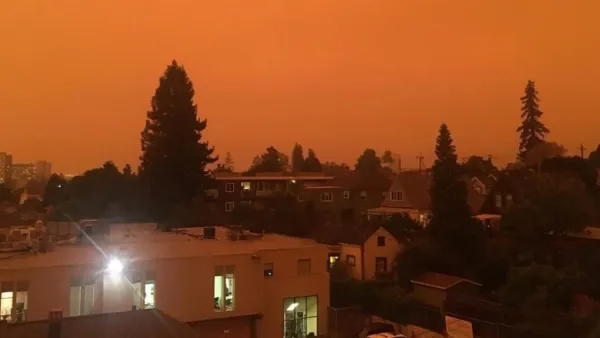
California Insurers Call for Pricing Based on 'Catastrophic Modeling'
Home insurers argue they should be able to base policy costs on modeling that accounts for future risks from climate change and overdevelopment.

Over a Quarter of US Homes Face ‘Severe or Extreme’ Climate Risk
The number of U.S. homes at risk from hurricanes, fires, or flooding is valued at close to $13 trillion.
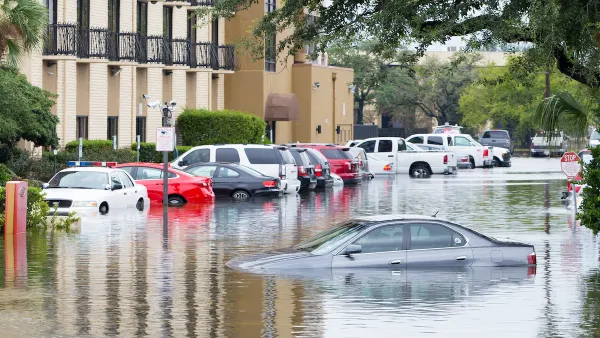
Migration to Disaster-Prone Areas Persists
Regions at high risk for flooding, wildfires, and other climate-fueled disasters continue to see rapid population growth.

Planetizen Federal Action Tracker
A weekly monitor of how Trump’s orders and actions are impacting planners and planning in America.

The state-sanctioned urbicide of Austin
People don’t kill cities. Freeways do.

US to reduce Colorado River water deliveries to Mexico
A new Colorado Treaty amendment reduces Mexico’s Colorado River water allocation by 250,000 acre feet.

5 New England states march closer to 800 megawatt wind energy project
Securing federal approval for the project may be complicated under the Trump administration, which has historically been hostile towards domestic wind power.

Baltimore to break ground on $50 million Transit Priority Project
The project will bring faster bus trips, safer streets and better bike connections to Baltimore.

Airbnb launches $250 million 'last-dollar financing' housing accelerator, makes first investment in Austin
The company will put $6.4 million towards affordable housing development in Texas’ capital.

FREE Course: Walkable City 1: Why Walkability?
After describing his path towards focusing on walkability as the essence of good planning, Jeff Speck marches through his five principal reasons for making more walkable places.
Reinventing Malls: Planning Alchemy—Turning Gray Fields Into Gold
The course focuses on the opportunities and imperatives that shape reinvention of mall sites.


Eagle County Government
Harvard University Graduate School of Design
Nashville Planning Department
The Architects Foundation
University of Cincinnati Online
The Pocatello Development Authority
The Urban Renewal Agency of the City of Pocatello
Journal of the American Planning Association