Climate change is causing more destructive wildfires, prompting home insurers to reconsider coverage in the state.


More destructive wildfires bolstered by climate change are causing Texas insurers to take note, write Delger Erdenesanaa and Christopher Flavelle in the New York Times. “In most of Texas, wildfires happen in the summer. But across the Southern Plains, including the Texas Panhandle, fire risk is highest around March when temperatures warm, strong winds blow over the flat landscape and dry grass left from the previous growing season can easily catch fire.”
The Smokehouse Creek fire raging in the Panhandle region is now the largest in the state’s history, fueled by high temperatures, low humidity, and strong winds. “Temperatures in Texas have risen by 0.61 degrees Fahrenheit per decade since 1975, according to a 2021 report by the state climatologist’s office,” while relative humidity has decreased.
“Texas homeowners saw their insurance rates increase 53.6 percent between 2019 and 2023, according to data compiled by S&P Global Market Intelligence.” Some insurers have started leaving the state altogether, mirroring a similar situation in California.
Read the full story: Climate Change Is Raising Texas’ Already High Wildfire Risks

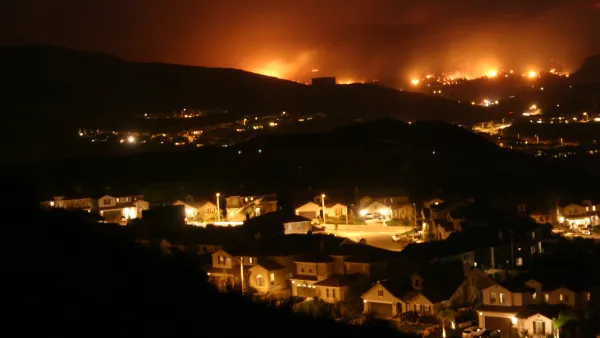
California Bans Insurance Companies From Dropping Homeowners in Wildfire Zones
The one-year moratorium is a stopgap measure to assist homeowners affected by recent wildfires as the state assesses ways of addressing the root causes of increasingly damaging natural disasters.
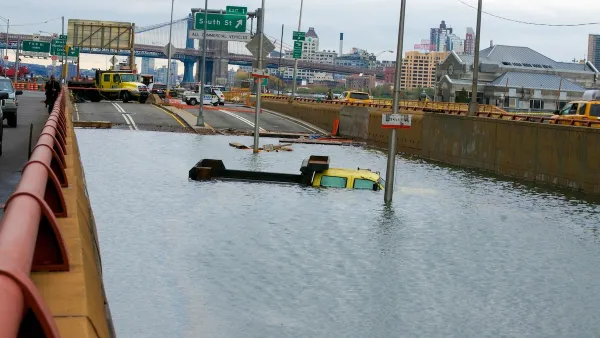
Over a Quarter of US Homes Face ‘Severe or Extreme’ Climate Risk
The number of U.S. homes at risk from hurricanes, fires, or flooding is valued at close to $13 trillion.
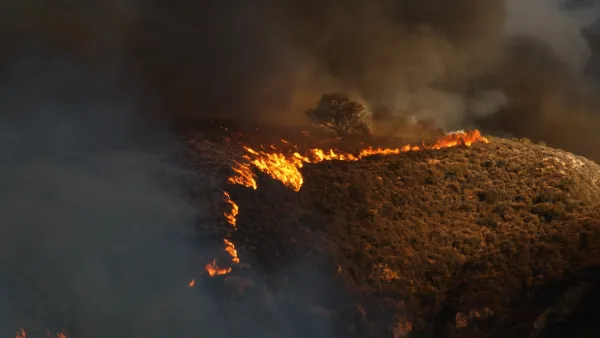
December Wildfires Could Signal Shifting Fire Season
A mix of strong seasonal Santa Ana winds and an unusually dry year is fueling winter wildfires in California.

Planetizen Federal Action Tracker
A weekly monitor of how Trump’s orders and actions are impacting planners and planning in America.

Amtrak, CN end decades-long dispute with eight-year agreement
The new operating agreement establishes an updated framework for the companies to work together, including processes to resolve disputes.

Judges permit Denver to divert 77,000 acre feet from the Colorado River for reservoir expansion
Overuse and climate change have caused the Colorado River’s water levels to plummet.

NYC DOT wants faster, more permanent street upgrades
The city is examining ways to build more concrete infrastructure without getting entangled in 'decades-long' projects.

'Something we’ve never seen before:' rising utility rates could strain city finances nationwide
Data centers, climate change and other factors have caused utility rates in the United States to increase by 38% since 2020.

Trump to overrule local leaders, lease millions of acres of America’s Pacific Island territories’ seafloors to mining companies
International law says that the Indigenous people of America’s territories have a right to prior and informed consent regarding projects that impact their countries.

FREE Course: Walkable City 1: Why Walkability?
After describing his path towards focusing on walkability as the essence of good planning, Jeff Speck marches through his five principal reasons for making more walkable places.
Reinventing Malls: Planning Alchemy—Turning Gray Fields Into Gold
The course focuses on the opportunities and imperatives that shape reinvention of mall sites.

.jpg)
Harvard University Graduate School of Design
KFH Group Inc.
Greater Baltimore Committee
The Architects Foundation
University of Cincinnati Online
The Pocatello Development Authority
The Urban Renewal Agency of the City of Pocatello