Small entrepreneurs are working to combat 'food deserts' by bringing fresh, healthy foods to communities lacking access to major grocery stores. But price continues to be a major factor in people's food choices.


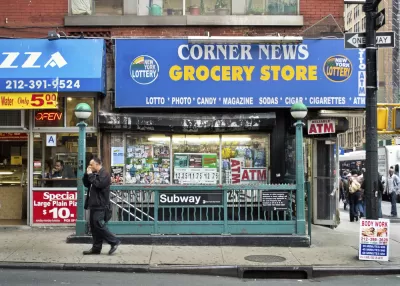
In an effort to fight what some are calling "retail redlining," entrepreneurs across the country are opening corner stores focused on providing fresh, healthy foods to their communities, and, in some cases, gaining institutional support. As reported by Patrice Worthy, "Washington DC recently launched a $3m initiative to bring 'new food and retailers' to the wards 4, 7 and 8 in the city."
Small business owners need support to stock healthier foods, as "[m]any small businesses like corner stores don’t stock produce because it’s highly perishable and has a small profit margin with a lot of waste."
Despite their romanticized appeal, "[t]hese community corner stores are only a small piece of what’s needed to give more people access to healthy food." According to Ellen Vollinger, legal director and director of advocacy on behalf of the Supplemental Nutrition Assistance Program (Snap/food stamps) at the Food Research and Action Center, they key is the federal SNAP program, because "[t]he biggest barrier to healthy food is price according to a June report released by the US Food and Nutrition Service." Under new rules announced by the Biden administration, average SNAP benefits "which were $121 per person before the pandemic, will rise by $36 permanently." Meanwhile, corner stores can fill a critical gap in access for underserved communities.
Read the full story: Candy v kale: healthy food comes to US corner stores in fight against ‘retail redlining’

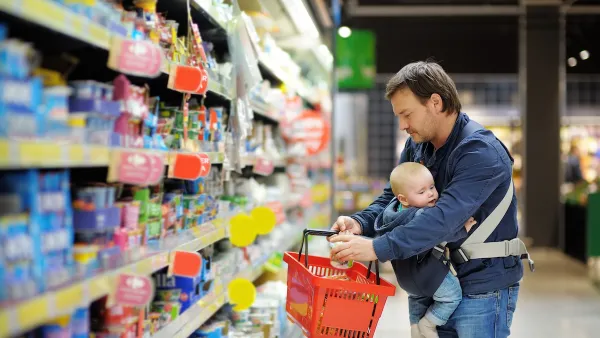
Even in ‘Food Deserts,’ Independent Grocers Struggle to Survive
Government support has helped open stores in underserved communities, but cost and scale make it difficult for small businesses to survive long-term.
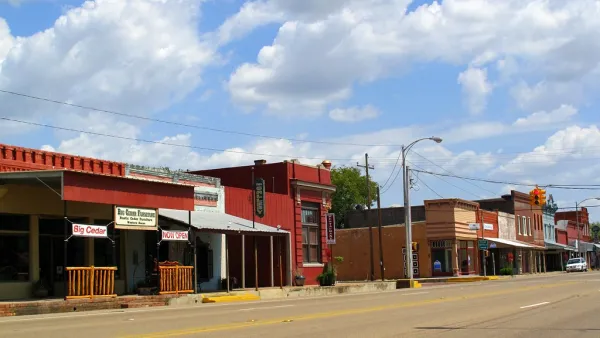
The Food Deserts of Rural America
When a town doesn’t have a grocery store, it means people don’t have access to food. But grocery stores also play an essential social and economic role in rural places. Community stores are trying to fill in the void.
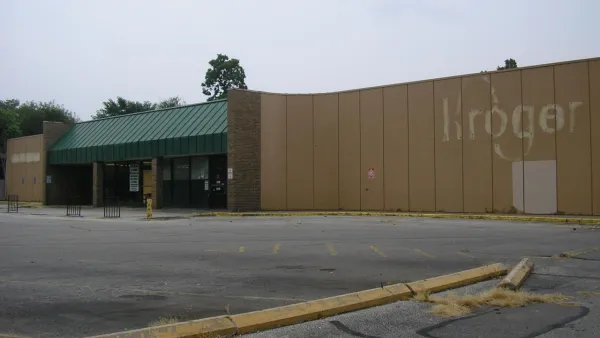
Food Insecurity a Growing Problem in Louisville
Supermarket closings have turned parts of the city into food deserts. As a result, residents lack access to fresh food and suffer health and economic consequences.

Planetizen Federal Action Tracker
A weekly monitor of how Trump’s orders and actions are impacting planners and planning in America.

Amtrak, CN end decades-long dispute with eight-year agreement
The new operating agreement establishes an updated framework for the companies to work together, including processes to resolve disputes.

Judges permit Denver to divert 77,000 acre feet from the Colorado River for reservoir expansion
Overuse and climate change have caused the Colorado River’s water levels to plummet.

Atlanta City Council unanimously backs $3.5 billion Beltline light rail project
The resolution was drafted after Atlanta Mayor Andre Dickens pulled support for the Atlanta Streetcar extension last year.

SEPTA to bring nearby frequent transit to over 1 million new riders as part of decade-long plan
The agency's Accelerate plan will also bring frequent transit to twice the amount of jobs that are currently located near it.

NYC plants over 18,000 trees, the most new foliage in a decade
Many of the trees were planted in communities vulnerable to extreme heat.

FREE Course: Walkable City 1: Why Walkability?
After describing his path towards focusing on walkability as the essence of good planning, Jeff Speck marches through his five principal reasons for making more walkable places.
Reinventing Malls: Planning Alchemy—Turning Gray Fields Into Gold
The course focuses on the opportunities and imperatives that shape reinvention of mall sites.

City of Thousand Oaks
City of Wisconsin Rapids
Harvard University Graduate School of Design
The Architects Foundation
University of Cincinnati Online
The Pocatello Development Authority
The Urban Renewal Agency of the City of Pocatello