The first-of-its-kind declaration triggers major water cutbacks for Arizona farmers and reduced allocations for Nevada and Mexico.


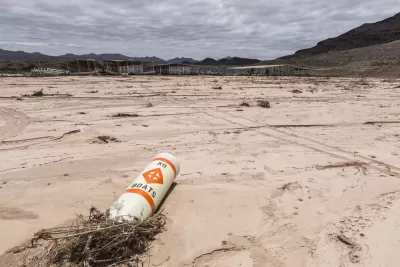
With water in Lake Mead at a critically low level – the lowest in the reservoir's nearly hundred-year history – the U.S. Bureau of Reclamation has declared a water shortage, triggering "mandatory cutbacks next year that will bring major challenges for Arizona farmers and reduce the water allotments of Nevada and Mexico." As reported by Ian James and Zayna Syed, the declaration "has been anticipated for months and was triggered by the spiraling decline of Lake Mead, which stores water used by Arizona, Nevada, California and Mexico." In particular, "[f]armers in part of central Arizona will face major cutbacks in water deliveries next year, and they’re preparing for the supplies to be entirely shut off in 2023."
"The reductions are taking effect under a 2019 agreement called the Drought Contingency Plan, which was aimed at reducing the risks of Lake Mead falling to critical lows. But as extreme heat and unrelenting drought have persisted across much of the watershed, the levels of the Colorado’s largest reservoirs have fallen faster than had been expected." The river "provides water for cities, tribal nations and about 4.5 million acres of farmland from Wyoming to the U.S.-Mexico border. About 70% of the water diverted from the river in the U.S. is used for agriculture, flowing to fields of hay and cotton, fruit orchards and farms that produce much of the country’s winter vegetables."
But the Colorado's water "has long been chronically overallocated under the 1922 Colorado River Compact and subsequent agreements, with more water promised on paper than what the river can supply in an average year." J.B. Hamby, vice president of California's Imperial Irrigation District, which holds the largest single water entitlement on the river, said "everyone needs to recognize the Colorado River is now in 'an era of limits' that requires everyone along the river to understand that water use must be limited," while some conservationists "have long called for the government to drain Lake Powell at Glen Canyon Dam and instead store the water downstream in a single reservoir at Lake Mead." The new federal infrastructure bill "includes money to improve so-called natural infrastructure, including forests, watersheds and underground aquifers, which could help bolster the supply, or at least slow the decline" of water supplies in the region.
FULL STORY: First-ever water shortage on the Colorado River will bring cuts for Arizona farmers

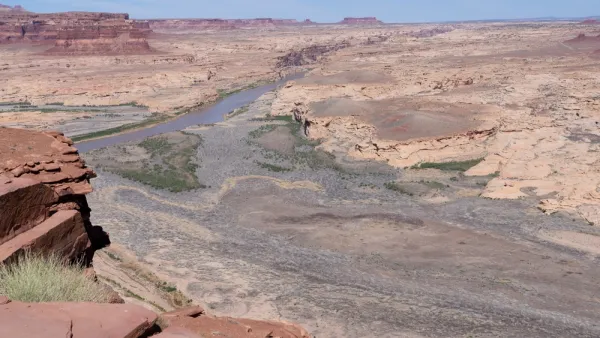
Federal Program Provides Direct Payments for Colorado River Water Conservation
A water buyback program will pay farmers who reduce their water use in an effort to sustain the West’s reservoirs, which are at historically low levels.
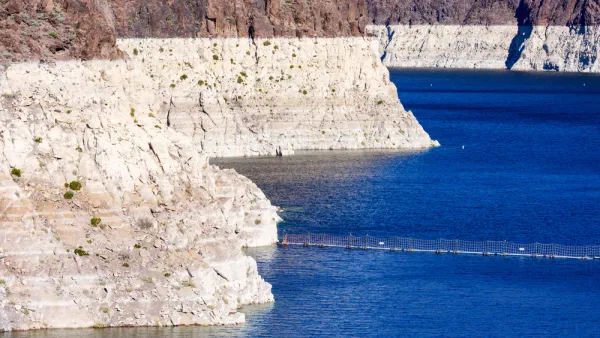
Colorado River Water Crisis Deepens
The states that rely on the Colorado’s water must make drastic cuts in water usage to maintain use of the West’s most important—and most threatened—water source.
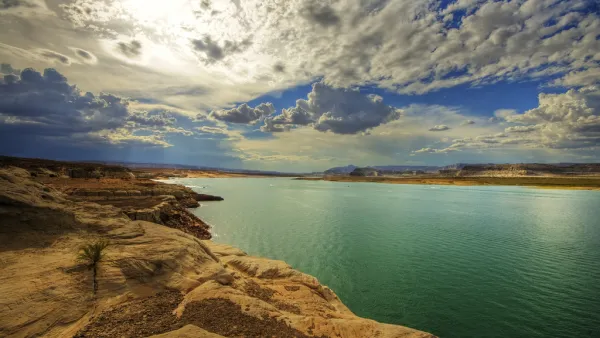
Is Glen Canyon Dam Obsolete?
As climate changes in the Rockies and the southwest, Lake Powell is gradually shrinking. The debate over Glen Canyon Dam is on again, and this time environmentalists aren't the only ones against it.

Planetizen Federal Action Tracker
A weekly monitor of how Trump’s orders and actions are impacting planners and planning in America.

The state-sanctioned urbicide of Austin
People don’t kill cities. Freeways do.

US to reduce Colorado River water deliveries to Mexico
A new Colorado Treaty amendment reduces Mexico’s Colorado River water allocation by 250,000 acre feet.

Mamdani overhauls NYC's Vision Zero plan with 100 new policy goals
The overhaul aims to reduce traffic deaths and make streets safer for pedestrians, cyclists and drivers through lower speed limits, new safety infrastructure and more.

Amtrak not solely to blame for New Jersey commuter rail's unreliability, report finds
A new study from the Garden State Initiative found that NJ Transit’s budget grew 20% across a 4 year period, but reliability declined significantly over the same period.

EPA erases limits on planet-warming pollution from power plants
Under Monday’s plan, power plants would still have some limits on how much mercury, arsenic and other contaminants they can emit.

FREE Course: Walkable City 1: Why Walkability?
After describing his path towards focusing on walkability as the essence of good planning, Jeff Speck marches through his five principal reasons for making more walkable places.
Reinventing Malls: Planning Alchemy—Turning Gray Fields Into Gold
The course focuses on the opportunities and imperatives that shape reinvention of mall sites.

Eagle County Government
Harvard University Graduate School of Design
Nashville Planning Department
The Architects Foundation
University of Cincinnati Online
The Pocatello Development Authority
The Urban Renewal Agency of the City of Pocatello
Journal of the American Planning Association