The rankings in a recent report are about the potential of U.S. cities to become more like the 15-minute city model provided by Paris.


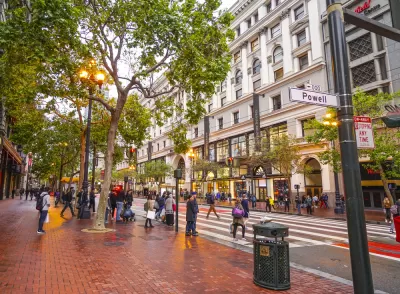
Natalie Bicknell shares news of a new report by moveBuddha, an online company that shares information and resources for moving, that ranks U.S. cities by their achievement of the "15-minute city" ideal that has gained traction in urbanism circles in recent years.
"[Mi]d-size American cities of 250,000 to 750,000 residents dominated the rankings of the top 25 future 15-minute cities in the United States," report Bicknell of the report's findings. A few large cities "known for engaging in urban planning on the neighborhood level," namely, Chicago and Philadelphia also made the cut.
The report compares data from 78 large U.S. cities on metrics like bike and walk scores, access to dining, safety, child care, schools, medical facilities, and more, according to an article for moveBuddha by Joe Robison.
Bicknell includes one critical note about the methodology of the report. The study excluded destinations that could be accessed by transit. "The decision was based on guidance from the Congress for the New Urbanism (CNU), which has decided to omit transit from its definition of a 15-minute city," explains Bicknell.
So which cities topped the list? Miami came in at number one, with San Francisco and Pittsburgh coming in second and third, respectively.
Read the full story: Study Ranks U.S. Cities by 15-Minute City Potential
What the ‘Walk Score’ Misses
A popular walkability assessment omits key factors that impact different demographics and can direct development resources to already wealthy neighborhoods.
Is the City Moving to the Suburbs?
Is the recent trend to build more walkable suburbs a sign of sustainable change?
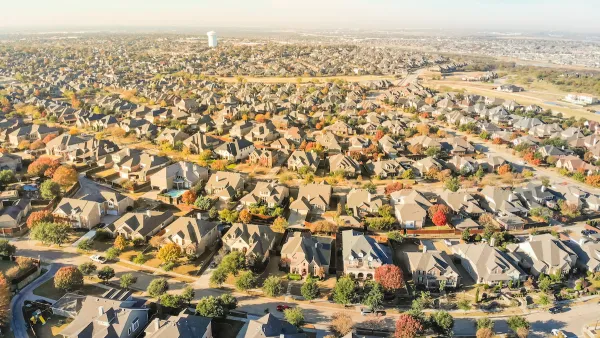
The Changing Shape of American Suburbs
Housing costs and availability are pushing more American households, including young families, to suburbs and exurbs — and they’re demanding changes.

Planetizen Federal Action Tracker
A weekly monitor of how Trump’s orders and actions are impacting planners and planning in America.

California plans to bury El Niño’s downpour
If the state plays its cards right, it may be able to store a billion acre-feet of El Niño’s water in aquifers.

Desperate measures: Advocates weigh draining Lake Powell to fill Colorado River
Draining the reservoir could reduce evaporation losses by a couple hundred thousand acre-feet.

In Texas, data centers are swallowing promised parkland
Residents who moved to Taylor, Texas for a rural community now have to contend with three data centers in their backyard.

How a Chicago-sized wind farm beat the odds and powered on
The project spanned five presidential administrations and a standoff with a U.S. military base.

MTA gives itself 30 days to transform pit into basketball court
The site has been under construction since 2022; the city originally estimated it would finish the court in 2024.

FREE Course: Walkable City 1: Why Walkability?
After describing his path towards focusing on walkability as the essence of good planning, Jeff Speck marches through his five principal reasons for making more walkable places.
Reinventing Malls: Planning Alchemy—Turning Gray Fields Into Gold
The course focuses on the opportunities and imperatives that shape reinvention of mall sites.

City of Rosemead
Rutgers University, Edward J. Bloustein School of Planning and Public Policy
One Hundred Miles
Hunter College, City University of New York (CUNY)
The Architects Foundation
University of Cincinnati Online
City of Cambridge
Montrose County
The Pocatello Development Authority