Despite mounting evidence that cities like New York must build more housing to accommodate their growing populations and stem the housing affordability crisis, some of the city's most progressive neighborhoods are resisting new development.


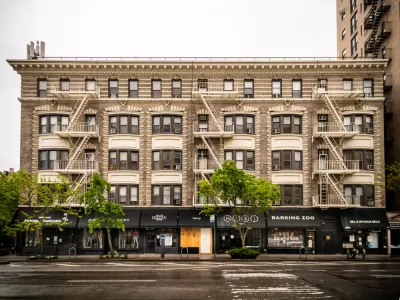
In an opinion piece for the New York Daily News, Ryder Kessler asserts that the "New Yorkers most engaged in left-wing politics are often the most opposed to the progressive change they preach," particularly when it comes to housing policy.
At a meeting considering Haven Green, "an affordable housing development for low-income, formerly homeless, largely LGBTQ seniors proposed for a space now occupied by the Elizabeth Street Garden," Kessler found the majority opinion held that "[a]ffordable housing should be built, board members said, just not here." Yet the facts, Kessler writes, "are undeniable: New York City must build. Between 2009 and 2018, we added only 19 housing units for every 100 new jobs — one for every five new New Yorkers. With demand outstripping supply, prices nearly doubled."
Critics of market-rate development "argue that new market-rate housing doesn’t help and affordable units will still be inaccessible. But research is clearer by the day: New units of all kinds drive all prices down, and those in desirable neighborhoods take pressure off lower-income areas more likely to suffer from displacement."
To Kessler, "Community Boards’ efforts to block new housing is a symptom of New York progressives’ tendency to abandon expert evidence, racial equity and empowerment of the marginalized — even as they attend rallies to chant 'housing is a human right.'"
Read the full story: Progressives’ glaring development hypocrisy
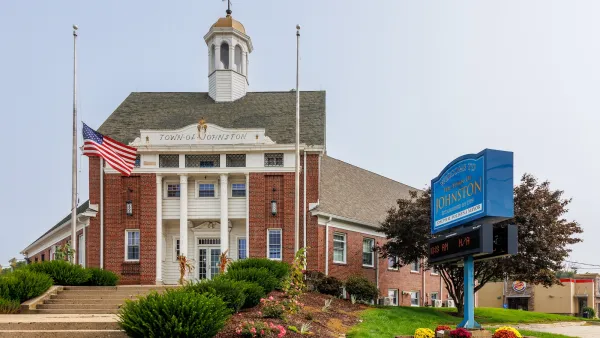
Judge says Rhode Island town can't seize private lot to block affordable housing
The town of Johnston moved to seize a lot for municipal buildings after its owners submitted a plan for a 254-unit housing development.
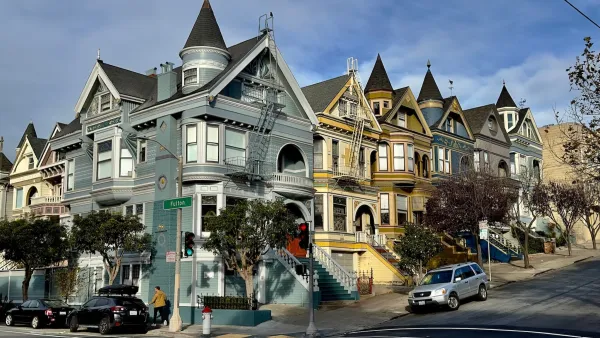
The trouble with QUIMBY, revisited — a rebuttal to a rebuttal
In a perfect world, QUIMBY might get us a bit closer where we need to go. But, this YIMBY argues, not close enough.
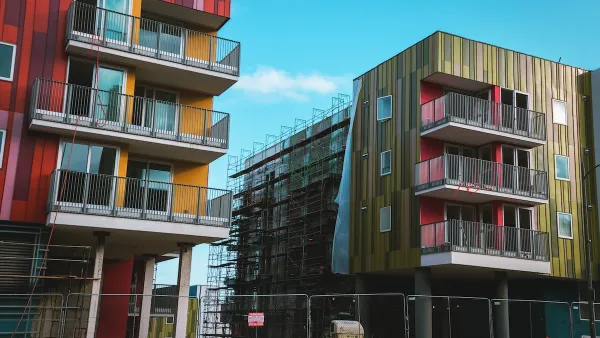
Survey: 59% of LA Residents Want Dense Housing in Their own Neighborhoods
A UCLA survey reveals strong support for new apartments across the city, bucking the notion that Angelenos are NIMBYs.

Planetizen Federal Action Tracker
A weekly monitor of how Trump’s orders and actions are impacting planners and planning in America.

California plans to bury El Niño’s downpour
If the state plays its cards right, it may be able to store a billion acre-feet of El Niño’s water in aquifers.

Desperate measures: Advocates weigh draining Lake Powell to fill Colorado River
Draining the reservoir could reduce evaporation losses by a couple hundred thousand acre-feet.

US buildings threatened, destroyed by fires set to triple by 2060
Researchers found a high fire risk for socioeconomically vulnerable neighborhoods in the American West.

LA residents may be allowed to paint their own crosswalks
Councilwoman Katy Yaroslavsky put out a motion instructing the Los Angeles Department of Public Transportation to study the feasibility of allowing volunteers to paint crosswalks.

Dallas moves to overhaul its zoning code
The city's zoning reform will allow more multi-family and mixed-use developments.

FREE Course: Walkable City 1: Why Walkability?
After describing his path towards focusing on walkability as the essence of good planning, Jeff Speck marches through his five principal reasons for making more walkable places.
Reinventing Malls: Planning Alchemy—Turning Gray Fields Into Gold
The course focuses on the opportunities and imperatives that shape reinvention of mall sites.

City of Rosemead
Rutgers University, Edward J. Bloustein School of Planning and Public Policy
One Hundred Miles
Hunter College, City University of New York (CUNY)
The Architects Foundation
University of Cincinnati Online
City of Cambridge
Montrose County
The Pocatello Development Authority