Strong place attachment makes it difficult for New Yorkers to settle into their new homes, but many are finding ways to recreate their favorite parts of the city elsewhere.


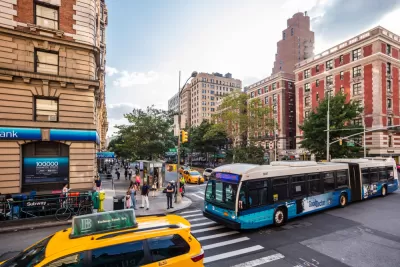
Some New Yorkers who moved away during the last year and a half are struggling to fit into their new surroundings, writes Jennifer Miller. "Many of the estimated 400,000 New Yorkers who left the city in the early months of the pandemic have since returned, but among those who moved permanently, many have found the transition to be emotionally fraught." The challenges have "some people grappling with their decision to leave, even if they know they aren’t going back." Former New Yorkers "also prioritized access to public transportation above the average renter, even in cities that are not known for their transit systems," leaving them more dissatisfied with the walkability–or lack thereof–outside of New York.
Katherine Loflin, a consultant who studies emotional and sociological attachments to place, "helped pioneer the study of 'place attachment'— how our bonds to a specific location help individuals and communities thrive." According to her research, "strong place attachment depends on three factors: the ability to enjoy social opportunities, pleasing aesthetics and a sense of belonging or welcoming." People thrive when they find a familiar sense of community and what Loflin calls heart. "Heart is what Ms. Loflin calls 'the secret sauce' of place attachment. And New Yorkers have a lot of it."
But for many who have made the move elsewhere, the reward can be worth it, says Laura Young of the New Denizen blog. "Worst case scenario, they move back to New York; best case scenario, they are living a happier, more fulfilling life.
FULL STORY: Why Is It So Hard to Say Goodbye to New York City?


Pandemic-Proof Real Estate: Whither NYC?
The president of Hudson Companies and The Planning Report’s first editor, David Kramer, discusses New York City’s COVID response and recovery and its likely impact on multifamily housing development going forward.
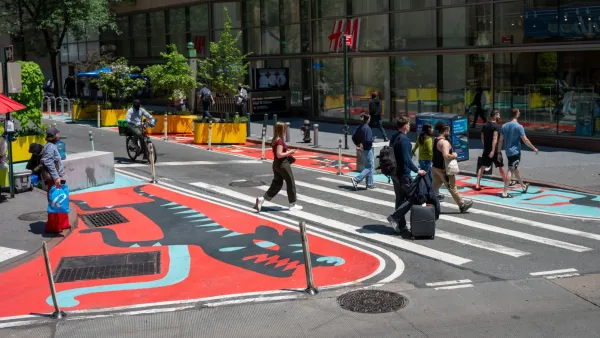
See Downtown Brooklyn’s Dramatic Complete Streets Transformation
A streetscape redesign spearheaded by the Downtown Brooklyn Partnership has quickly made many of Brooklyn’s streets unrecognizable.
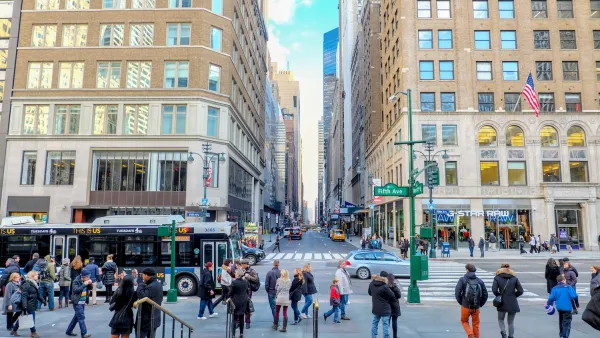
Report Offers Tools for a More Affordable NYC
The activist organization Transportation Alternatives offers detailed recommendations for more efficient and affordable transportation to New York City's Mayor-elect Zohran Mamdani.

Planetizen Federal Action Tracker
A weekly monitor of how Trump’s orders and actions are impacting planners and planning in America.

The state-sanctioned urbicide of Austin
People don’t kill cities. Freeways do.

US to reduce Colorado River water deliveries to Mexico
A new Colorado Treaty amendment reduces Mexico’s Colorado River water allocation by 250,000 acre feet.

5 New England states march closer to 800 megawatt wind energy project
Securing federal approval for the project may be complicated under the Trump administration, which has historically been hostile towards domestic wind power.

Baltimore to break ground on $50 million Transit Priority Project
The project will bring faster bus trips, safer streets and better bike connections to Baltimore.

Airbnb launches $250 million 'last-dollar financing' housing accelerator, makes first investment in Austin
The company will put $6.4 million towards affordable housing development in Texas’ capital.

FREE Course: Walkable City 1: Why Walkability?
After describing his path towards focusing on walkability as the essence of good planning, Jeff Speck marches through his five principal reasons for making more walkable places.
Reinventing Malls: Planning Alchemy—Turning Gray Fields Into Gold
The course focuses on the opportunities and imperatives that shape reinvention of mall sites.

Eagle County Government
Harvard University Graduate School of Design
Nashville Planning Department
The Architects Foundation
University of Cincinnati Online
The Pocatello Development Authority
The Urban Renewal Agency of the City of Pocatello
Journal of the American Planning Association