The pandemic has provided a proving ground for fare-free transit in cities all over the country. For some cities, it might make fiscal sense for these experiments to be made permanent.


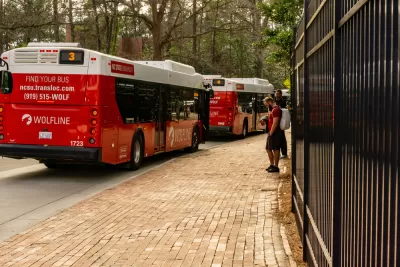
Jake Blumgart reports from Raleigh, North Carolina, where the Covid-19 pandemic has helped advocates for fare-free transit win some political victories for their cause.
The article starts with the example of David Meeker, who before the pandemic estimated that it could take four or five years to pull off a fare-free transit campaign.
"But as COVID-19 swept over the country, the City Council acted quickly to scrap payments for bus riders. That would allow all-door boarding — minimizing interaction with the driver — and it would be a boon for beleaguered essential workers who still had to report to work," explains Blumgart. "In 2021, the City Council has extended the pandemic-era fare-free norm for another budget year. For Meeker and his allies, both in and out of government, this feels like the moment to lock in this policy change."
According to Blumgart, the fare-free proposition is different in a city like Raleigh, where 2 million people rode transit in 2019, than it would be in, for example, New York City or Washington, D.C. "[I]n 2019, the cost of running Raleigh’s bus network was over $31 million with fare revenues only coming to $3.4 million. When the amount spent on collecting that revenue is considered — paying people to collect and move large amounts of physical money — the actual amount is even less," explains Blumgart.
FULL STORY: Raleigh Pushes for Permanent Fare-Free Transit

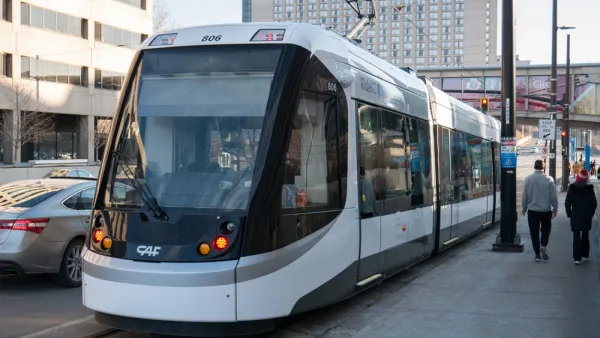
The Limits of Kansas City’s Fare-Free Experiment
For the Missouri city, the economic and social benefits of eliminating transit fares outweigh the costs, but can their success be replicated in bigger cities more dependent on farebox revenue?
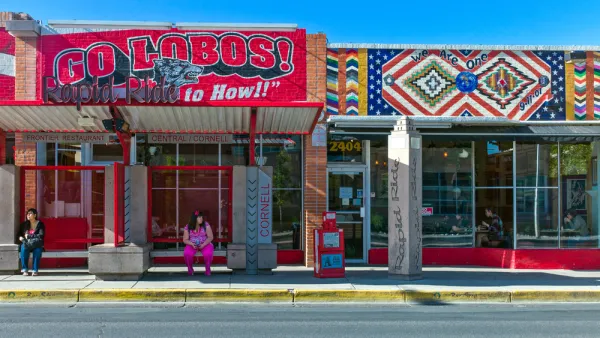
Transit Goes Fare-Free for One Year in Albuquerque
Albuquerque will become one of the largest cities in the nation to launch a fare-free pilot program for transit riders.
'Freedom to Move Act' Would Provide Federal Support for Free Transit Programs
New legislation by Rep. Ayanna Pressley (D-Mass.) would also target fare enforcement on the nation's transit systems.

Planetizen Federal Action Tracker
A weekly monitor of how Trump’s orders and actions are impacting planners and planning in America.

The state-sanctioned urbicide of Austin
People don’t kill cities. Freeways do.

US to reduce Colorado River water deliveries to Mexico
A new Colorado Treaty amendment reduces Mexico’s Colorado River water allocation by 250,000 acre feet.

5 New England states march closer to 800 megawatt wind energy project
Securing federal approval for the project may be complicated under the Trump administration, which has historically been hostile towards domestic wind power.

Baltimore to break ground on $50 million Transit Priority Project
The project will bring faster bus trips, safer streets and better bike connections to Baltimore.

Airbnb launches $250 million 'last-dollar financing' housing accelerator, makes first investment in Austin
The company will put $6.4 million towards affordable housing development in Texas’ capital.

FREE Course: Walkable City 1: Why Walkability?
After describing his path towards focusing on walkability as the essence of good planning, Jeff Speck marches through his five principal reasons for making more walkable places.
Reinventing Malls: Planning Alchemy—Turning Gray Fields Into Gold
The course focuses on the opportunities and imperatives that shape reinvention of mall sites.

Eagle County Government
Harvard University Graduate School of Design
Nashville Planning Department
The Architects Foundation
University of Cincinnati Online
The Pocatello Development Authority
The Urban Renewal Agency of the City of Pocatello
Journal of the American Planning Association