Albuquerque will become one of the largest cities in the nation to launch a fare-free pilot program for transit riders.


The Albuquerque City Council approved a 12-month pilot program to allow fare-free access to the ABQ Ride system, starting on January 1, 2022.
The pilot program will use federal funds approved four months ago to fund the pilot program, according to an article by Jessica Dyer.
Dyer's article provides insight into the public discussion that preceded the vote, and also an explanation for the long duration of time between the approval of funding and the approval of funding. According to Dyer, "some councilors had recently hesitated to set it in motion, voicing reservations about whether the city had adequately planned for security problems that might arise when there is no financial barrier to boarding."
City councilmembers have said they plan to support the fare-free model going forward, if it proves popular with riders, according to a separate article by KOB 4.
FULL STORY: ABQ City Council OKs zero-fare bus program


Albuquerque Remains Committed to Free Transit
Ridership on the city’s transit system has gone up by 20 percent since they eliminated bus fares in 2022.
'Freedom to Move Act' Would Provide Federal Support for Free Transit Programs
New legislation by Rep. Ayanna Pressley (D-Mass.) would also target fare enforcement on the nation's transit systems.
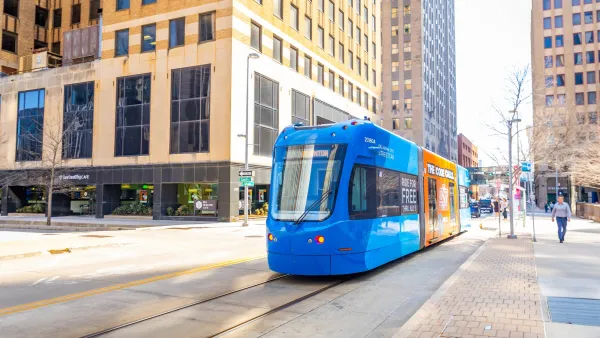
OKC streetcar will stay fare-free after ridership shot up 74%
The downtown streetcar saw a surge in ridership after it eliminated fares in January.

Planetizen Federal Action Tracker
A weekly monitor of how Trump’s orders and actions are impacting planners and planning in America.

The state-sanctioned urbicide of Austin
People don’t kill cities. Freeways do.

US to reduce Colorado River water deliveries to Mexico
A new Colorado Treaty amendment reduces Mexico’s Colorado River water allocation by 250,000 acre feet.

5 New England states march closer to 800 megawatt wind energy project
Securing federal approval for the project may be complicated under the Trump administration, which has historically been hostile towards domestic wind power.

Baltimore to break ground on $50 million Transit Priority Project
The project will bring faster bus trips, safer streets and better bike connections to Baltimore.

Airbnb launches $250 million 'last-dollar financing' housing accelerator, makes first investment in Austin
The company will put $6.4 million towards affordable housing development in Texas’ capital.

FREE Course: Walkable City 1: Why Walkability?
After describing his path towards focusing on walkability as the essence of good planning, Jeff Speck marches through his five principal reasons for making more walkable places.
Reinventing Malls: Planning Alchemy—Turning Gray Fields Into Gold
The course focuses on the opportunities and imperatives that shape reinvention of mall sites.

Eagle County Government
Harvard University Graduate School of Design
Nashville Planning Department
The Architects Foundation
University of Cincinnati Online
The Pocatello Development Authority
The Urban Renewal Agency of the City of Pocatello
Journal of the American Planning Association