A global survey shows that women around the world overwhelmingly cite fear of assault as the top reason for avoiding walking.


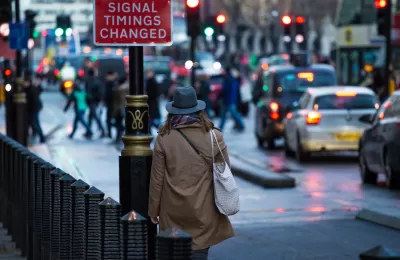
"In a new survey conducted by two Columbia University researchers and published by Leading Cities, people of all genders from 12 countries (including the U.S.) were asked about how safe — or unsafe — they felt while walking in their communities, and how the features of their built environments impacted their perceptions," reports Kea Wilson. Women-identified respondents overwhelmingly cited the fear of sexual assault as the top reason they "always" or "very frequently" choose to avoid walking to their destinations. "Of the small sample of gender non-binary people who responded to the survey, sexual assault also ranked as a top concern. But zero men who responded to the survey said the same."
For urban planners, this research has powerful implications that should influence the way we design streets and cities. "But the researchers behind the paper said that theirs is one of the first attempts to actually quantify just how deeply pervasive (and sometimes deeply inhibiting) fears of violence really are among women and enbies who walk — something which the predominantly male practitioners who shape the street environment don’t always fully appreciate."
Sethi underscores that those fears themselves are often just as big a barrier to women’s mobility as the actual violence and abuse women experience in the street realm. But in many communities, crime prevention strategies don’t prioritize creating environments that feel comprehensively safe — for instance, by cultivating inviting, walkable neighborhoods with lots of other pedestrians around — instead favoring isolated enforcement and prevention strategies at discrete points where crimes have already occurred, or are likely to.
"Interestingly, the features of the built environment that women say would make them feel safer while walking, like active street fronts and wide sidewalks, are not substantially different than what other genders want out of their roadways, too." The study's authors "say the survey provides more than enough evidence that the perspectives of women of diverse backgrounds needed to be better represented in the planning process, particularly in decision-making roles. And when they’re finally heard, cities may be surprised by how many people of all genders start walking for transportation."
FULL STORY: Fear of Assault Keeps Women From Walking

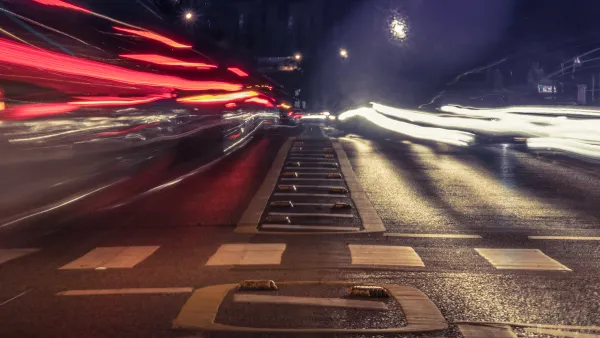
The Vicious Cycle at the Heart of Pedestrian Safety
When people feel unsafe, they walk less; with fewer pedestrians, walking becomes less safe.
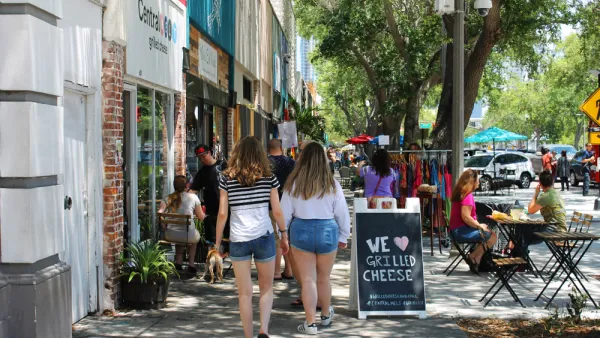
AARP Releases DIY Walk Audit
An updated 'walk audit toolkit' lets you assess pedestrian safety in your neighborhood and advocate for improvements.
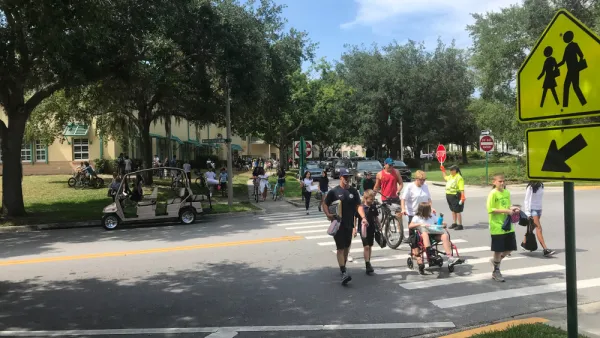
Opinion: Road Safety Data Should Include Close Calls
Even in the absence of lethal collisions, the experience of repeated near-misses can discourage pedestrians from walking and degrade public perception of road safety.

Planetizen Federal Action Tracker
A weekly monitor of how Trump’s orders and actions are impacting planners and planning in America.

The state-sanctioned urbicide of Austin
People don’t kill cities. Freeways do.

US to reduce Colorado River water deliveries to Mexico
A new Colorado Treaty amendment reduces Mexico’s Colorado River water allocation by 250,000 acre feet.

5 New England states march closer to 800 megawatt wind energy project
Securing federal approval for the project may be complicated under the Trump administration, which has historically been hostile towards domestic wind power.

Baltimore to break ground on $50 million Transit Priority Project
The project will bring faster bus trips, safer streets and better bike connections to Baltimore.

Airbnb launches $250 million 'last-dollar financing' housing accelerator, makes first investment in Austin
The company will put $6.4 million towards affordable housing development in Texas’ capital.

FREE Course: Walkable City 1: Why Walkability?
After describing his path towards focusing on walkability as the essence of good planning, Jeff Speck marches through his five principal reasons for making more walkable places.
Reinventing Malls: Planning Alchemy—Turning Gray Fields Into Gold
The course focuses on the opportunities and imperatives that shape reinvention of mall sites.

.jpg)
Eagle County Government
Harvard University Graduate School of Design
Nashville Planning Department
The Architects Foundation
University of Cincinnati Online
The Pocatello Development Authority
The Urban Renewal Agency of the City of Pocatello
Journal of the American Planning Association