Marin County, the wealthy county in the North Bay Area with a history of exclusionary land use and transportation practices, is using the shortage of water to justify blocking the development of an affordable housing project.



"Housing advocates and developers are warily watching California’s intensifying drought and what it may mean in a state that needs millions of new homes to house its residents," reports Emily C. Dooley.
According to Dooley, "the state’s twin issues of housing stock and water availability are colliding." New housing requires more water and puts stress on existing water supplies, which is especially true for the sprawling housing developments that have for decades been the most common form of new housing in the state. At a time when the state is empowering water regulators to divert water supplies, the state needs 120,000 new affordable homes every tear until 2030, according to an estimate by the California Housing Partnership.
Much of the article focuses on the potential consequences of the drought for affordable housing development in Marin County. According to Dooley, the Marin Municipal Water District is considering a moratorium on new water connections after stalling an affordable housing project in the name of water. The decision to stall the water permits for a 74-unit multifamily development approved by the county for low- and extremely low-income residents is also likely to set a precedent for a "healthy aging center" working its way through the permitting process.
Another city, Oakley, in Summit County, Utah, has also taken steps to block development out of concerns about the local water supply, but the Marin County example certainly sets the decision in a different development context. The article invokes the word NIMBY to describe the effect of the drought on housing politics in the state of California. "Housing is needed throughout the state. Where housing opponents usually cite traffic concerns, water concerns could become one more way to thwart development," according to Dooley.
The action by the Marin Municipal Water District to block the construction of affordable housing comes at the same time as governments around the state of California plan to meet the targets for planned housing development according to the mandates of the Regional Housing Needs Assessment process.
FULL STORY: Water and Housing Needs Collide in California’s Severe Drought

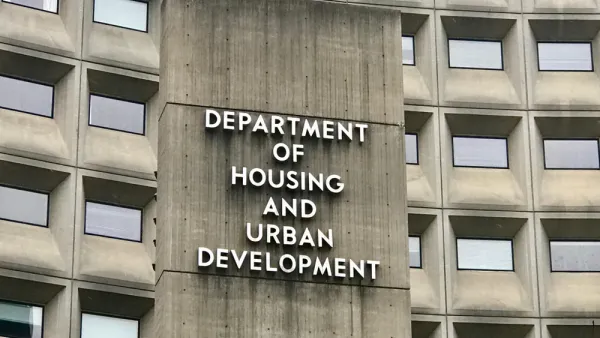
HUD Updates Fair Market Rate Definition
The U.S. Department of Housing and Urban Development announced two actions last week intended to expand the reach of federal housing voucher programs.

Austin’s ‘Affordability Unlocked’ Initiative Faces Lawsuit
A group of 18 plaintiffs is suing to overturn the city of Austin’s “Affordability Unlocked” planning initiative.

Lack of Multi-Family Zones Contributes to Nashville’s High Housing Costs, Study Says
Nashville and surrounding communities allow for a relatively small amount of multi-family housing, according to a new zoning atlas of Middle Tennessee. A regionally focused nonprofit is using the atlas to push for zoning reforms.

Planetizen Federal Action Tracker
A weekly monitor of how Trump’s orders and actions are impacting planners and planning in America.

The state-sanctioned urbicide of Austin
People don’t kill cities. Freeways do.

US to reduce Colorado River water deliveries to Mexico
A new Colorado Treaty amendment reduces Mexico’s Colorado River water allocation by 250,000 acre feet.

Mamdani overhauls NYC's Vision Zero plan with 100 new policy goals
The overhaul aims to reduce traffic deaths and make streets safer for pedestrians, cyclists and drivers through lower speed limits, new safety infrastructure and more.

Amtrak not solely to blame for New Jersey commuter rail's unreliability, report finds
A new study from the Garden State Initiative found that NJ Transit’s budget grew 20% across a 4 year period, but reliability declined significantly over the same period.

EPA erases limits on planet-warming pollution from power plants
Under Monday’s plan, power plants would still have some limits on how much mercury, arsenic and other contaminants they can emit.

FREE Course: Walkable City 1: Why Walkability?
After describing his path towards focusing on walkability as the essence of good planning, Jeff Speck marches through his five principal reasons for making more walkable places.
Reinventing Malls: Planning Alchemy—Turning Gray Fields Into Gold
The course focuses on the opportunities and imperatives that shape reinvention of mall sites.

Eagle County Government
Harvard University Graduate School of Design
Nashville Planning Department
The Architects Foundation
University of Cincinnati Online
The Pocatello Development Authority
The Urban Renewal Agency of the City of Pocatello
Journal of the American Planning Association