The state's department of health is deploying the retrofitted buses to administer vaccines in hard-to-reach communities.


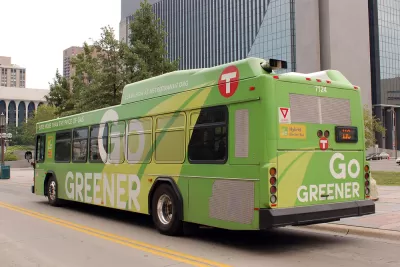
With a 40% reduction in service during the pandemic, Metro Transit, the Twin Cities' public transit agency, had some buses to spare. Meanwhile, some people in the state had difficulties accessing COVID-19 vaccines in their neighborhoods. "In Minnesota, as in many states, Black, Hispanic and Native American residents have received disproportionately fewer vaccine doses." To help get more people vaccinated, writes Henry Pan in Next City, "the Minnesota Department of Health, along with Metro Transit and Blue Cross and Blue Shield of Minnesota, debuted six buses specifically retrofitted to provide COVID-19 vaccines in areas where people need it the most."
The buses "are dispatched to a part of the state if the state health department finds an “obvious gap” in vaccine access. The health department works with partners in the community to identify these gaps, which can include a fear of crowds given social distancing guidelines, a lack of access to transportation and technology, free time, or poor English proficiency. Community organizations can also reach out to the health department to request a vaccine bus."
"Speaking to the challenges of getting people to vaccination events, Blue Cross and Blue Shield of Minnesota spokesperson Jenna Carter says, 'With each and every location, we learn there is no cookie-cutter solution, and each site is custom to the community, so we work hard every day to ensure we are customizing our approach and solution for each community.'"
FULL STORY: Minnesota Repurposes Transit Buses to Give COVID-19 Vaccines to Communities That Need Them Most

Nine Months Later: How the Pandemic Is Changing Communities
Planetizen shares the latest in a series of compendia tackling the effects of the pandemic, now and in the future, for cities and communities.
Twin Cities Trains Move to Fewer Cars, Higher Frequency
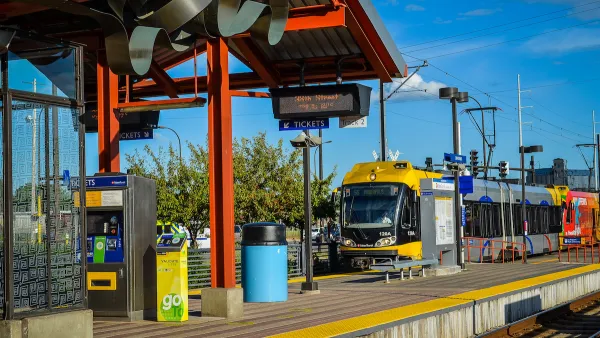
Headways will drop from 15 minutes to 12 minutes.
New Bus Rapid Transit Route Breaks Ground in the Twin Cities
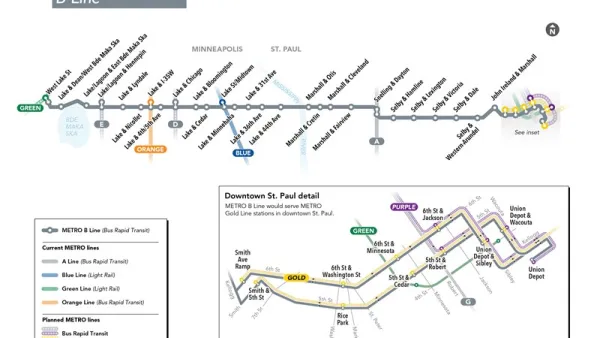
The Twin Cities are on a mission to become the bus rapid transit capital of the United States. The latest improvement to advance that ambition broke ground earlier this week.

The state-sanctioned urbicide of Austin
People don’t kill cities. Freeways do.

US to reduce Colorado River water deliveries to Mexico
A new Colorado Treaty amendment reduces Mexico’s Colorado River water allocation by 250,000 acre feet.

New Jersey’s second-largest city bans standalone data centers
Jersey City will continue to allow co-location facilities, such as those meant for research institutions that store their own data.

Amtrak not solely to blame for New Jersey commuter rail's unreliability, report finds
A new study from the Garden State Initiative found that NJ Transit’s budget grew 20% across a 4 year period, but reliability declined significantly over the same period.

EPA erases limits on planet-warming pollution from power plants
Under Monday’s plan, power plants would still have some limits on how much mercury, arsenic and other contaminants they can emit.

Phoenix announces new on-demand transit service, more frequent RAPID buses
Both new services will launch in October, and are part of Phoenix's Project Effective Access Solutions for Easing Congestion.

FREE Course: Walkable City 1: Why Walkability?
After describing his path towards focusing on walkability as the essence of good planning, Jeff Speck marches through his five principal reasons for making more walkable places.
Reinventing Malls: Planning Alchemy—Turning Gray Fields Into Gold
The course focuses on the opportunities and imperatives that shape reinvention of mall sites.

Eagle County Government
Harvard University Graduate School of Design
Nashville Planning Department
The Architects Foundation
University of Cincinnati Online
The Pocatello Development Authority
The Urban Renewal Agency of the City of Pocatello
Journal of the American Planning Association