New data technology has made it possible to measure transit equity in ways that were impossible before. TransitCenter is making good use of the new capabilities.


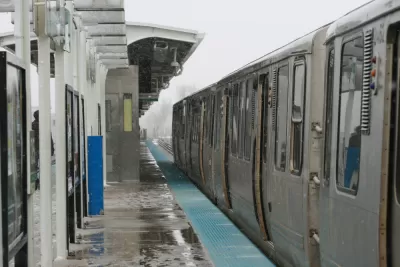
Questions about transit equity have, historically, been hard to answer. Recent data advances have made it more feasible to quantify information about gaps in transit service, and the communities affected by those gaps.
Now TransitCenter has built a new transit equity dashboard, as a template and a "newly-possible best practice." The Transit Center Equity Dashboard "[demonstrates] the nuance that access-to-opportunity analysis brings to equity evaluations, and to shed light on large gaps in access facing U.S. transit riders," according to the website for the new dashboard.
"This dashboard measures how well transit networks in seven U.S. cities connect people who’ve been marginalized within those metro areas to the jobs, services, and amenities they need to thrive," according to the website. "Using February 2020 as a baseline, the dashboard looks at metrics like the number of jobs people can reach within a limited timeframe or budget, travel times to hospitals and grocery stores, and service frequency, and tracks how these measures have changed in each region."
Of the seven cities, six are live on the site with stories, maps, and data: Chicago, Los Angeles, New York, Philadelphia, San Francisco-Oakland, and Washington, D.C. The dashboard for Boston is coming soon.
As an example of the "story" included with the dashboard for each of the cities, Chicago is revealed to provide less transit service to Black and Lantinx residents compared to other groups. Trips for healthcare and grocery shopping are also likely to take longer, due to transportation and development patterns.
Laura Bliss shares news and insight into the findings of the new dashboard in an article for Bloomberg CityLab. The headlining takeaway from that article: transit service cuts during the pandemic have yet to be restored in many places, and many riders continue to suffer the consequences.
There is a mountain of data to explore for each city on the dashboard. Start exploring at the link below.
Read the full story: Tracking Transit Equity in US Cities

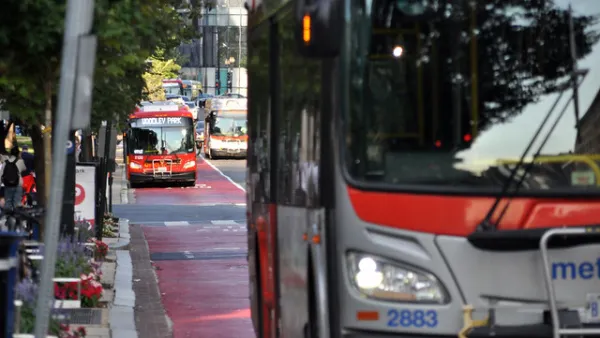
DC Improving Transit Equity
The Transit Equity Dashboard reveals a more marked improvement in transit access in the District of Columbia than in other metro areas.
D.C. Transit Recovery ‘Slow and Bumpy’
Transit service in the District has not yet recovered to pre-pandemic levels, with Black and low-income riders feeling the brunt of the impact.

Equity and Transit Go Hand in Hand for the Pandemic Recovery
Equity illuminates the light at the end of the tunnel for U.S. transit agencies, according to a recent report by the Urban Institute.

Planetizen Federal Action Tracker
A weekly monitor of how Trump’s orders and actions are impacting planners and planning in America.

Amtrak, CN end decades-long dispute with eight-year agreement
The new operating agreement establishes an updated framework for the companies to work together, including processes to resolve disputes.

Northwest rail fans eager for Sept. 30 debut of Amtrak’s Airo fleet
Get ready for that new train smell and more seats. But they won’t go faster or run more frequently on the Cascades route in Washington and Oregon.

NYC to turn city-owned property into thousands of homes
The city has scheduled a public hearing regarding the development for October.

Buses travel at 5mph along this route in NYC. The Bronx's first-ever busway looks to change that
Prior to the busway, buses on the Bx36 route traveled as slowly as 5 miles per hour.

Pittsburg launches 'EZ permits,' aims for one-day turnaround for low-risk permits
The pilot ‘fast lane’ for permits is part of a bundle of modernization efforts for Pittsburg’s permitting process.

FREE Course: Walkable City 1: Why Walkability?
After describing his path towards focusing on walkability as the essence of good planning, Jeff Speck marches through his five principal reasons for making more walkable places.
Reinventing Malls: Planning Alchemy—Turning Gray Fields Into Gold
The course focuses on the opportunities and imperatives that shape reinvention of mall sites.

City of Thousand Oaks
City of Wisconsin Rapids
Harvard University Graduate School of Design
The Architects Foundation
University of Cincinnati Online
The Pocatello Development Authority
The Urban Renewal Agency of the City of Pocatello