As the end of federal and state eviction moratoriums looms, renters who fell behind on payments during the pandemic now face "staggering" amounts of debt.


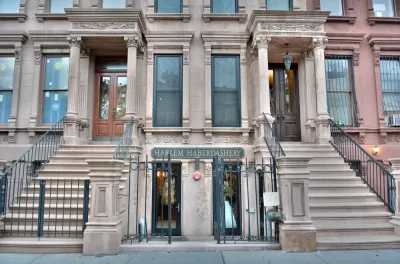
Renters who fell behind during the pandemic "face staggering debts," with many teetering on the edge of eviction, writes Stefanos Chen for the New York Times. According to a report from NYU's Furman Center that analyzed low-income New York renter households, "the average rent owed by households with arrears through the year ending February 2021 jumped 66 percent." Additionally, "[t]he share of households that owed more than $3,000 increased 65.5 percent, to 2,059 from 1,244; and the share of households owing $10,000 or more jumped 140 percent, to 672 from 280."
As with other aspects of the pandemic, communities of color have been disproportionately affected. "A recent study of state court data found that predominantly Black and Latino neighborhoods, where a disproportionately high number of Covid cases have been reported, had nearly four times the rate of eviction filings."
"[T]he sharp rise in debt for those who have fallen behind is alarming for both tenants, who could face imminent eviction, and landlords, who are unlikely to recoup a sizable share of rent, because it is owed by the city’s most overburdened renters." New York state's eviction moratorium, meanwhile, is set to end on August 31. A $2.4-billion state Emergency Rental Assistance program is scheduled to start accepting applications in June.
FULL STORY: Low-Income Renters Who Fell Behind Face Staggering Debts


Trump Revives 2019 Plan to Cut Housing Assistance for Undocumented Immigrants
The proposed change to HUD rules would restrict federal housing aid from households that include undocumented people.

Report: DC Needs ‘Immense’ Funding Increase to Address Housing Crisis
Close to 60,000 District households can’t afford their housing costs, according to research from the Urban Institute.
Jersey City Approves New Rental Assistance
The city will supply rental assistance grants through its Affordable Housing Trust Fund.

Planetizen Federal Action Tracker
A weekly monitor of how Trump’s orders and actions are impacting planners and planning in America.

The state-sanctioned urbicide of Austin
People don’t kill cities. Freeways do.

US to reduce Colorado River water deliveries to Mexico
A new Colorado Treaty amendment reduces Mexico’s Colorado River water allocation by 250,000 acre feet.

5 New England states march closer to 800 megawatt wind energy project
Securing federal approval for the project may be complicated under the Trump administration, which has historically been hostile towards domestic wind power.

Baltimore to break ground on $50 million Transit Priority Project
The project will bring faster bus trips, safer streets and better bike connections to Baltimore.

Airbnb launches $250 million 'last-dollar financing' housing accelerator, makes first investment in Austin
The company will put $6.4 million towards affordable housing development in Texas’ capital.

FREE Course: Walkable City 1: Why Walkability?
After describing his path towards focusing on walkability as the essence of good planning, Jeff Speck marches through his five principal reasons for making more walkable places.
Reinventing Malls: Planning Alchemy—Turning Gray Fields Into Gold
The course focuses on the opportunities and imperatives that shape reinvention of mall sites.

Eagle County Government
Harvard University Graduate School of Design
Nashville Planning Department
The Architects Foundation
University of Cincinnati Online
The Pocatello Development Authority
The Urban Renewal Agency of the City of Pocatello
Journal of the American Planning Association