The region has poured over a billion dollars into storage infrastructure and demand management policies in anticipation of worsening drought conditions.


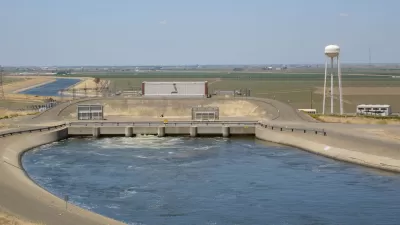
Despite Governor Newsom's recent warning that California is, once again, facing drought conditions, reports Laura Bliss for Bloomberg Green + CityLab, "highly urbanized Southern California has a record 3.2 million acre-feet of water in reserve, enough to quench the population’s needs this year and into the next." This reserve is "thanks in large part to tremendous gains in storage infrastructure and steady declines in water use — driven by mandates, messaging, and incentive programs — belied by the region’s storied reputation for thirst."
Over the last two decades, Southern California "has invested more than $1 billion in new storage infrastructure, including a nearly trillion-liter reservoir at Diamond Valley Lake and the Inland Feeder Pipeline, a 44-mile network of tunnels and pipes that more than doubled capacity for deliveries from the State Water Project, California’s massive system for water storage and delivery that serves many its cities."
Additionally, "the last drought triggered changes in how Californians consume their precious resource. At the press conference last week, Newsom praised the 16% reduction in water use the state has made since 2013." Today, Los Angeles "uses less water now than it did in the 1970s, despite adding 1 million residents," and "[s]ince 2009, nearly 52 million square feet of lawn have been replaced through rebates and outreach programs boosting drought-tolerant succulents, flowers and chaparrals."
Historically, Los Angeles has drawn much of its water from outside the region, but with California's water supplies set to dwindle due to climate change and intensified drought, "L.A. hopes to wean itself off of imports and expand its capacity for self-sustenance. Mayor Eric Garcetti has pledged to source 70% of the city’s water locally by 2035, while L.A.’s latest urban water management plan calls to reduce per capita water use to 100 gpcd [gallons per capita per day] by 2035."
"There is no supply in California that is not vulnerable," says Newsha Ajami, director of urban water policy at Stanford University's Water in the West program, citing the importance of demand management as "the best and cheapest way we can approach water security."
FULL STORY: Facing Drought, Southern California Has More Water Than Ever

Superfund Project to Deliver Massive Water Supply Boon to Los Angeles
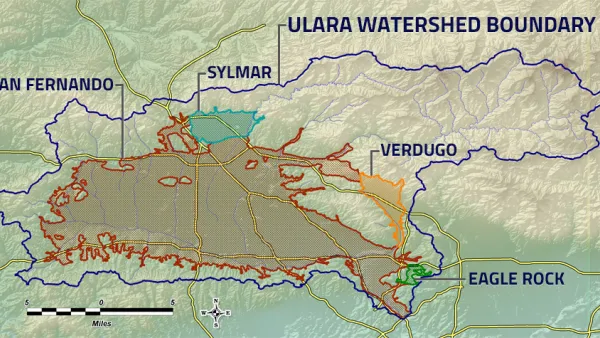
The semi-arid region of Los Angeles is often mistaken for a desert, but the local water supply is also constrained by the environmental sins of the 20th century. The water supply equation of Los Angeles will soon change, however.
California Governor Declares Statewide Drought Emergency
The declaration applies to all of California's 58 counties, with agencies and households urged to implement stricter conservation measures as the historic drought deepens.
Researchers Propose the Concept of 'Anthropogenic Drought'
As climate change heightens the risk of intense drought periods, a new framework can help scientists better understand the interconnected causes and effects of drought.

Planetizen Federal Action Tracker
A weekly monitor of how Trump’s orders and actions are impacting planners and planning in America.

The state-sanctioned urbicide of Austin
People don’t kill cities. Freeways do.

US to reduce Colorado River water deliveries to Mexico
A new Colorado Treaty amendment reduces Mexico’s Colorado River water allocation by 250,000 acre feet.

Mamdani overhauls NYC's Vision Zero plan with 100 new policy goals
The overhaul aims to reduce traffic deaths and make streets safer for pedestrians, cyclists and drivers through lower speed limits, new safety infrastructure and more.

Amtrak not solely to blame for New Jersey commuter rail's unreliability, report finds
A new study from the Garden State Initiative found that NJ Transit’s budget grew 20% across a 4 year period, but reliability declined significantly over the same period.

EPA erases limits on planet-warming pollution from power plants
Under Monday’s plan, power plants would still have some limits on how much mercury, arsenic and other contaminants they can emit.

FREE Course: Walkable City 1: Why Walkability?
After describing his path towards focusing on walkability as the essence of good planning, Jeff Speck marches through his five principal reasons for making more walkable places.
Reinventing Malls: Planning Alchemy—Turning Gray Fields Into Gold
The course focuses on the opportunities and imperatives that shape reinvention of mall sites.

Eagle County Government
Harvard University Graduate School of Design
Nashville Planning Department
The Architects Foundation
University of Cincinnati Online
The Pocatello Development Authority
The Urban Renewal Agency of the City of Pocatello
Journal of the American Planning Association