Mayor Bill de Blasio is pushing ahead with a controversial approval step for hotel development, despite the warnings of city budget office staff about the long-term consequences of the move.


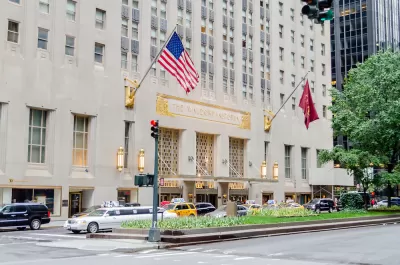
"New York City leaders, led by Mayor Bill de Blasio, are closing in on a controversial plan to drastically restrict hotel development," report Dana Rubinstein and J. David Goodman.
"The mayor wants to require City Council approval for any new hotel, anywhere in the city — a layer of scrutiny otherwise reserved for neighborhood-altering projects such as airports, helipads, racetracks, large stadiums and drive-in movie theaters."
According to the article, the mayor justifies the proposed discretionary approval on the increased traffic and activity caused by hotels. Critics of the plan says similar discretionary approvals have gutted hotel development in the city in the recent past.
City budget officials are among the voices suggesting that the special permits proposed for hotel development would "eventually leave New York with insufficient hotel capacity, potentially costing $350 million by 2025 and as much as $7 billion by 2035 in lost taxes," report Rubinstein and Goodman, based on a confidential budget office report leaked to The New York Times.
Planetizen first picked up news of the proposed special permits for hotel development in December 2020.
Read the full story: A $7 Billion Mistake? New York Seeks to Curb New Hotels.


Small Hotels a Non-Starter After Zoning Change in New York City
A local labor organization wanted larger hotels to help workers create unions, so they sought a zoning change to make it harder to develop smaller hotels in light manufacturing zones.

de Blasio Balancing Act Puts Manufacturing Jobs, Hotel Industry Interest in the Balance
The New York Times reports details about the de Blasio Administration's negotiations concerning land use regulations that will impact industrial and hotel business. With a re-election campaign looming in 2017, the story reveals a lot about the politi

One Year, Zero Conversions: New York Revamps its Hotels-to-Housing Program
The Housing Our Neighbors with Dignity Act (HONDA) was intended to convert dormant hotels into sorely needed housing. So far the law hasn’t worked as intended.

Planetizen Federal Action Tracker
A weekly monitor of how Trump’s orders and actions are impacting planners and planning in America.

The state-sanctioned urbicide of Austin
People don’t kill cities. Freeways do.

US to reduce Colorado River water deliveries to Mexico
A new Colorado Treaty amendment reduces Mexico’s Colorado River water allocation by 250,000 acre feet.

Brightline West’s future may rely on $6 billion federal loan
The company has until Nov. 2 to make a $400 million equity investment into its proposed high-speed rail line.

LA Metro’s ultimatum: no extra buses for LA28 if federal funding isn’t imminently secured
If Metro does not provide additional buses, LA28 organizers will have to find a new way to manage Olympic traffic. LA28’s budget does not include a line item for transit.

Colorado’s Largest Data Center Could Rise Next to Homes — Without a Public Hearing
The proposed campus would consume 11 times the power of Denver International Airport; as it has across the country, opposition mounts.

FREE Course: Walkable City 1: Why Walkability?
After describing his path towards focusing on walkability as the essence of good planning, Jeff Speck marches through his five principal reasons for making more walkable places.
Reinventing Malls: Planning Alchemy—Turning Gray Fields Into Gold
The course focuses on the opportunities and imperatives that shape reinvention of mall sites.

Eagle County Government
Harvard University Graduate School of Design
Nashville Planning Department
The Architects Foundation
University of Cincinnati Online
The Pocatello Development Authority
The Urban Renewal Agency of the City of Pocatello
Journal of the American Planning Association