Seattle schools are often forced to reduce their playground space in favor of parking and circulation for private cars, but altering the city code could change that.


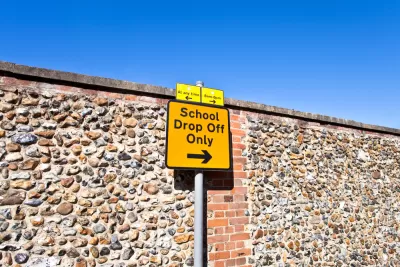
An analysis of recent retrofits at two Seattle schools shows that "if the Seattle School District had complied with the City requirement for private car storage in the recent retrofits at Magnolia and Queen Anne Elementaries it would have obliterated all outdoor play space and a significant amount of indoor education space." Margaret McCauley argues that city code requiring Seattle schools to replace playground and activity space with surface parking and car traffic doesn't address the needs of bike riders and pedestrians and takes away valuable outdoor space.
With low-income families less likely to own cars, devoting "scarce land resources to circulation for privately owned cars is inequitable." McCauley writes that "encouraging a dispersed traffic pattern, where families (excluding the medically fragile of course) park remotely in the neighborhood and walk the final block with their kids, produces a safer setting" and encourages friendlier interactions than expecting families to "be able to easily drive to and from the school at arrival and departure times."
According to McCauley, a city code change that prioritizes "safe routes to school instead of a requirement for on-site parking and drop-off zones" would "allow Seattle’s School Traffic Safety Committee to focus efforts on safe routes to school rather than parking plans that are counterproductive to safety."
FULL STORY: Seattle City Code Requires We Pave Over Playgrounds, But We Could Change That

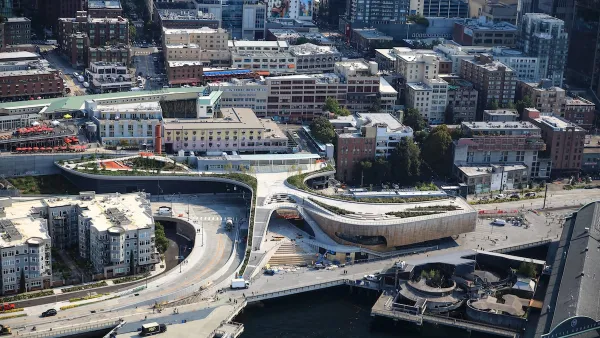
Seattle’s New Overlook Walk Offers Ample Park Space Near Pike Place Market
The elevated park and event space replaces part of the demolished Alaskan Way Viaduct, connecting the city’s famous Pike Place Market to the waterfront.
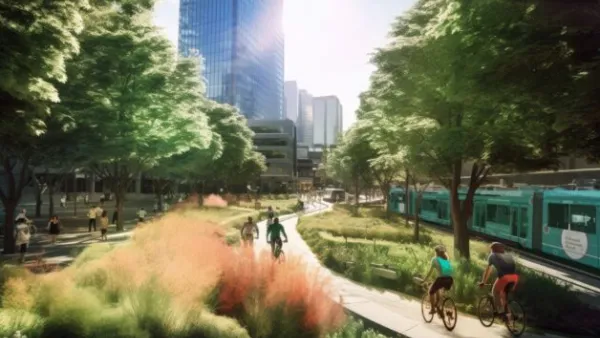
Seattle Releases Draft 20-Year Transportation Plan
The draft Seattle Transportation Plan proposes an ambitious agenda for the next 20 years of transportation planning in the city of Seattle.
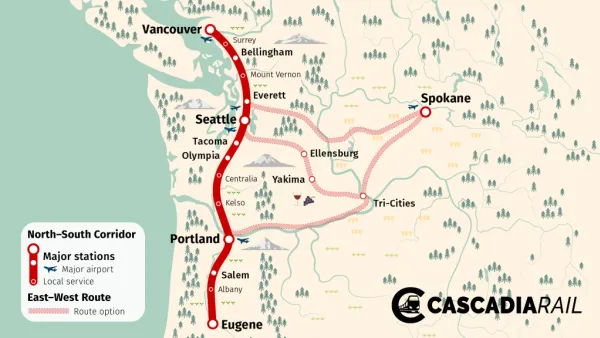
Cascadia High-Speed Rail Corridor Seeking Federal Funding
The state of Washington is hoping federal infrastructure funding can pay for $198 million of the $348 million necessary to plan the Cascadia High-Speed Rail project.

The state-sanctioned urbicide of Austin
People don’t kill cities. Freeways do.

US to reduce Colorado River water deliveries to Mexico
A new Colorado Treaty amendment reduces Mexico’s Colorado River water allocation by 250,000 acre feet.

New Jersey’s second-largest city bans standalone data centers
Jersey City will continue to allow co-location facilities, such as those meant for research institutions that store their own data.

Amtrak not solely to blame for New Jersey commuter rail's unreliability, report finds
A new study from the Garden State Initiative found that NJ Transit’s budget grew 20% across a 4 year period, but reliability declined significantly over the same period.

EPA erases limits on planet-warming pollution from power plants
Under Monday’s plan, power plants would still have some limits on how much mercury, arsenic and other contaminants they can emit.

Phoenix announces new on-demand transit service, more frequent RAPID buses
Both new services will launch in October, and are part of Phoenix's Project Effective Access Solutions for Easing Congestion.

FREE Course: Walkable City 1: Why Walkability?
After describing his path towards focusing on walkability as the essence of good planning, Jeff Speck marches through his five principal reasons for making more walkable places.
Reinventing Malls: Planning Alchemy—Turning Gray Fields Into Gold
The course focuses on the opportunities and imperatives that shape reinvention of mall sites.

Eagle County Government
Harvard University Graduate School of Design
Nashville Planning Department
The Architects Foundation
University of Cincinnati Online
The Pocatello Development Authority
The Urban Renewal Agency of the City of Pocatello
Journal of the American Planning Association