A new report examines how governments can encourage citizens to use alternatives to private cars in order to reduce car dependency.


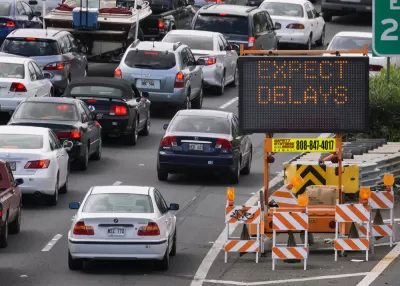
A new report by the International Transport Forum analyzes fiscal policies and other instruments for managing urban traffic and correcting current policy biases that favor automobile travel over more sustainable and affordable transport options. The report also reviews international case studies of integrated transportation and land use planning to make transportation more efficient and reduce congestion on streets.
Among the conclusions made, with much more detail, in the report:
- Cities need more efficient, less damaging and fairer use of scarce space.
- The guiding principle for managing car use is to enable citizens to carry out their daily activities without a car and not having to rely on cars to satisfy their transport needs.
- Significantly reducing the modal share of private vehicles in urban mobility implies significant long-term change in the spatial form of cities.
- The most effective urban mobility management systems deploy road pricing schemes together with road space allocation and land-use planning instruments.
Read the full story: Reversing Car Dependency

Automobile Dependency: An Unequal Burden
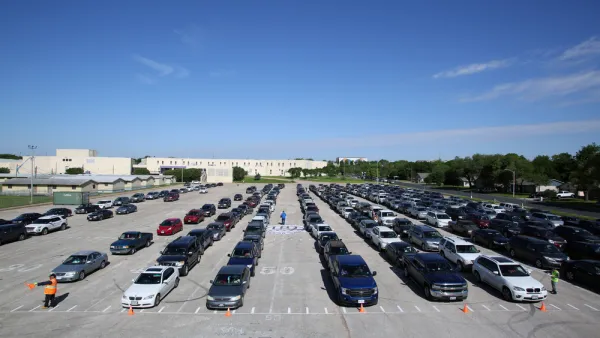
Automobile-dependent planning has changed automobiles from a luxury into a necessity. Excessive vehicle costs leave many households without money to purchase essential food, shelter and healthcare. They need more affordable transportation options.
Walkability Plan, Including Parking Reform, Adopted in Houston
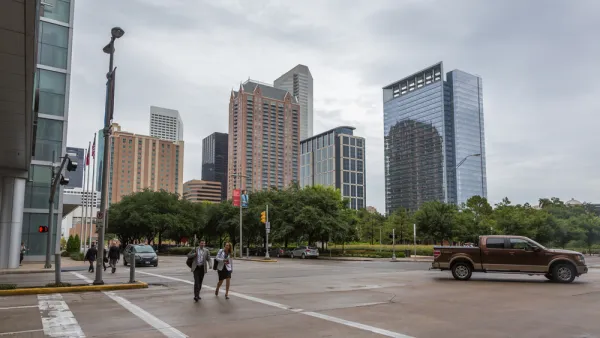
The city of Houston is embarking on an ambitious plan to reshape how new development in the city prioritizes walkability, and deprioritizes the automobile.

Breaking the Cycle of Automobile Dependency
Many current planning practices reinforce a cycle of increased automobile use, more automobile-oriented community redevelopment, and reduced mobility options. There are good reasons to break this pattern.

Planetizen Federal Action Tracker
A weekly monitor of how Trump’s orders and actions are impacting planners and planning in America.

The state-sanctioned urbicide of Austin
People don’t kill cities. Freeways do.

Colorado’s Largest Data Center Could Rise Next to Homes — Without a Public Hearing
The proposed campus would consume 11 times the power of Denver International Airport; as it has across the country, opposition mounts.

Amtrak, CN end decades-long dispute with eight-year agreement
The new operating agreement establishes an updated framework for the companies to work together, including processes to resolve disputes.

Raised interest rates may kill financially vulnerable construction projects
The chief economist at ConstructConnect warns that if construction project owners are negatively impacted by the raised rates, it could result in delayed payments to contractors.

Data centers are consuming nearly 25% of Oregon’s power
The state has 111 data centers, with 32 more either planned or under construction.

FREE Course: Walkable City 1: Why Walkability?
After describing his path towards focusing on walkability as the essence of good planning, Jeff Speck marches through his five principal reasons for making more walkable places.
Reinventing Malls: Planning Alchemy—Turning Gray Fields Into Gold
The course focuses on the opportunities and imperatives that shape reinvention of mall sites.

Greater Baltimore Committee
Eagle County Government
Harvard University Graduate School of Design
The Architects Foundation
University of Cincinnati Online
The Pocatello Development Authority
The Urban Renewal Agency of the City of Pocatello
Journal of the American Planning Association