Plans have been approved for the development of 5 World Trade Center, in place of a building damaged on September 11 and eventually torn down.


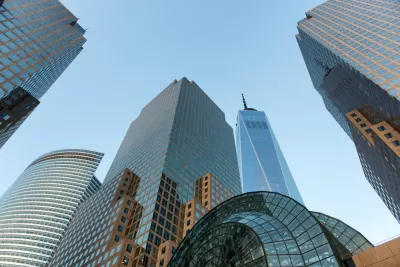
The final piece of the rebuilt World Trade Center is now in place.
The Port Authority of New York and New Jersey Board of Commissioners and the Lower Manhattan Development Corporation Board recently approved plans for the development of a 1.56-million-square-foot, 900-foot-tall tower designed by Kohn Pedersen Fox (KPF) and developed by Brookfield Properties and Silverstein Properties.
"The proposal for the future 1.56 million gross square foot mixed-use building currently anticipates approximately 1.2 million square feet of residential space or 1,325 residential rental units – of which 25%, or approximately 330, would be permanently affordable. The building would also include approximately 190,000 square feet of office space," according to a Port Authority press release. "[T]he building would have a 12,000 square foot community facility space, as well as 55,000 square feet of public amenity space and 7,000 square feet of retail."
In addition to being the final development to rebuild from the damage done on September 11, 2001, the new 5 World Trade Center will be the first residential project on the World Trade Center campus.
Two articles, one by Jonathan Hillburg and the other by Diane Pham, provide additional insight into process that yielded these plans for 5 World Trade Center. Hillburg also notes that the General Project Plan (GPP) for the World Trade Center complex originally had the development of 5 World Trade Center targeted for office development. "[M]odifying the GPP will take approval from the LMDC, Empire State Development Board of Directors, the Public Authorities Control Board, and the US Department of Housing and Urban Development,' state and national environmental approvals, and more," report Hillburg.
FULL STORY: KPF’s 5 World Trade Center tower officially approved

NYC's Plan to add 9500+ Housing Units to Midtown
The city council approved a rezoning plan that will allow high-density mixed-use development in a formerly manufacturing-only district.
Manhattan Rezonings Pose Tough Challenges for Planners
The New York City Department of Planning kicked off a rezoning process for the Manhattan neighborhood of SoHo earlier this month. Planning and development challenges abound.
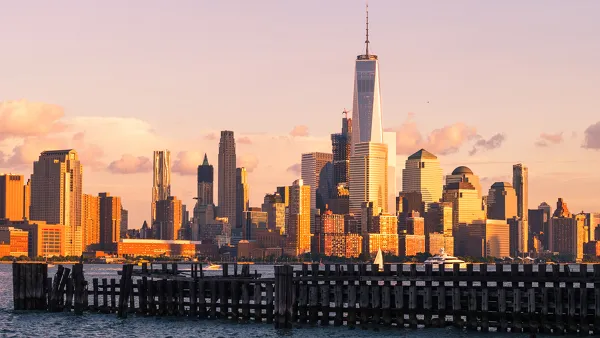
Taking Stock of New York's Changing Skyline Post-9/11
Fear that skyscrapers might be a persistent target of terrorist attacks did not last long beyond the days and months following 9/11. Neither terrorists nor the Great Recession have stopped the city's skyline from continuing to reaching skyward.

Planetizen Federal Action Tracker
A weekly monitor of how Trump’s orders and actions are impacting planners and planning in America.

The state-sanctioned urbicide of Austin
People don’t kill cities. Freeways do.

US to reduce Colorado River water deliveries to Mexico
A new Colorado Treaty amendment reduces Mexico’s Colorado River water allocation by 250,000 acre feet.

Mamdani overhauls NYC's Vision Zero plan with 100 new policy goals
The overhaul aims to reduce traffic deaths and make streets safer for pedestrians, cyclists and drivers through lower speed limits, new safety infrastructure and more.

Amtrak not solely to blame for New Jersey commuter rail's unreliability, report finds
A new study from the Garden State Initiative found that NJ Transit’s budget grew 20% across a 4 year period, but reliability declined significantly over the same period.

EPA erases limits on planet-warming pollution from power plants
Under Monday’s plan, power plants would still have some limits on how much mercury, arsenic and other contaminants they can emit.

FREE Course: Walkable City 1: Why Walkability?
After describing his path towards focusing on walkability as the essence of good planning, Jeff Speck marches through his five principal reasons for making more walkable places.
Reinventing Malls: Planning Alchemy—Turning Gray Fields Into Gold
The course focuses on the opportunities and imperatives that shape reinvention of mall sites.

Eagle County Government
Harvard University Graduate School of Design
Nashville Planning Department
The Architects Foundation
University of Cincinnati Online
The Pocatello Development Authority
The Urban Renewal Agency of the City of Pocatello
Journal of the American Planning Association