New research shows that the voluntary emissions measurements conducted by many cities vastly undercount their greenhouse gas production.


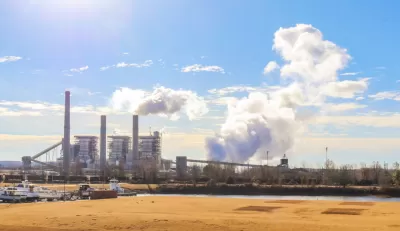
A new study published in Nature Communications claims that cities undercount their greenhouse gas emissions by, on average, close to 20%. If this figure holds across the country, writes John Schwartz in the New York Times, the missed emissions would account for more emissions than the entire state of California produces.
As cities continue to grow and climate change poses increasingly urgent threats, leaders around the world have set emissions-reduction goals, "but there is not yet a consistent way for them to measure the amount of carbon dioxide or to gauge any reduction." As such, the voluntary efforts being undertaken by cities are "inconsistent and flawed." Based on the research team's estimates, the city of Cleveland underreported their emissions by a whopping 90%. Palo Alto, on the other hand, reported emissions 42% higher than the team's estimates, showing a wide range of inaccurate reporting that both under- and over-estimate emissions.
The errors seem to come from "simple miscalculations," but the study's results highlight the need for "a consistent way to state emissions that goes from the city level to the national level." To understand whether a city is moving closer to its climate goals, "accurate measurement is an essential element of knowing where they stand."
Read the full story: U.S. Cities Are Vastly Undercounting Emissions, Researchers Find
FTA Kills ‘Social Cost of Carbon’ in Transit Grant Criteria
The Capital Investments Grant program will no longer factor in the future impacts of carbon emissions.

Driving Equity and Clean Air: California Invests in Greener School Transportation
California has awarded $500 million to fund 1,000 zero-emission school buses and chargers for educational agencies as part of its effort to reduce pollution, improve student health, and accelerate the transition to clean transportation.
USDOT Repeals Emissions Monitoring Rule
A Biden-era regulation required states to report and plan to reduce transportation-related emissions.

Planetizen Federal Action Tracker
A weekly monitor of how Trump’s orders and actions are impacting planners and planning in America.

Washington state to charge fee to drivers with fuel-efficient cars
Revenue from the fee will go towards supporting the state’s highways.

Trump to blast ‘hydrocarbon highway’ through ‘world’s longest art gallery’
Environmental and historic preservation groups are suing to stop the project.

A data center developer is going back on its promises to nearby residents
Data center developer HostDime originally promised free at-home Wi-Fi to residents of Eatonville, Florida.

Trump administration takes another swing at Solar for All
Since the Environmental Protection Agency announced its intent to end Solar for All in August 2025, two federal judges have ruled in favor of protecting it.

The MTA wants to entice international bus manufacturers to set up shop in America
The MTA hopes to create more competition for better bus options while still "buying American."

FREE Course: Walkable City 1: Why Walkability?
After describing his path towards focusing on walkability as the essence of good planning, Jeff Speck marches through his five principal reasons for making more walkable places.
Reinventing Malls: Planning Alchemy—Turning Gray Fields Into Gold
The course focuses on the opportunities and imperatives that shape reinvention of mall sites.

City of Charlotte
City of Rosemead
Rutgers University, Edward J. Bloustein School of Planning and Public Policy
University of Michigan School for Environment and Sustainability (SEAS)
Hunter College, City University of New York (CUNY)
The Architects Foundation
University District Partnership